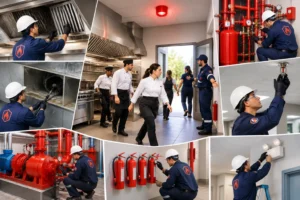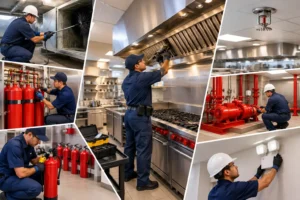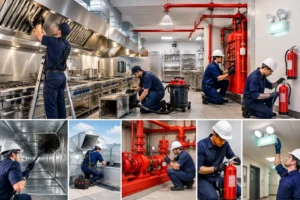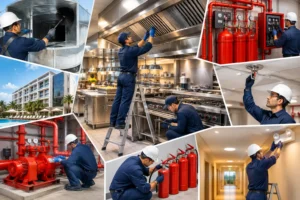
A commercial kitchen can look fully operational at 5:00 p.m. and still be one failed inspection away from a shutdown, an insurance problem, or a suppression system that does not perform when a fire starts. That is why the wet chemical system recertification process matters. It is not a paperwork exercise. It is a standards-based verification that your kitchen fire suppression system is in serviceable condition, properly documented, and ready to protect people, equipment, and business continuity.
What the wet chemical system recertification process actually covers
In a working foodservice environment, wet chemical fire suppression systems are exposed to heat, grease, vibration, cleaning chemicals, equipment moves, and repeated daily use. Over time, those conditions affect nozzles, fusible links, detection lines, cylinders, piping, appliance coverage, and control components. A system that passed a prior inspection does not stay compliant by default.
The wet chemical system recertification process is the structured review of the installed system against applicable code requirements, manufacturer specifications, and actual kitchen conditions. In most commercial kitchens, that means looking closely at NFPA 17A for wet chemical extinguishing systems and NFPA 96 for ventilation control and fire protection of commercial cooking operations. If alarm monitoring, shutdowns, or building fire alarm interfaces are involved, NFPA 72 may also come into play.
Recertification is about confirming three things. First, the system is still installed correctly for the current cooking line. Second, it will discharge as intended if a fire occurs. Third, the documentation supporting compliance is complete enough to stand up during an audit, carrier review, or authority having jurisdiction inspection.
Why recertification becomes urgent in real kitchens
Most compliance failures do not start with a dramatic event. They start with small changes that go undocumented. A fryer is relocated six inches. A griddle is replaced with different dimensions. A nozzle cap is missing after cleaning. Grease accumulates where detection components should operate freely. The cylinder pressure is out of range. A manual pull station becomes obstructed by storage.
Each of those issues can affect performance and code compliance. In a hotel, resort, or high-volume restaurant, that exposure goes beyond a failed tag. It can affect insurance validity, create reopening delays after an incident, and increase liability if the system does not actuate properly.
That is why recertification should be treated as an operational control, not a reactive repair. For multi-unit operators and facilities under audit pressure, the cost of planned compliance is almost always lower than the cost of interruption.
Wet chemical system recertification process step by step
The actual scope depends on the system manufacturer, the kitchen layout, and local enforcement expectations, but the process generally follows a disciplined sequence.
1. System identification and documentation review
The technician begins by confirming the system manufacturer, model, protected appliances, tank size, detection design, and prior service history. Nameplates, prior inspection tags, test records, and service reports are reviewed to establish whether the system matches its documented configuration.
This step matters more than many operators realize. If the paperwork describes one appliance lineup and the kitchen now has another, the system may no longer provide proper coverage even if every visible component appears intact.
2. Visual inspection of components and hazard coverage
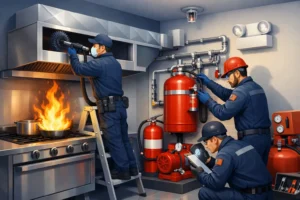
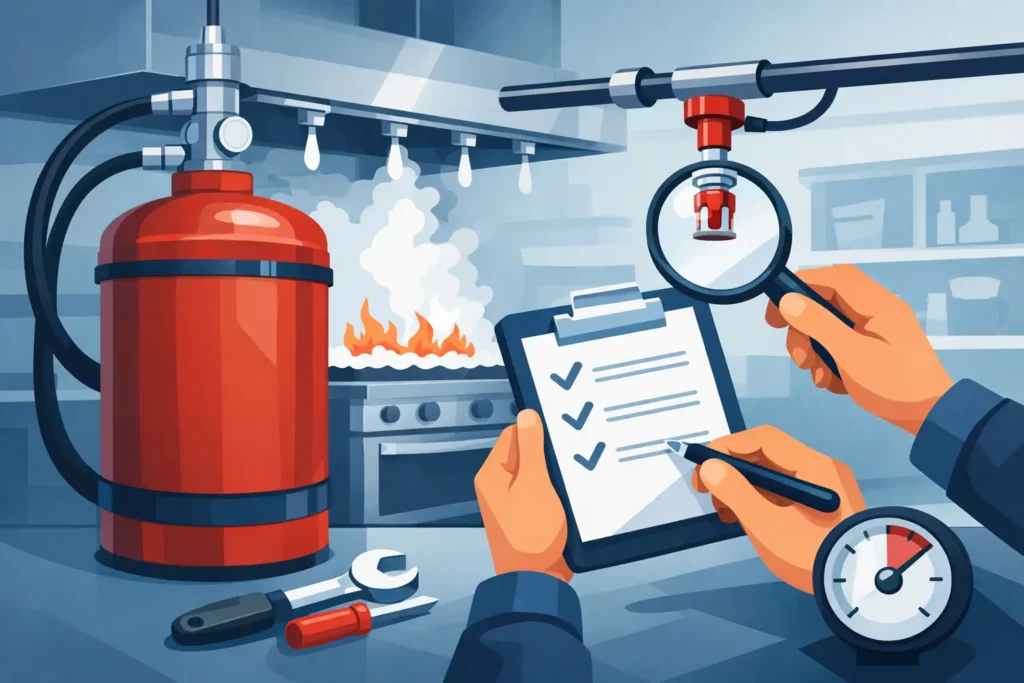
Nozzles, blow-off caps, distribution piping, detection line components, fusible links, control heads, cylinders, and manual pull stations are inspected for condition, accessibility, and installation integrity. The protected cooking appliances, hood, and duct entry areas are checked to confirm that nozzle placement and appliance coverage still align with the hazard.
This is also where field conditions often reveal noncompliance. Common examples include painted nozzles, obstructed pull stations, damaged conduit, grease contamination, unapproved appliance substitutions, and missing identification markings.
3. Cylinder and agent condition verification
The agent cylinder is checked for pressure status, physical condition, mounting security, and serviceability. Depending on the system design and maintenance interval, the technician verifies that the cylinder remains within acceptable limits and has not exceeded required service thresholds.
A cylinder that is under pressure loss, corroded, or improperly mounted creates obvious risk. Less obvious is the documentation gap. If the cylinder cannot be traced through proper service records, recertification may be delayed until that deficiency is resolved.
4. Detection and actuation inspection
The detection line and release mechanism are examined to confirm proper routing, tension, connection points, and service condition. Fusible links are checked for age, suitability, contamination, and placement. Mechanical release assemblies and associated shutdown functions are reviewed to confirm they are properly connected and not impaired.
In many kitchens, grease and heat affect these components first. If links are overdue, if the detection path has been altered, or if the release assembly is sticking, the system may not activate when needed. That is a life safety issue, not a minor maintenance item.
5. Auxiliary equipment interface verification
Wet chemical systems are typically tied to fuel shutoff, electrical shutdown, and sometimes building alarm or supervisory functions. During recertification, those connected responses should be verified based on the installed configuration and the applicable standard.
This is one of the most overlooked parts of the process. A suppression system can discharge, but if gas or electric power to cooking equipment is not interrupted where required, the hazard may continue. Likewise, if alarm integration is required and not functioning, the event response chain is weakened.
6. Corrective actions and component replacement
Recertification is rarely just a pass-or-fail visit. In many cases, deficiencies are identified and corrected during service. That may include replacing fusible links, cleaning or replacing nozzles, adjusting detection lines, updating caps, correcting mounting issues, or documenting appliance changes that require redesign.
Some deficiencies are straightforward. Others require system modification, manufacturer-specific parts, or coordination with other trades. If a new appliance line changes the hazard profile, simple recertification may not be enough. The system may need reengineering to remain compliant.
7. Final tagging, reporting, and certification records
Once the system meets the required conditions, the service provider issues updated inspection tagging and a documented report. For serious operators, this report should be detailed, readable, and audit-ready. Photographic evidence, noted deficiencies, completed corrections, and date-based maintenance recommendations are all valuable.
This documentation is what protects the operator after the technician leaves the site. If an insurer, brand auditor, or fire official asks for proof, verbal assurance is not enough.
Common reasons systems fail recertification
Most failed recertification visits come down to condition, configuration, or documentation. Condition issues include grease-laden nozzles, corroded cylinders, damaged detection hardware, and expired fusible links. Configuration issues usually happen after equipment changes, hood modifications, or line rearrangements that were never reviewed against the suppression layout.
Documentation failures are equally serious. Missing prior records, incomplete service history, absent tags, and unclear correction logs can complicate compliance even when the physical system appears serviceable. For facilities with strict audit requirements, poor records can create the same operational headache as a physical defect.
There is also a practical trade-off here. Some operators delay service because the kitchen is busy and downtime is difficult to schedule. But delayed recertification often leads to more disruption later, especially when deficiencies accumulate and require parts, redesign, or follow-up visits.
How often should commercial kitchens plan recertification?
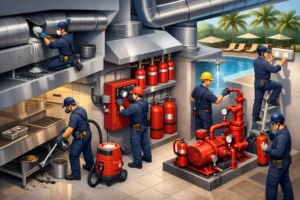
The answer depends on the installed system, local code enforcement, manufacturer requirements, and the kitchen’s operating conditions. High-volume operations with constant grease production and frequent equipment changes usually need closer attention than lower-load environments. Hotels, resorts, and institutional kitchens also tend to have more interconnected systems, which increases the need for disciplined service intervals.
The safest approach is not to treat recertification as a standalone date on the calendar. It should sit inside a broader preventive maintenance program that includes hood and duct cleaning, nozzle inspection, fusible link replacement, cylinder review, and documented deficiency tracking. That approach reduces surprises and keeps the system closer to certification condition year-round.
Choosing a service provider for the wet chemical system recertification process
Not every fire protection vendor is equally equipped for commercial kitchen suppression work. Kitchen systems are specialized. The provider should understand wet chemical system brands, hood configurations, appliance-specific coverage, shutdown interfaces, and the code language that governs these hazards.
For operators, the key question is simple: can the provider do more than place a tag on the system? You need technical inspection, corrective action capability, documented reporting, and a clear understanding of how suppression compliance connects to sanitation, ventilation, audit readiness, and uninterrupted kitchen operations. That is where a specialist contractor adds real value.
A recertification visit should leave you with a verified system status, a clear list of any remaining risks, and a record that can be shown to management, insurers, and inspectors without explanation. That level of discipline is what companies like Fire Patrol are built to deliver in hospitality and foodservice environments.
The best time to address suppression compliance is before the inspector arrives, before the insurer asks, and definitely before a fire tests the system for you. If your kitchen has changed, if your records are incomplete, or if service has been delayed, now is the right time to put the system back into a verified and defensible condition.