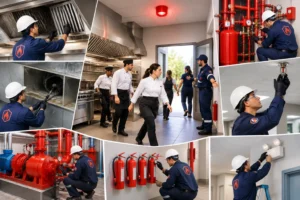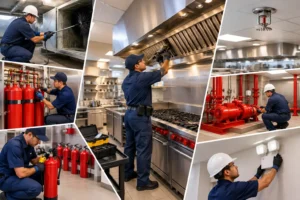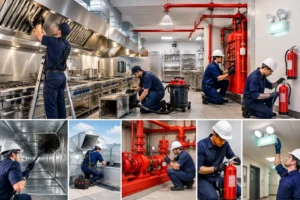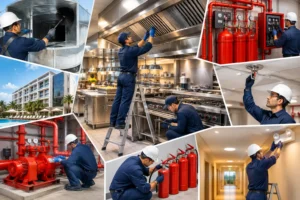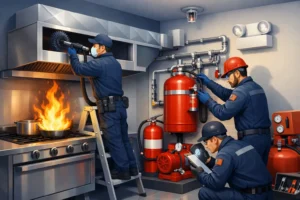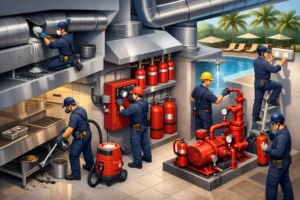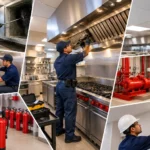
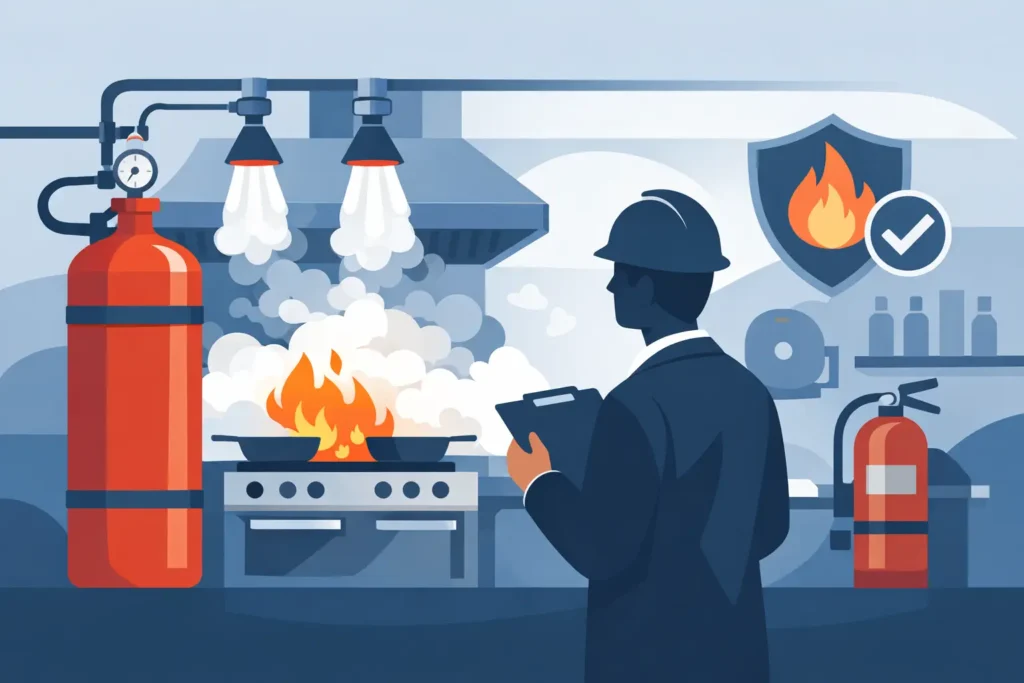
A kitchen fire does not usually start with a dramatic event. More often, it begins with normal production – hot oil, overloaded cooking equipment, grease-laden vapors, and a suppression system that has not been inspected or maintained the way the standard requires. That is exactly why is NFPA 17A compliance critical for commercial kitchens: when a fire starts in a hood, plenum, duct, or appliance, the wet chemical system must activate correctly, discharge where it should, and support fast control of the hazard before operations, property, and life safety are compromised.
For restaurants, hotels, resorts, institutional kitchens, and multi-unit foodservice operations, NFPA 17A compliance is not a paperwork issue. It is a system performance issue. It affects whether your suppression equipment will function under actual fire conditions, whether your site will pass inspection, whether your insurer will support a claim, and whether your kitchen can stay open after a high-risk incident.
Why NFPA 17A compliance is critical in commercial kitchens
NFPA 17A governs wet chemical extinguishing systems designed for protection of commercial cooking operations. In practical terms, that means the standard addresses the kind of fire risk most foodservice operators face every day – grease fires involving fryers, griddles, ranges, charbroilers, woks, and other cooking appliances beneath exhaust hoods.
These are not ordinary fire scenarios. Cooking fires develop quickly, spread through grease contamination, and can extend into the hood and duct system if suppression and exhaust-related controls are not functioning together. A compliant system is designed and maintained so that nozzles are in the correct locations, caps are in place, cylinders are charged, detection components are serviceable, and mechanical or electrical fuel shutoff features operate as intended.
When any one of those elements is neglected, the system may still look acceptable from the outside while being unreliable in the moment that matters most. That gap between appearance and performance is one of the main reasons compliance is critical.
Compliance is about discharge performance, not just inspection stickers
Many operators assume they are covered because the suppression tank is on the wall and the inspection tag is current. That is not always enough. A system can have visible components in place and still fail due to blocked nozzles, improper appliance coverage, degraded fusible links, damaged detection cable, low cylinder pressure, or modifications made in the kitchen that were never reflected in the suppression layout.
Commercial kitchens change over time. Equipment gets replaced. Lines are moved. Appliances are added or removed. Hood usage shifts with menu changes. If the fire suppression system is not reviewed against the actual cooking line, compliance can drift without anyone recognizing the exposure until an audit, a fire, or an insurance investigation brings it to light.
That is why disciplined inspection and maintenance matter. NFPA 17A compliance supports the actual delivery of wet chemical agent where it is needed, in the quantity and pattern the system was designed to provide.
Small deficiencies can create large failures
A missing nozzle cap may seem minor until grease blocks the discharge path. A delayed fusible link replacement may seem routine until heat detection fails to release on time. A disconnected gas shutoff may go unnoticed until fuel continues feeding the fire after system discharge. In commercial kitchens, small maintenance lapses can stack into a major system failure.
The standard exists to reduce that kind of preventable breakdown.
NFPA 17A and NFPA 96 work together
One of the biggest mistakes in kitchen fire protection is treating suppression compliance as separate from exhaust system hygiene and hood maintenance. It is not separate in real operating conditions.
NFPA 17A addresses the wet chemical suppression system. NFPA 96 addresses ventilation control and fire protection of commercial cooking operations, including grease accumulation in hoods, ducts, fans, and related components. If grease loads are excessive, fire can spread faster and beyond the intended area of appliance protection. If nozzles are coated, obstructed, or misdirected because of poor maintenance conditions, suppression effectiveness can be reduced.
This is where operators need a practical view of compliance. Passing an inspection is one objective. Maintaining a kitchen environment where suppression, exhaust, housekeeping, and shutoff controls all support each other is the real goal. In a high-volume hotel or restaurant, that coordinated approach is what lowers the chance of shutdown after an incident.
Why owners and facility managers should care beyond code enforcement
The immediate answer to why is NFPA 17A compliance critical is life safety and fire control. But for operators, the business consequences are just as serious.
A noncompliant system can lead to failed fire inspections, corrective notices, delayed license approvals, insurer scrutiny, and expensive interruption of service. In hospitality environments, a kitchen shutdown affects far more than one meal period. It can disrupt room service, banquet production, restaurant revenue, staffing schedules, guest satisfaction, and brand reputation.
There is also legal exposure. If a fire occurs and post-incident review shows overdue service, missing documentation, disabled shutoffs, or system design mismatches, ownership and management may face difficult questions about negligence, maintenance practices, and duty of care. Those issues are far more expensive than preventive service.
Insurance and claims depend on documented compliance
Insurance carriers do not just look at the fact that a system existed. They often look at whether it was maintained, inspected, and documented according to applicable standards and manufacturer requirements. If records are incomplete or deficiencies were known but not corrected, claim handling can become more complicated.
That is why serious operators rely on documented inspections, photographic reporting, service records, cylinder pressure review, nozzle condition checks, fusible link replacement, and confirmation of alarm and fuel shutoff integration where required. Good documentation supports more than compliance. It supports defensibility.
Audit readiness matters in high-volume foodservice
Hotels, resorts, healthcare kitchens, industrial cafeterias, and franchise groups often operate under layered oversight. Local fire authorities are one part of the picture. Internal brand standards, third-party auditors, insurance inspections, HACCP-related controls, ownership reviews, and risk management programs can all influence what is expected from the kitchen environment.
In that setting, NFPA 17A compliance becomes an operational discipline. You need current inspection status, clear deficiency tracking, and proof that corrective actions were completed. You also need to know whether the suppression system still matches the appliances under the hood today, not six years ago.
This is especially important in facilities that renovate in phases or change equipment based on menu demand. A compliant system on day one can become noncompliant after an equipment swap if nozzle placement, coverage, and shutoff coordination are no longer aligned with the hazard.
What compliance typically requires in real operations
The exact service scope depends on the system type, manufacturer requirements, kitchen configuration, and local enforcement expectations. Still, reliable compliance usually involves more than a quick visual check.
It includes inspection of nozzles and blow-off caps, review of cylinder pressure and condition, verification of fusible links and detection components, mechanical testing of release functions where applicable, confirmation that gas or electric appliance shutoffs operate correctly, and review of alarm interface requirements tied to NFPA 72 when present. It also requires looking at the hood and duct environment because contamination and physical changes around the system affect reliability.
For some operators, the trade-off is timing and coordination. Taking equipment out of service for inspection or corrective work can be inconvenient, especially in high-occupancy hospitality properties. But postponing service usually increases the chance of emergency downtime later, and emergency downtime is always more disruptive.
Why a specialized service partner makes a difference
Commercial kitchen suppression work is technical field service, not generic maintenance. The provider has to understand wet chemical systems, cooking line hazards, appliance-specific coverage, release mechanisms, fuel isolation, alarm interaction, and the operational pressure of foodservice environments.
That matters because compliance problems are not always obvious. A specialist is more likely to identify issues such as hidden nozzle obstruction, outdated fusible links, incompatible equipment changes, or incomplete reporting that can create problems during inspections or after a fire event. A specialist also knows how to schedule service around production realities and document findings in a way that supports audits and corrective action tracking.
For operators who manage multiple kitchens, consistency is just as important as technical accuracy. A structured service program reduces the risk of one site falling behind on inspections while another site receives corrective work that is not properly documented. That consistency is part of operational risk control.
Fire Patrol approaches this work as an ongoing compliance function, not a one-time visit, because kitchens do not remain static and neither do their risks.
The real cost of noncompliance is business interruption
Most decision-makers understand that fire protection is necessary. What is often underestimated is how quickly a single suppression deficiency can escalate into lost revenue, failed audits, canceled events, damaged equipment, and prolonged closure.
The question is not only whether a system can pass inspection today. The better question is whether it will perform correctly during a fast-moving cooking fire while protecting staff, guests, property, and continuity of service. That is the standard serious operators should use.
If your kitchen depends on uninterrupted production, insurable risk control, and audit-ready documentation, NFPA 17A compliance should be treated as part of core operations, not deferred maintenance. The safest kitchens are rarely the ones that react fastest after a problem. They are the ones that built the inspection, cleaning, testing, and corrective process before the fire ever had a chance.