A kitchen can look clean, productive, and fully staffed – and still fail an inspection because the fire suppression system is not compliant where it matters. In high-volume foodservice operations, cumplimiento NFPA 17A cocinas comerciales is not a paperwork exercise. It is a technical condition that affects fire control, insurance defensibility, audit outcomes, and whether the kitchen can keep operating after a review.
For operators, chefs, facility managers, and safety leaders, the issue is rarely whether a wet chemical system exists. The real question is whether that system is installed, maintained, tested, and documented in a way that aligns with the standard and with the actual cooking hazard below the hood. That gap is where risk grows.
What compliance with NFPA 17A actually means
NFPA 17A governs wet chemical extinguishing systems designed for commercial cooking operations. In practice, compliance means the suppression system is not treated as a one-time installation. It must remain serviceable, correctly configured, and matched to the appliances, fuel sources, hood arrangement, and protected hazard.
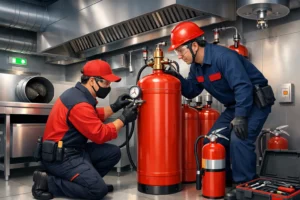
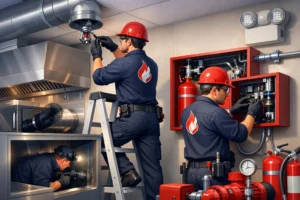
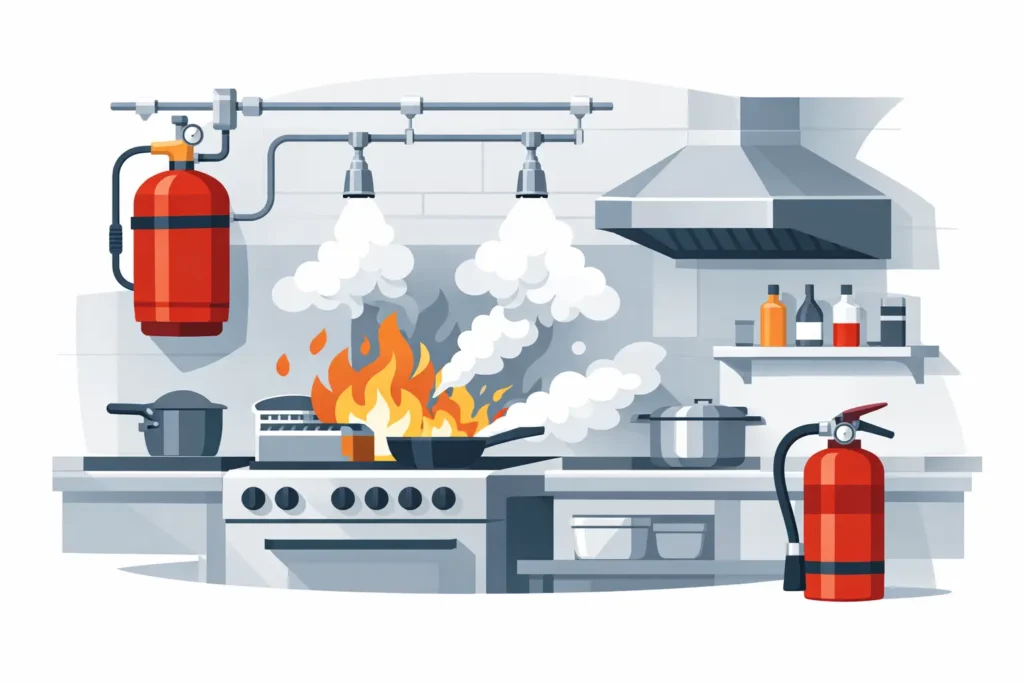
That includes more than the tank and pull station. Nozzle placement, caps, piping condition, actuation method, fusible links, manual activation access, fuel shutoff, alarm interface, and discharge readiness all affect whether the system will perform during a grease fire. A kitchen may appear operational while carrying deficiencies that only become visible during technical inspection.
This is why NFPA 17A compliance cannot be separated from hood and duct conditions, line of appliance changes, and the broader fire protection environment. If equipment has been moved, replaced, or added without re-evaluating coverage, the system may no longer protect the hazard it was designed for.
Cumplimiento NFPA 17A cocinas comerciales: the common failure points
Most non-compliance issues are not dramatic. They are gradual, operational, and easy to miss until an audit, insurer review, or incident exposes them.
One common failure point is appliance changeout. A facility replaces fryers, adds a charbroiler, or reconfigures the cook line for production needs, but the suppression layout is never adjusted. The system may still discharge, but not onto the right hazard areas or in the right distribution pattern.
Another frequent issue is neglected component service. Fusible links age. Nozzles collect grease residue. Blow-off caps go missing. Cylinders show pressure concerns. Manual pull stations become obstructed or poorly identified. Any one of these defects can compromise actuation or distribution.
Documentation failures are just as serious. A system might have been serviced, but if inspection records are incomplete, dated incorrectly, or unsupported by technical findings, the operator has little proof of compliance. During audits and insurance reviews, undocumented work often carries the same practical value as work never performed.
There is also the interface problem. NFPA 17A performance in a real event depends on related systems responding correctly. Fuel shutoff must occur where required. Alarm monitoring and notification must function as intended. If the suppression system discharges but gas or electric power to cooking appliances is not interrupted, the fire hazard may persist.
Why semiannual inspection is only part of the answer
Many operators know the six-month inspection cycle, but compliance is not guaranteed by scheduling a vendor twice a year. A semiannual visit is a requirement, not a complete strategy.
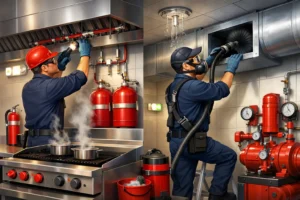
A proper inspection should verify condition, configuration, actuation components, and readiness of the full protected system. It should also identify whether kitchen operations have changed since the last service. In hotels, resorts, and multi-unit restaurant environments, those changes happen often. Equipment is replaced under time pressure. Production increases. Cleaning quality varies by shift and by location.
That means the right service model is preventive, not reactive. If a provider only tags the system and leaves without reviewing nozzles, caps, links, agent condition, mechanical operation, and field changes, the kitchen may carry forward the same exposure for another six months.
Compliance also depends on what happens between inspections. Grease accumulation, unauthorized modifications, blocked pull stations, and damaged components can appear long before the next scheduled service. For high-output kitchens, periodic operational review is often the difference between passing inspection and discovering a shutdown risk too late.
NFPA 17A and NFPA 96 work together
Operators sometimes treat suppression compliance and exhaust cleaning as separate tasks handled by different vendors with no connection between them. That is a costly mistake.
NFPA 17A addresses the wet chemical suppression system. NFPA 96 addresses ventilation control and fire protection for commercial cooking operations, including hood and duct cleanliness. In the field, these standards overlap. Excess grease accumulation affects fire spread, discharge performance, post-fire damage, and inspection outcomes.
A technically compliant suppression system installed over a grease-loaded hood and duct network does not create a low-risk kitchen. It creates a kitchen with one compliant element inside a larger non-compliant condition. Auditors, insurers, and fire officials do not evaluate risk in isolation. They look at the total operating environment.
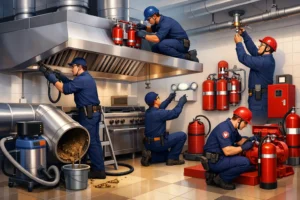
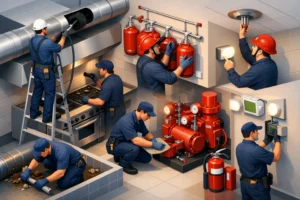
This is why documented hood and duct cleaning, nozzle inspection and cleaning, fusible link replacement, and suppression system service should be coordinated. If these activities are fragmented, details get missed. If they are managed as one compliance program, deficiencies are easier to identify and correct before they escalate.
What auditors, insurers, and AHJs want to see
The standard matters, but so does the evidence. In many cases, a facility does not fail because nobody touched the system. It fails because the operator cannot demonstrate that inspection, maintenance, and corrections were completed to a defensible standard.
Audit-ready documentation should show the date of service, the system identified, the components evaluated, the deficiencies found, the corrective actions required, and the status of those corrections. Photo-supported reporting adds credibility, especially in multi-site operations where corporate oversight depends on field verification.
Authorities Having Jurisdiction, insurers, and hospitality compliance teams also expect consistency. If one report says the system is acceptable and the next reveals long-standing deficiencies, confidence drops quickly. Good documentation creates traceability. It shows whether the kitchen is improving, deteriorating, or operating with unresolved risks.
For operators managing multiple properties, this consistency has operational value. It supports budgeting, scheduling, vendor accountability, and capital planning. If a system is aging out, repeatedly failing pressure checks, or no longer matching appliance layout, documented trends make the case for replacement before a forced shutdown does.
How to approach cumplimiento NFPA 17A en cocinas comerciales
The most effective approach starts with a field-based assessment, not assumptions. The provider should verify the protected appliances, hazard type, nozzle layout, actuation path, agent condition, manual pull access, shutoff integration, and visible maintenance issues. If the kitchen line has changed, compliance must be re-evaluated against the current hazard, not the original drawing.
Next comes correction planning. Some deficiencies are straightforward, such as replacing fusible links, restoring nozzle caps, cleaning obstructed nozzles, or correcting signage. Others require coordination, including fuel shutoff repairs, alarm integration work under NFPA 72, cylinder service, or system reconfiguration after equipment changes.
Then comes documentation and scheduling. A compliant condition should be recorded in a way that can be produced during inspections, insurance reviews, and internal audits. Just as important, the next service date should be part of a preventive schedule, not left to memory or emergency calls.
For hospitality environments, timing matters. Work should be organized around operating hours, occupancy pressure, and kitchen production windows. The best compliance programs reduce disruption while raising technical control. That is where a specialized kitchen fire protection contractor adds value over a generalist vendor.
Fire Patrol approaches this as an ongoing compliance function, not a tag-and-go service. That matters when the kitchen supports guest experience, revenue continuity, and corporate risk exposure all at once.
The cost question operators usually ask too late
Some operators delay corrections because the system still appears functional. That decision can be expensive in ways that do not show up on a routine maintenance budget.
A failed inspection can trigger reinspection fees, emergency service calls, lost production time, and pressure from franchisors, brand auditors, or ownership groups. A fire event involving a poorly maintained or improperly documented suppression system raises the stakes further. Insurance questions become harder to answer. Liability exposure increases. Business interruption extends beyond the damaged equipment.
It also depends on the type of operation. A single-site restaurant may absorb a small corrective repair quickly. A hotel, resort, or institutional kitchen with multiple hazards and integrated systems may require a broader compliance plan. The larger and more complex the operation, the less practical it is to treat NFPA 17A service as a minimal checkbox.
The better question is not whether compliance costs money. It is whether the kitchen can afford preventable failure, avoidable citations, or a suppression system that does not perform when the hazard reaches flash point.
A commercial kitchen does not get safer because the hood looks active and the tag is current. It gets safer when the system matches the hazard, the components are serviceable, the records are defensible, and the next inspection is already under control.