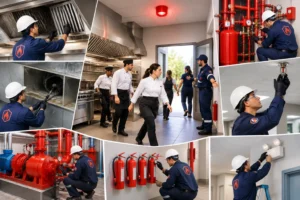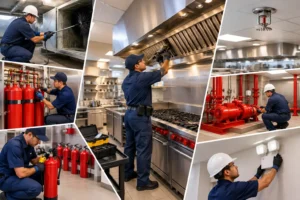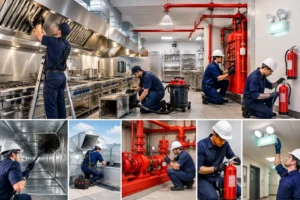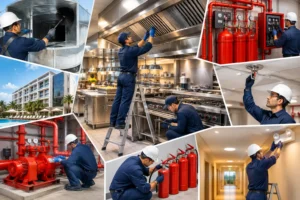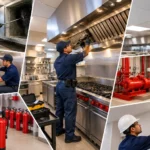
A kitchen fire does not wait for a slow season, a scheduled shutdown, or the next inspection date. In high-volume foodservice operations, supresión wet chemical is one of the few protective layers designed specifically for the hazards created by cooking oils, grease vapors, and energized appliances under the hood. When that system is neglected, the risk is not limited to flame spread. It can trigger failed inspections, insurance disputes, operational shutdowns, and serious property loss.
For restaurants, hotels, resorts, institutional kitchens, and multi-unit operations, wet chemical protection is not a box to check. It is a life-safety and compliance system that must be installed correctly, inspected on schedule, and maintained with documented technical discipline.
What supresión wet chemical actually does
A wet chemical fire suppression system is engineered for commercial cooking equipment that produces grease-laden vapors. Unlike general fire extinguishing methods, it is designed to respond to fires involving cooking media such as vegetable oils and animal fats, which behave differently from ordinary combustibles.
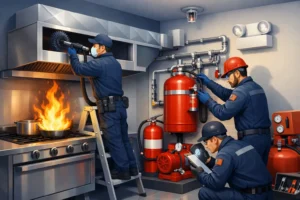
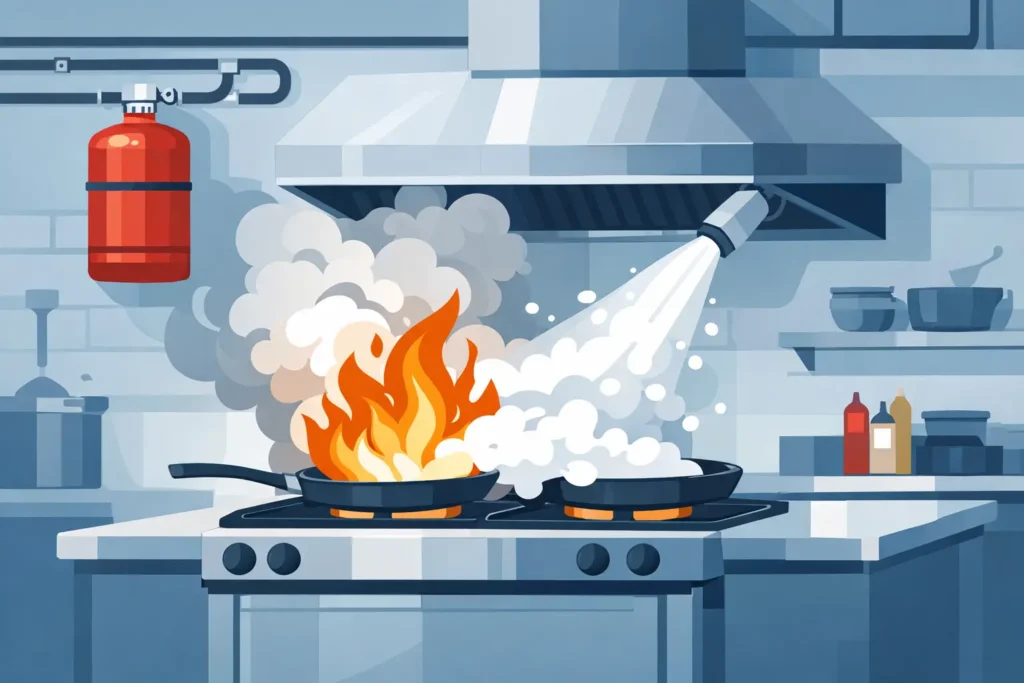
When the system activates, the wet chemical agent is discharged through designated nozzles over appliances, plenum areas, and duct entry points. The agent suppresses flames and reacts with hot cooking grease to create a soapy foam layer that helps prevent reflash. At the same time, the system is typically configured to shut off the fuel or electrical power serving the protected appliances, which is a critical part of effective fire control.
That sequence matters. If agent discharge occurs without proper appliance shutdown, the fire can continue to feed on heat sources. If nozzles are obstructed or misaligned, the agent may not reach the hazard zone as designed. If fusible links are compromised, the system may fail to release when temperatures rise to the activation point.
Why commercial kitchens need supresión wet chemical
Commercial kitchens present a concentrated fire load. Open flame, hot oil, grease accumulation, rapid cooking cycles, and extended operating hours create conditions where small ignition events can escalate fast. The suppression system over the cookline is intended to intervene in those first moments, before a fire moves into the hood, ductwork, or roof structure.
This is also why wet chemical systems are governed by recognized standards and inspection requirements. Code compliance is tied directly to system condition, not simply system presence. A cylinder mounted in the kitchen does not prove readiness. Authorities having jurisdiction, insurers, and auditors want evidence that the system is functional, current, and maintained according to applicable standards, including NFPA 17A and NFPA 96.
For operators, the practical issue is straightforward. If the system fails during an actual event, the consequences can include kitchen closure, smoke contamination, structural damage, employee injury, guest disruption, and a difficult claims process. If the system fails during inspection, the result may still be costly through citations, corrective deadlines, or interrupted operations.
The components that determine system performance
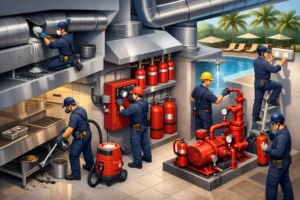
A wet chemical system is only as reliable as its individual components and the condition of the protected area. The releasing mechanism, agent cylinder, detection line, fusible links, manual pull station, appliance interlocks, nozzles, blow-off caps, pipe network, and alarm integration must all function together.
Nozzles deserve special attention because they are exposed to the realities of kitchen production. Grease buildup, improper cleaning, physical impact, missing caps, and unauthorized repositioning can all affect discharge performance. A nozzle aimed a few inches off target may not protect the hazard it was designed to cover.
Fusible links are another common issue. These heat-sensitive devices are meant to trigger release under fire conditions, but they can become contaminated with grease or paint, replaced with incorrect parts, or left in service beyond acceptable intervals. The same is true of mechanical components inside the release assembly. Wear, corrosion, or tampering can compromise activation even if the system appears intact from a distance.
Agent cylinders and pressure status also require documented review. A low-pressure or damaged cylinder can render the entire system unreliable. In many facilities, this goes unnoticed until inspection because visual checks are inconsistent or assigned to personnel without suppression-specific training.
Inspection frequency is not optional
The most common compliance mistake is treating wet chemical service as reactive maintenance. These systems require periodic inspection by qualified personnel, along with immediate corrective action when deficiencies are found. Waiting for a fire marshal visit, insurer audit, or kitchen incident is already too late.
A proper inspection goes beyond a quick visual pass. It should confirm cylinder condition and pressure, nozzle placement and cleanliness, cap integrity, fusible link condition, manual pull accessibility, appliance shutdown function, mechanical release operation, and overall compatibility between the system design and the current cooking equipment layout.
That last point is often missed. Kitchens evolve. Appliances are moved, replaced, added, or removed. A line that was protected correctly two years ago may no longer match the actual hazard configuration today. When equipment changes without corresponding suppression review, coverage gaps can appear even though the system still looks operational.
Common failure points seen in the field
In commercial food operations, system deficiencies usually come from routine operational pressure rather than dramatic neglect. Staff clean aggressively around hood areas and dislodge nozzle caps. Contractors relocate equipment without adjusting suppression coverage. Grease accumulates in concealed areas. Documentation is lost when management changes. Service tags remain in place, but the actual condition of the system tells a different story.
Another frequent issue is incomplete coordination between fire suppression, hood cleaning, and alarm functions. These are related systems. Heavy grease in the hood and ducts increases fire spread potential even when wet chemical protection is installed. Alarm monitoring and notification may also be required depending on the facility configuration and local enforcement. If one part of the protection chain is weak, the whole risk profile changes.
There is also the problem of assuming every vendor provides the same level of service. In practice, there is a major difference between a basic tag-and-go visit and a technical inspection that includes deficiency identification, functional verification, corrective recommendations, and documented reporting with photographic evidence. For audit-driven operations, that difference becomes very visible during review.
Code compliance and documentation matter as much as hardware
A compliant wet chemical system is not defined only by its equipment. It is also defined by records. Inspection reports, service dates, corrective actions, parts replacement, test results, and evidence of system status all matter when a hotel brand standard audit, insurance review, health and safety assessment, or fire inspection occurs.
Decision-makers in hospitality and foodservice are often managing multiple risks at once. Fire protection, sanitation, refrigeration, ventilation, and life-safety systems all compete for attention. The reason suppression documentation matters is that it reduces uncertainty. If a deficiency exists, it can be tracked and corrected. If the system was serviced properly, there is proof. If an authority requests records, they are available.
That level of control supports operational continuity. It also protects ownership and management from avoidable legal and financial exposure. A documented preventive maintenance program is easier to defend than a pattern of informal service calls and missing records.
How to evaluate your current wet chemical protection
If you manage a commercial kitchen, the first question is not whether a system is installed. The real question is whether the current system matches your present cooking hazards and whether the records support that claim.
Review the protected appliances under each hood. Confirm that nozzles are present, capped, clean, and directed correctly. Verify that fusible links and pull stations are in place and accessible. Check whether appliance shutdown was tested and documented during the last inspection. Compare the equipment line today with the layout the system was originally designed to protect.
Then review the service documentation. If the records are vague, incomplete, or limited to tags with no technical detail, that is a warning sign. Facilities that depend on uninterrupted kitchen operations usually benefit from a structured inspection and maintenance schedule rather than one-off service decisions.
For operators with multiple kitchens or high guest exposure, working with a specialized provider such as Fire Patrol can simplify that process because the service model is built around kitchen-specific compliance, documented deficiencies, corrective follow-up, and audit readiness.
Supresión wet chemical is a prevention system, not a fallback plan
The strongest suppression programs are preventive, not reactive. They recognize that system reliability depends on routine inspection, cleaning coordination, component replacement, and documentation discipline. They also recognize that compliance is not static. Standards, kitchen layouts, and risk conditions change.
In a commercial kitchen, fire protection only works when the system is ready before the emergency starts. If your hood system has not been reviewed recently, if your appliance line has changed, or if your records would not stand up to an audit, the safest time to address it is during normal operations, not after an activation, a failed inspection, or a shutdown notice.
A wet chemical system should give your kitchen a controlled response in the worst moment. The way to earn that response is through disciplined service long before that moment arrives.