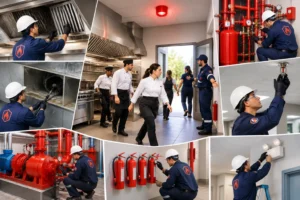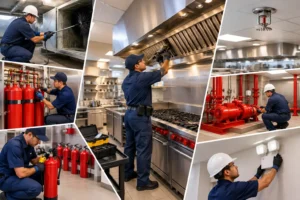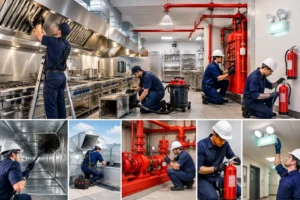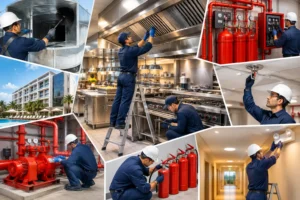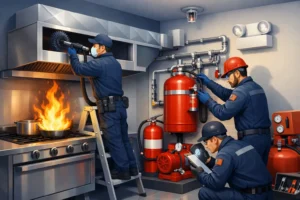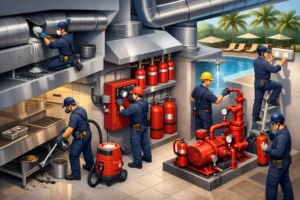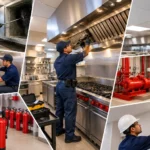
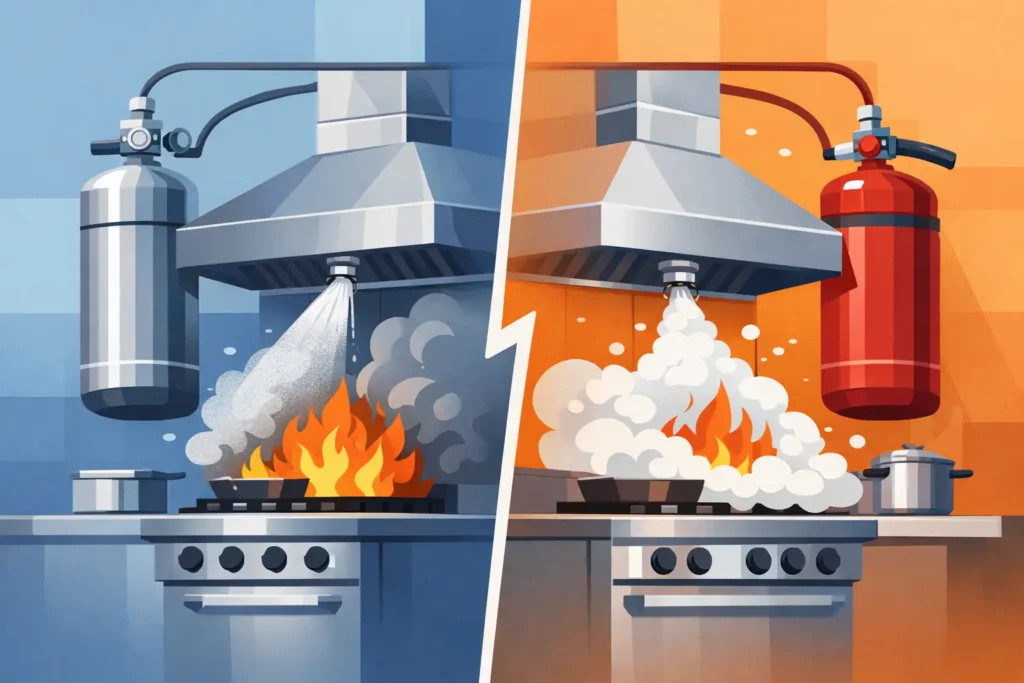
A failed suppression system does not usually announce itself before an inspection, an insurance review, or a real cooking line fire. That is why the question of ansul versus kidde kitchen systems matters less as a brand preference and more as a life safety, compliance, and continuity decision for commercial kitchens.
For operators, chefs, facility managers, and hotel engineering teams, the right comparison is not about which name is more familiar. It is about whether the installed system matches the appliance hazard, whether parts and nozzles are correctly specified, whether the detection line is in proper condition, and whether the system can be inspected, maintained, and documented in line with NFPA 17A and NFPA 96. In many kitchens, the brand debate only becomes urgent after a deficiency is found. By then, the cost of delay is higher.
Ansul versus Kidde kitchen systems: what actually changes on site
Both ANSUL and Kidde kitchen suppression systems are established wet chemical solutions designed for commercial cooking hazards. Both are used to protect hoods, ducts, plenum areas, and listed appliances such as fryers, ranges, griddles, and charbroilers. Both can be integrated with fuel and power shutoff functions and building alarm notification when required. From a distance, they may look similar. In field conditions, the differences show up in design details, service procedures, parts availability, and how easily a system can be kept audit-ready.
ANSUL systems are widely recognized in the foodservice market and are commonly found in restaurants, hotels, institutional kitchens, and multi-site operations. Kidde systems also have a strong installed base and are used in many commercial facilities with dependable performance when properly maintained. Neither brand should be treated as universally better in every kitchen. The correct choice depends on the protected appliances, local service support, existing infrastructure, and the condition of the installed system.
That last point matters. A properly installed older system from either manufacturer may present less risk than a newer system that has been modified incorrectly, left with clogged nozzles, or maintained with incomplete documentation.
System design matters more than the logo on the cylinder
Wet chemical kitchen systems are engineered assemblies, not interchangeable hardware. The cylinder, agent quantity, regulator, detection components, pull station, piping network, nozzle placement, and appliance shutdown sequence must work as one listed configuration. When an operator compares ANSUL and Kidde, the first question should be whether the design follows the manufacturer listing for the exact cooking equipment under the hood.
This is where errors often begin. Appliance lineups change. A fryer is replaced with a larger unit. A charbroiler is moved. A tilt skillet is added. The hood remains, but the suppression layout is no longer correct. If the system was originally engineered under one manufacturer’s design manual, you cannot assume a similar nozzle from another brand or a field substitution will remain compliant. It may not.
From a compliance standpoint, that means the real issue is not brand reputation. It is configuration control. A system must be evaluated according to its listing, nozzle coverage requirements, detection path, and shutdown functions. If those elements are compromised, both fire performance and code compliance are compromised.
Detection, actuation, and shutoff reliability
In practical terms, operators should pay close attention to the mechanical and supervisory side of the system. Fusible links must be the correct temperature rating and replaced at required intervals. Detection cable or conduit path conditions must be checked. Manual pull stations must be accessible and identified. Gas valves, electrical contactors, and alarm interfaces must function as intended during discharge or test procedures.
Both ANSUL and Kidde systems can perform effectively when these components are maintained correctly. Both can fail operationally when preventive service is weak. A suppression cylinder with acceptable pressure does not prove the full system is ready. Reliability depends on the entire chain of detection, release, discharge, and shutdown.
Serviceability and parts support are often the deciding factor
For many commercial kitchens, especially hotels, resorts, and multi-unit restaurant groups, serviceability has a direct impact on risk. A system that is technically suitable but difficult to support in your market can create delays in inspections, repairs, and impairments. That affects operations and can expose the facility during an audit or claim review.
ANSUL often has broad market presence, which can make trained service access and replacement parts easier to coordinate in many regions. Kidde may also be well supported, but that depends heavily on the local service network and the condition of the installed equipment. If your kitchen already has a Kidde system in good standing, replacing it simply for brand standardization may not be justified. If parts lead times, obsolete components, or limited authorized support are affecting compliance, that calculation changes.
This is where experienced inspection matters. An informed contractor does not recommend replacement based on preference alone. The recommendation should follow an evaluation of system age, current listing status, appliance changes, cylinder condition, nozzle integrity, detection hardware, and the ability to maintain the system on schedule with documented evidence.
When replacement makes more sense than repair
There are cases where the ansul versus kidde kitchen systems discussion becomes a replacement decision rather than a maintenance decision. That usually happens when the installed system has repeated deficiencies, unsupported components, undocumented alterations, poor nozzle alignment, or outdated release hardware that no longer fits the current cooking line.
In those cases, continuing to repair an aging system can cost more over time than upgrading to a properly engineered, fully documented installation. The benefit is not only reduced breakdown risk. It is also cleaner inspection history, better audit readiness, and stronger support for insurance and life safety compliance.
Compliance and documentation should guide the decision
Most operators do not need a brand debate. They need a system that will pass inspection, protect the kitchen, and support uninterrupted business activity. That means documented inspection frequency, visible maintenance records, tagged service history, appliance-specific coverage verification, and confirmation that all interlocks function properly.
Under NFPA 96, the fire-extinguishing system protecting commercial cooking operations must be maintained and serviced in accordance with the manufacturer’s listed design and applicable standards. Under NFPA 17A, wet chemical systems require proper inspection, maintenance, and functional reliability. Those are not paperwork details. They are the basis for defensible compliance.
If an authority having jurisdiction, insurer, or corporate auditor reviews your kitchen protection, they are not grading the brand name in isolation. They are looking at whether the system is installed correctly, maintained by qualified personnel, free of obstruction or contamination, and supported by records. A missing nozzle cap, grease-loaded discharge point, or overdue fusible link replacement can create the same problem regardless of manufacturer.
Which system is better for your facility?
The honest answer is that it depends on the facility, not just the catalog. If you are building a new kitchen, the best choice is often the system that can be designed precisely for the appliance package, supported locally by qualified technicians, and maintained under a structured service schedule. If you are operating an existing kitchen, the better system is often the one already installed, provided it remains listed, serviceable, and correctly matched to the cooking hazard.
For high-volume hospitality environments, consistency matters. Multi-property operators may prefer one manufacturer for standardization of training, parts, inspection procedures, and reporting. Independent restaurants may prioritize local service responsiveness and cost control. Institutional kitchens may focus on engineering approval pathways and long-term maintenance planning. All of those are valid considerations.
What should not drive the decision is informal substitution, partial retrofitting without engineering review, or deferring corrective action because the system appears intact. Kitchen suppression systems fail in the details. A wrong nozzle, a blocked duct path, an inoperative gas shutoff, or an undocumented appliance change can turn a compliant installation into an exposure.
A disciplined comparison should include the actual protected equipment, service history, available parts, testing of shutdown functions, discharge hardware condition, and the quality of the inspection record. That is the level where brand selection becomes meaningful.
If your facility is weighing ANSUL against Kidde, the most practical next step is not a brochure comparison. It is a field evaluation of the system you have, the hazards you operate, and the compliance standard you need to meet without interruption. Fire Patrol approaches that process with the same priority your operation should have – verified protection, documented service, and no uncertainty when the inspector arrives or the kitchen is under load.
The right kitchen suppression system is the one that can still do its job after months of heat, grease, cleaning chemicals, menu changes, and daily production pressure. Choose the system you can keep compliant, test properly, document clearly, and trust when conditions are at their worst.