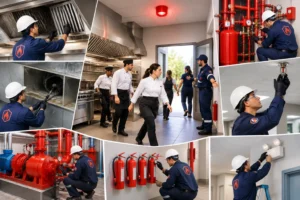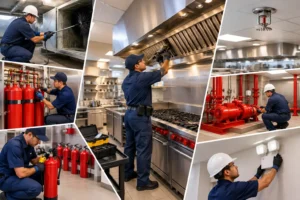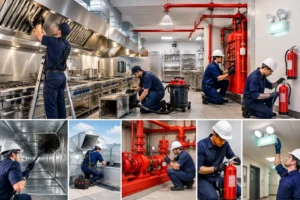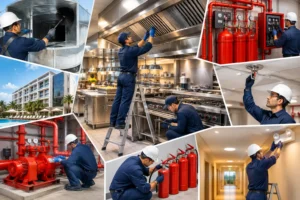
A failed hood inspection rarely starts with the hood. It usually starts weeks earlier – with grease loading inside the duct, a fan issue nobody documented, missing access panels, or a cleaning interval that no longer matches the kitchen’s actual cooking volume. That is why this guide to kitchen exhaust inspections matters for operators who need more than a visual check. In a commercial kitchen, exhaust performance affects fire risk, sanitation, code compliance, and business continuity at the same time.
For restaurants, hotels, resorts, commissaries, and institutional kitchens, the exhaust system is not a background utility. It is part of the fire protection envelope. When grease vapors are not captured, contained, and exhausted correctly, the result can be accelerated buildup in the hood and ductwork, higher ignition risk, poor indoor air conditions, and failed inspections that trigger corrective actions on a tight timeline.
What a kitchen exhaust inspection actually covers
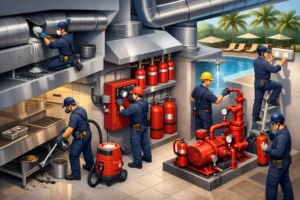
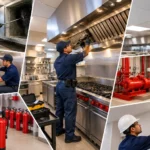
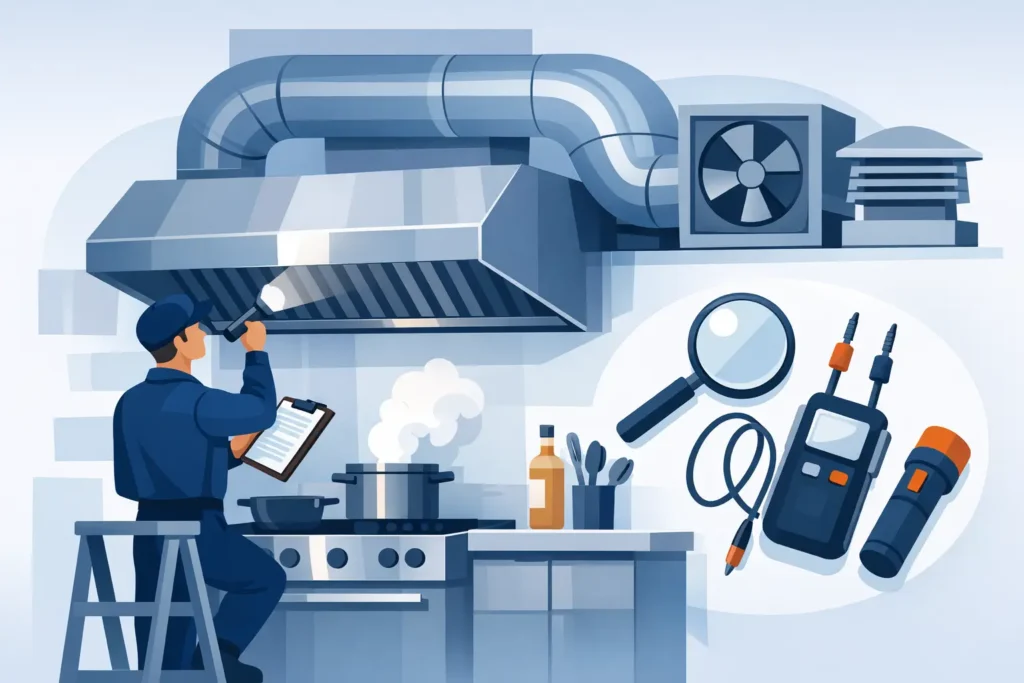
A proper kitchen exhaust inspection is broader than checking whether the hood looks clean from below. The inspection should review the full path of grease-laden vapor removal, including the hood interior, filters, plenum, duct sections, access panels, fan assembly, rooftop terminations, and surrounding conditions that affect performance and fire safety.
In practice, the inspector is looking for two things at once. The first is contamination – how much grease has accumulated, where it is collecting, and whether cleaning intervals are adequate. The second is compliance – whether the system condition aligns with applicable requirements under NFPA 96 and with the facility’s own maintenance, fire suppression, and audit obligations.
That distinction matters. A system can appear operational while still failing the standard for safe condition. Grease buildup hidden above the hood line, damaged fan hinges, inaccessible duct sections, or missing inspection records may not stop cooking that day, but they create exposure that shows up during an audit, an insurance review, or a fire event.
Guide to kitchen exhaust inspections for compliance-driven kitchens
The right inspection approach depends on the kitchen type, cooking load, and risk profile. A hotel banquet kitchen running high-volume frying and broiling does not produce the same exhaust burden as a light-duty café. Inspection frequency and cleaning schedules must reflect actual operations, not assumptions made when the system was first installed.
Most commercial operators should expect inspections to verify grease accumulation, structural condition, airflow-related issues, and serviceability. The hood should be checked for residue levels, filter fit, damaged components, and any signs that grease is bypassing intended capture areas. In the duct system, inspectors look for access limitations, residue thickness, leaks, corrosion, and sections where cleaning may have been incomplete or impossible.
The exhaust fan also deserves close attention. Fan belts, hinges, wiring condition, vibration, and grease discharge patterns can indicate whether the system is functioning as intended. If the fan cannot be safely opened or serviced, cleaning quality usually suffers. That becomes a compliance issue quickly, because inaccessible areas are often the same areas where grease accumulates fastest.
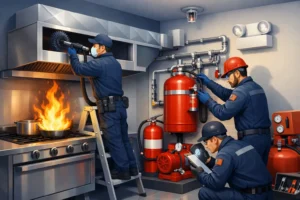
Inspection should also account for adjacent fire protection components. In many commercial kitchens, the exhaust system and the wet chemical suppression system are operationally linked. Nozzle obstructions, misalignment, damaged fusible links, or poor housekeeping around protected appliances can undermine the overall safety strategy even if the exhaust path itself looks acceptable.
Common deficiencies that lead to failed inspections
The most common problem is simple grease accumulation beyond acceptable levels. That buildup may be visible on filters and hood seams, but the more serious issue is often inside horizontal duct runs and fan bases. If cleaning intervals are based on a fixed calendar rather than actual production, heavy-use kitchens can fall out of compliance before the next scheduled service.
Another recurring deficiency is poor access. If the duct lacks adequate access panels, or if installed panels are blocked by construction or equipment layout, inspection and cleaning become incomplete by default. This creates a documented gap that regulators, insurers, and auditors take seriously.
Mechanical defects are also frequent. Loose fan components, missing hinge kits, cracked welds, worn belts, and roof curb issues do more than reduce efficiency. They can affect grease discharge, create unsafe servicing conditions, and shorten the life of the system. In some facilities, the problem is not neglect but fragmented maintenance – one vendor cleans, another services HVAC, another handles fire suppression, and nobody evaluates how the components affect one another.
Documentation failures are just as important as physical deficiencies. If the kitchen cannot produce service reports, cleaning records, inspection findings, and proof of corrective action, the operator may still fail an audit even after paying for maintenance. A clean hood without a paper trail does not help much when an AHJ, franchise auditor, or insurance representative asks for evidence.
How inspection frequency should be determined
NFPA 96 provides the framework most operators know, but the practical question is how often the system should be inspected and cleaned based on actual use. High-volume operations, solid fuel cooking, wok lines, charbroilers, and round-the-clock kitchens generally need tighter intervals. Seasonal hospitality operations may also need pre-opening and peak-season reviews because cooking intensity changes over time.
This is where a generic schedule can become a liability. If the kitchen has expanded its menu, added more frying, increased occupancy, or extended service hours, the original maintenance interval may no longer be defensible. On the other hand, over-servicing low-volume systems creates avoidable cost without improving risk control. The right answer is based on inspection evidence, not habit.
A disciplined provider will adjust the schedule using field observations, grease-loading trends, cooking profiles, and prior reports. That gives the operator a stronger compliance position because the maintenance plan is tied to documented conditions rather than guesswork.
What good inspection reporting looks like
A usable report should do more than state pass or fail. It should identify the exact system areas inspected, note deficiencies clearly, include photographic evidence when relevant, and separate cleaning findings from repair findings. If corrective action is needed, the report should explain urgency and operational impact.
For example, a note that says grease present is weak documentation. A report that identifies moderate grease accumulation in the horizontal duct downstream of the hood collar, recommends cleaning before the next production cycle, and includes images gives the operator something actionable and defensible.
The same standard applies to repairs. If an access panel is missing, if fan serviceability is compromised, or if suppression system components near the hood show contamination, those issues should be documented with enough precision for maintenance teams and managers to respond without delay.
For multi-unit operators and hospitality groups, consistency matters. Standardized inspection reports make it easier to compare locations, prioritize risk, and demonstrate program control across the portfolio. That is often the difference between reactive maintenance and audit-ready maintenance.
Kitchen exhaust inspections are part of a larger fire risk program
Exhaust inspection should never be isolated from the rest of the kitchen safety program. Grease removal, suppression system readiness, alarm interface, housekeeping, and staff awareness all affect the same risk environment. A clean duct does not compensate for blocked nozzles, and a recently serviced suppression system does not offset heavy grease accumulation in hidden exhaust sections.
That is why many operators benefit from a coordinated service model. When hood and duct condition, nozzle inspection, fusible link replacement, cylinder pressure review, and compliance documentation are handled as part of one structured program, fewer issues slip between vendors or service dates. For facilities under constant audit pressure, that coordination reduces surprises.
Fire Patrol approaches these environments as compliance systems, not isolated work orders. That mindset is especially valuable in commercial kitchens where a missed deficiency can affect life safety, insurance validity, and operating permits at the same time.
How operators should prepare for an inspection
Preparation starts with access and records. Make sure technicians can reach hoods, duct access points, and fan assemblies without delays caused by locked roofs, blocked equipment, or production conflicts. Have prior cleaning tags, service records, suppression inspection reports, and any open corrective items available for review.
It also helps to brief the inspector on changes in the kitchen. New appliances, higher production, recurring smoke complaints, unusual grease patterns, or recent repairs can change the inspection focus. Small operational changes often explain why a system that was acceptable six months ago is no longer performing the same way.
Most of all, treat findings early. Kitchen exhaust deficiencies get more expensive when they are postponed. What begins as a cleaning issue can develop into duct contamination, fan damage, suppression contamination, failed audits, or shutdown risk if left unmanaged.
The safest kitchens are not the ones that never have findings. They are the ones with a documented inspection routine, a realistic maintenance schedule, and a clear process for correcting deficiencies before they become incidents.