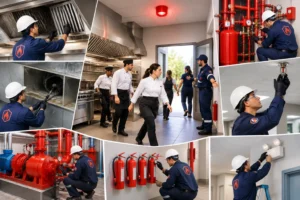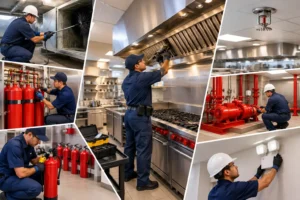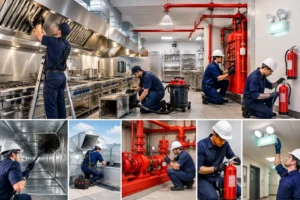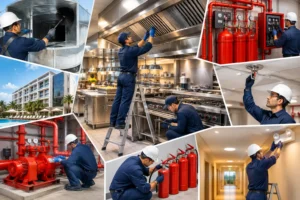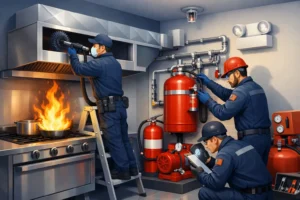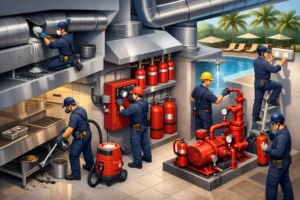
A kitchen can pass a casual visual check and still have dangerous suppression gaps. That is the problem with trying to verify kitchen suppression coverage by looking only at the tank, the pull station, or the inspection tag. In a commercial kitchen, coverage means the wet chemical system is correctly matched to the current cooking lineup, appliance placement, hood design, duct path, and fuel shutoff sequence.
If any of those conditions changed after installation, your system may still be present but no longer fully protective. That creates risk during a fire event, and it also creates trouble during inspections, insurance review, and post-loss investigation.
What kitchen suppression coverage actually means
Coverage is not just the presence of nozzles under the hood. It is the confirmed ability of the system to discharge the right agent, in the right places, over the right hazard areas, with the required shutdowns and alarm functions operating as intended.
For commercial kitchens, that usually includes protection for plenum areas, duct entry, and each protected appliance hazard. Fryers, griddles, ranges, charbroilers, upright broilers, and special cooking equipment can each require a different nozzle type, placement, and protection approach based on the system manufacturer’s design manual and the appliance listing.
That distinction matters. A hood may be long enough to cover all appliances physically, but the suppression layout may only have been engineered for the original equipment set. Once appliances are swapped, resized, moved, or added, the suppression design may no longer align with the actual fire hazard.
Why systems lose proper coverage over time
Most coverage failures do not begin with a major fire event. They begin with small operational changes that happen during remodels, line expansion, equipment replacement, or maintenance work performed by multiple vendors.
A common example is replacing a 36-inch griddle with a charbroiler or adding a fryer bank under an existing hood. The hood still captures heat and grease, so the change may look acceptable from an operations standpoint. The suppression system, however, may now have the wrong nozzle arrangement, the wrong appliance coverage, or insufficient overlap.
Another frequent issue is appliance drift. Equipment gets pulled out for cleaning, moved for plumbing or gas work, and pushed back into a slightly different position. Even a small shift can affect nozzle aim, protected area geometry, and required distance to the hazard surface.
Grease accumulation also contributes to false confidence. A system may technically be installed, but obstructed nozzles, contaminated caps, and dirty duct entries can interfere with discharge pattern or indicate broader maintenance neglect. In these cases, the problem is not only design coverage but real-world performance.
How to verify kitchen suppression coverage correctly
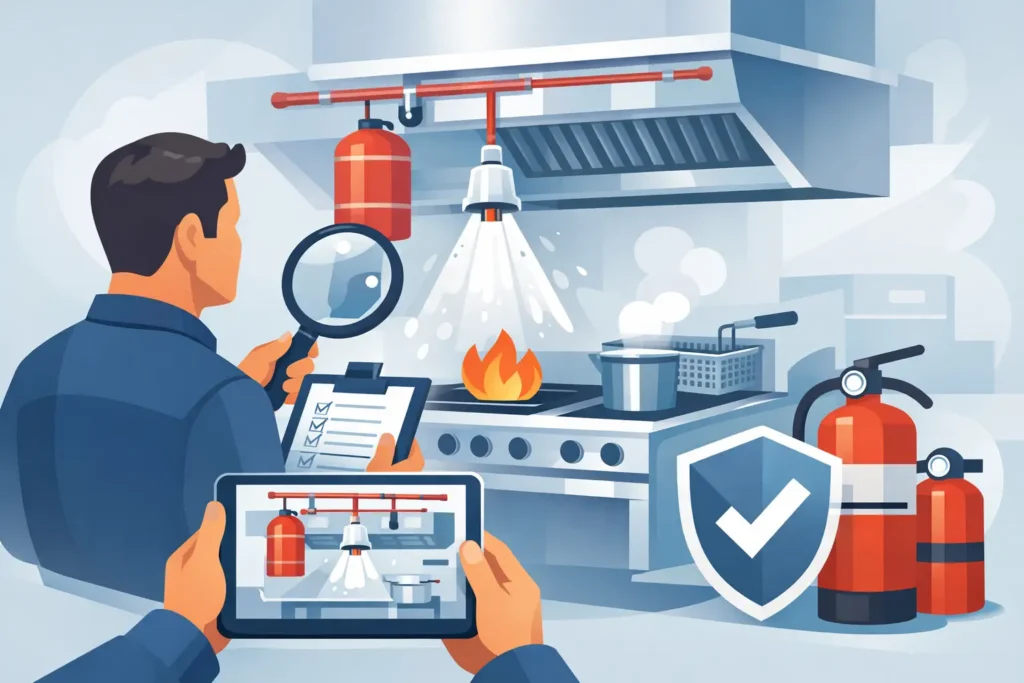
The correct process is technical, not cosmetic. If you need to verify kitchen suppression coverage, start by comparing the live kitchen conditions to the approved system design and current manufacturer requirements.
Confirm the appliance lineup under the protected hood
Document every cooking appliance beneath the hood, including width, type, fuel source, and actual position. Do not rely on old drawings or assumptions from the last inspection cycle. Field conditions are what matter.
Pay close attention to equipment with high grease production and open-flame characteristics, such as fryers, wok ranges, and charbroilers. These appliances often carry very specific protection requirements. If the current lineup differs from the original installation basis, the system should be reviewed for redesign, not just routine service.
Check nozzle types, locations, and direction
Each nozzle must be the correct type for the protected hazard and installed in the proper location with the correct aiming. This is not interchangeable across all appliances. Different manufacturers use different nozzle coding, flow characteristics, and placement criteria.
Nozzles should also be free of grease obstruction and fitted with proper caps where required. Missing caps, bent fittings, or visible misalignment are immediate warning signs. A nozzle that appears close enough is not the same as a nozzle installed to listing and manufacturer specification.
Review plenum and duct protection
Kitchen fires do not stay at appliance level. Grease-laden vapors can carry fire into the plenum and exhaust duct, which is why suppression coverage must extend beyond the cooking surface. Verify that plenum nozzles and duct nozzles are present, properly aimed, and appropriate for the hood and duct configuration.
This is especially important after hood modifications, fan replacements, or duct cleaning work that may have altered components or disturbed nozzle alignment.
Verify fuel and power shutoff sequence
A compliant kitchen suppression system must do more than discharge agent. It also needs to shut down fuel and electrical sources to protected cooking equipment where required. If gas continues feeding a fire after discharge, the system response is compromised.
Mechanical and electrical interface points should be tested and documented. That includes gas valve closure, appliance power interruption where applicable, and alarm or monitoring integration. A tagged system with failed shutdown logic is not fully protective.
Review manual actuation and detection components
Manual pull stations must be accessible, identified, and functional. Automatic detection components, including fusible links or other listed releasing elements, must match the manufacturer’s requirements and replacement schedule.
Improper link temperature ratings, painted links, contamination, or expired components all affect system reliability. Coverage is not only about where agent goes. It is also about whether the system will release when it needs to.
Signs your kitchen may not be fully covered
Some warning signs are obvious, but many are operational. If your last kitchen equipment upgrade did not include a suppression review, that is a red flag. If appliance spacing changed, if hood sections were extended, or if the cooking line was rebalanced for production needs, your coverage may no longer match the hazard.
Other signs include nozzles aimed at empty space, appliances partially extending beyond the intended protected area, recurring grease contamination around capped nozzles, missing documentation, or inspection reports that note deficiencies without confirming final correction.
Insurance carriers and fire inspectors often look beyond the tag date. They want evidence that the system is correct for the present kitchen configuration. Without that, you may face delayed approvals, failed inspections, or coverage disputes after an incident.
What documents should support coverage verification
A serious coverage review should produce more than a verbal approval. You should expect documented findings tied to field conditions. That usually includes identification of the system manufacturer and model, a record of protected appliances, nozzle mapping, cylinder condition, detection status, shutdown verification, and deficiency notes.
Photographic evidence is especially valuable in hospitality and multi-unit operations because it creates a traceable record of what was present at the time of service. That can support internal compliance files, insurance communication, and correction planning across properties.
For many operators, this is where a specialist contractor adds value. Fire Patrol, for example, approaches kitchen protection as an inspection and compliance system, not a quick visual service call. That difference matters when the goal is audit readiness and operational continuity.
Verify kitchen suppression coverage before the next inspection forces the issue
The worst time to discover a coverage gap is during a fire, and the second worst time is during an audit with guests on site and production schedules already committed. Hotels, resorts, restaurants, and institutional kitchens depend on continuity. A failed suppression review can trigger urgent corrective work, equipment downtime, and reputation risk.
That is why verification should be scheduled after any equipment change, hood modification, kitchen expansion, suppression discharge, or major maintenance event. It should also be part of a recurring preventive program, not treated as a one-time checkbox.
There is also a practical trade-off to recognize. Not every kitchen needs a full redesign after every minor change. But any change that affects appliance hazard type, dimensions, spacing, or hood layout should trigger a technical review. The cost of verifying is low compared to the cost of an uncovered fryer battery, denied claim, or failed opening inspection.
Commercial kitchen fire protection only works when the installed system still matches the real kitchen. If you want fewer surprises, stronger documentation, and better control over inspection outcomes, treat coverage verification as part of running the kitchen, not just maintaining the hardware.