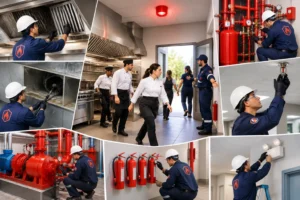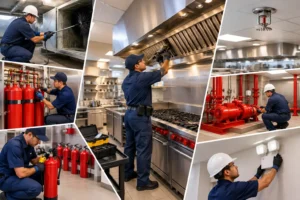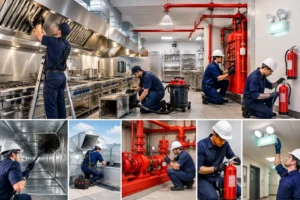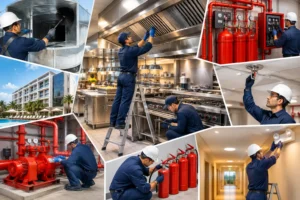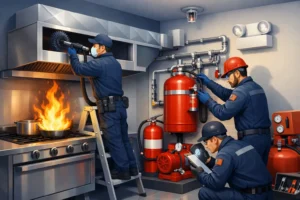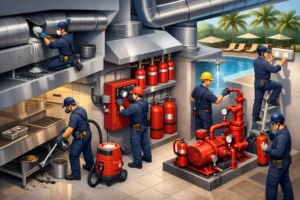
A wet chemical system can look fully intact from the outside and still be one pressure loss away from failing when the kitchen needs it most. That is why revisión presión cilindros wet chemical is not a cosmetic checkpoint. In commercial kitchens, it is a compliance task tied directly to discharge reliability, system readiness, and the ability to pass inspections without surprises.
For restaurants, hotels, resorts, and institutional kitchens, cylinder pressure is not a minor maintenance detail. It affects whether the suppression agent will discharge with the force and pattern the manufacturer intended. If pressure drops below acceptable range, the system may not distribute agent properly through the piping and nozzles. If pressure is abnormal in the other direction, that can also indicate storage, charging, or component issues that require immediate technical review.
Why cylinder pressure review matters in wet chemical systems
Wet chemical systems are designed specifically for grease-producing cooking operations. They protect fryers, griddles, ranges, charbroilers, and hood plenums by releasing a potassium-based agent that suppresses flames and helps prevent reflash. But the agent alone is not enough. The stored pressure inside the cylinder is what moves that agent through the system during an actual fire event.
When pressure is outside the listed range, the system can become unreliable even if the pull station, detection line, nozzles, and tank assembly appear undisturbed. This is where many facilities take unnecessary risk. A visual glance is not a technical inspection. Pressure status must be checked against the manufacturer criteria, environmental conditions, service history, and the overall condition of the suppression system.
In a high-output kitchen, this matters for more than life safety. A failed discharge can trigger severe grease fire spread, damage to hoods and ducts, equipment loss, business interruption, and difficult conversations with insurers, auditors, and ownership. Pressure review is one of the simplest indicators of whether the system remains in serviceable condition.
What a revisión de presión de cilindros wet chemical should actually include
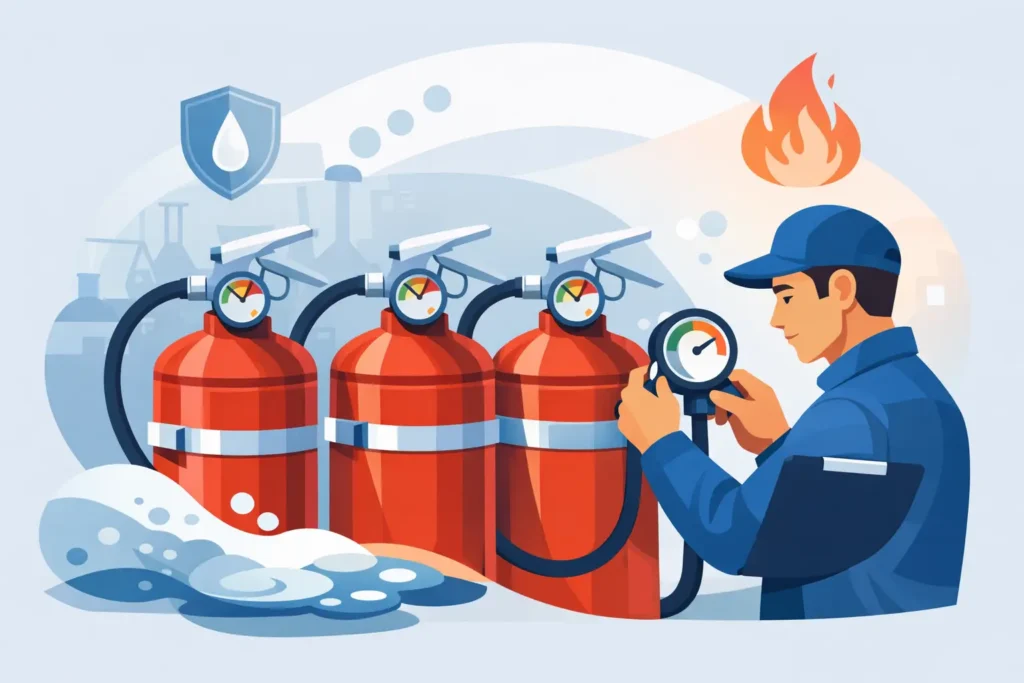
A proper inspection goes beyond reading a gauge and moving on. The pressure reading must be evaluated in context. Technicians should verify the gauge condition, compare the reading to the acceptable operating zone, confirm the cylinder is correctly mounted, and inspect for signs of tampering, corrosion, leaks, impact damage, or expired service intervals.
Temperature matters as well. Cylinder pressure can fluctuate with ambient conditions, so a qualified review considers where the cylinder is installed and whether the environment may be affecting the reading. Kitchens with high heat loads, poor ventilation around protected areas, or adjacent mechanical spaces can create conditions that require closer monitoring.
The review should also include the discharge path. If pressure appears normal but nozzles are obstructed, caps are missing, piping has been altered, or appliance layout no longer matches the original design, the system may still fail to perform correctly. Pressure is one critical variable, not the only one.
For audit-ready service, findings should be documented with readings, observations, corrective recommendations, and photographic evidence where applicable. That record protects operators during inspections and supports maintenance planning before a noncompliance issue becomes a shutdown risk.
Common pressure-related problems found in the field
The most obvious issue is a gauge reading outside the acceptable zone. Low pressure can point to leakage, aging components, improper charging, or long periods without qualified service. In some cases, the gauge itself is defective, which is why the condition of the indicator cannot be ignored.
Corrosion at the cylinder body, valve assembly, or fittings is another concern. In kitchen environments, heat, grease vapor, and cleaning chemicals can accelerate deterioration if housekeeping and maintenance controls are weak. Even if the pressure has not yet fallen below range, visible corrosion should trigger further evaluation.
Another frequent problem is assuming that a tagged system is a compliant system. A cylinder may carry an old service tag while the current pressure condition tells a different story. Compliance depends on actual condition and current inspection status, not on paperwork alone.
NFPA expectations and inspection discipline
In commercial kitchen fire protection, pressure review should be handled within the broader framework of NFPA 17A and NFPA 96 requirements, along with the manufacturer’s listed maintenance procedures. Those standards exist for a reason. Wet chemical systems operate in aggressive environments with heavy grease loading, frequent thermal cycling, and constant operational change.
Semiannual inspection schedules are standard for many kitchen suppression systems, but that does not mean every risk can wait six months. Facilities with heavy production, frequent menu changes, equipment moves, or prior deficiencies may require closer observation. If a kitchen has had a discharge, mechanical damage, renovation, or prolonged downtime, pressure status should be reassessed before returning the system to normal reliance.
This is also where coordination matters. Cylinder pressure review should not be isolated from nozzle inspection, fusible link replacement, manual pull station testing, gas or electric shutoff verification, and alarm interface review when applicable. A system passes in practice only when all these parts function together.
When pressure issues become an operational problem
Many operators only focus on suppression systems when an inspector is coming, but pressure loss often creates business risk before it creates a citation. If a restaurant cannot demonstrate that the kitchen suppression system is in proper condition, management may face delayed openings, failed corporate audits, insurer scrutiny, or restrictions on equipment use.
For hotels and resorts, the exposure is larger. A single kitchen outage can affect banquet service, room service, signature dining, and guest satisfaction at the same time. In multi-unit or institutional settings, one deficiency may also signal broader maintenance gaps across the property.
There is also a liability issue. After a cooking fire, post-incident review often examines service records, inspection frequency, corrective action timing, and known deficiencies. If pressure was out of range and no action was taken, the problem shifts from equipment failure to preventable negligence.
How facility teams should respond to an abnormal reading
If the cylinder gauge appears low, high, damaged, or unreadable, the right response is not adjustment by in-house staff. Wet chemical systems are listed fire protection assemblies, and service must be performed by qualified technicians following manufacturer procedures. Unauthorized handling can create a false sense of readiness while increasing noncompliance.
The first step is to treat the condition as a service priority. The protected cooking line may need immediate operational review depending on the severity of the issue and the authority having jurisdiction. A contractor should verify the reading, assess whether the cylinder requires recharge or replacement, inspect for leaks or mechanical defects, and confirm the rest of the system has not been compromised.
At the same time, management should review whether the issue reflects a larger preventive maintenance gap. Pressure abnormalities rarely happen in isolation forever. They tend to show up alongside overdue inspections, dirty nozzles, damaged caps, missed fusible link changes, or undocumented equipment modifications beneath the hood.
Revisión presión cilindros wet chemical as part of a preventive program
The strongest approach is to make cylinder pressure review part of a scheduled kitchen risk control program, not a reaction to red tags or insurer pressure. In practice, that means combining suppression inspection with hood and duct conditions, sanitation exposure, line changes, shutdown testing, and documentation management.
This is where specialized kitchen-focused service provides real value. A technician who understands wet chemical systems in hospitality environments will not only record a gauge reading. They will evaluate whether the system still matches the cooking hazard, whether nozzles remain properly aimed and protected, and whether documentation will stand up during an audit.
For operators managing multiple kitchens, consistency matters. Pressure readings, deficiencies, and corrective actions should be tracked the same way across every site. That creates visibility for recurring failures and helps leadership budget repairs before a local issue becomes a portfolio-wide compliance problem.
A disciplined service partner such as Fire Patrol approaches this work as part of ongoing life safety management, not as a one-time checkbox. That distinction matters when kitchens run long hours, inspections are frequent, and any downtime carries immediate financial impact.
The practical takeaway is simple. If your wet chemical cylinder pressure has not been reviewed recently by a qualified technician, you do not know with certainty whether the system will perform as listed. In a commercial kitchen, that is not a detail worth guessing on. The safest time to catch a pressure problem is before heat, grease, and an open flame decide the schedule for you.