A kitchen suppression system rarely fails without warning. The warning signs are usually there first – grease on nozzles, damaged caps, low cylinder pressure, blocked pull stations, disconnected alarms, or service records that do not match actual field conditions. When the issue involves a wet chemical unit protecting cooking appliances, an inspección sistema Kidde is not just a maintenance task. It is a risk-control measure tied directly to life safety, code compliance, insurance position, and business continuity.
For restaurants, hotels, resorts, institutional kitchens, and multi-unit foodservice operations, the real question is not whether the system looks intact from a distance. The question is whether it will discharge correctly, cover the hazard it was designed for, shut down fuel and power when required, and document compliance in a way that stands up during an audit or post-loss investigation. That is where a disciplined inspection process matters.
What an inspección sistema Kidde should verify
A proper inspection goes far beyond checking whether the tank is still mounted on the wall. In a commercial kitchen, the Kidde system must be evaluated as an active fire protection assembly with mechanical, detection, discharge, and interface components working together under field conditions. If one element is compromised, overall performance can be affected.
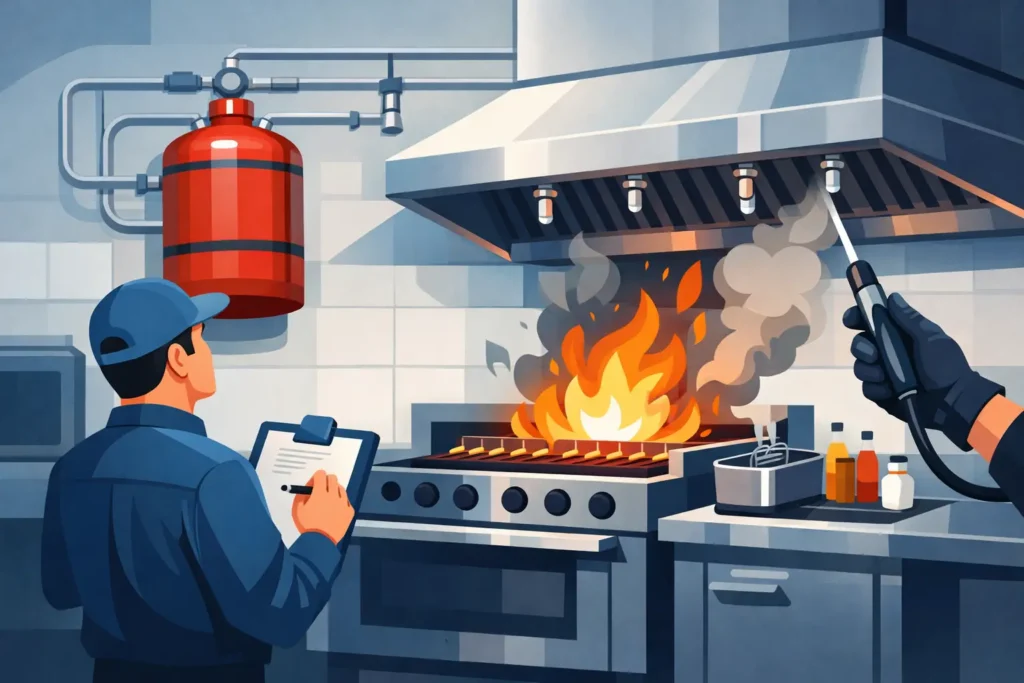
The inspection typically starts with system identification. The technician confirms the protected appliances, hood and duct configuration, hazard coverage, agent cylinder condition, manual actuation device, detection line or fusible link arrangement, nozzles, pipe network, and appliance shutoff interfaces. This matters because kitchens change. A line that originally protected a fryer and range may now sit over different equipment, or appliance spacing may have changed enough to alter nozzle coverage.
Cylinder condition is one of the first control points. Pressure must be within acceptable range, the container must show no visible damage or corrosion, and tamper indicators or seals should be intact where applicable. A system with low pressure or an overdue service interval may appear ready but still fail at discharge. That gap is exactly what causes trouble during an actual grease fire.
Nozzle inspection is equally critical. Grease accumulation, paint, impact damage, missing blow-off caps, or incorrect orientation can interfere with proper agent distribution. In wet chemical systems, nozzle performance is not cosmetic. It determines whether the suppressant reaches the appliance surfaces, plenum, and duct entry points that create the fire path in cooking operations.
Why visual checks are not enough
Many facilities assume the system is fine because no trouble signal is present and the kitchen has had no recent fire event. That assumption is risky. A suppression system can remain silent while still carrying impairments that only become obvious during discharge or regulatory review.
A true inspección sistema Kidde includes evaluation of the detection and release path. Fusible links, cable routing, pulley condition, tension, and mechanical release devices must be checked for wear, contamination, obstruction, or unauthorized modification. In high-volume kitchens, grease vapor and heat exposure accelerate deterioration. If links are not replaced on schedule or if cables bind inside contaminated pathways, system actuation can be delayed or prevented.
Manual pull stations also need field verification. They should be accessible, properly identified, unobstructed, and connected to the releasing mechanism as designed. It is common to find stations blocked by storage, decorative panels, or operational changes made by kitchen staff. During an emergency, a hidden pull station is almost the same as no pull station at all.
Alarm and shutdown integration deserves the same attention. Depending on system design and applicable requirements, actuation may need to shut off gas, disconnect electric power to protected appliances, and report through the fire alarm system under NFPA 72 integration criteria. If these functions are not tested and documented correctly, the kitchen may remain energized during a fire, increasing the chance of reflash and wider damage.
Common deficiencies found during Kidde system inspections
The most serious issues are often simple ones that have been ignored for too long. Grease on nozzles is common, especially in operations with weak hood cleaning discipline. So are missing nozzle caps, corroded fittings, outdated fusible links, and cylinders that have not been serviced within required intervals.
Another recurring problem is equipment drift. A facility replaces appliances, adds a charbroiler, moves a fryer, or changes hood layout without updating suppression coverage. The result is a system that may still be tagged but no longer protects the actual hazard arrangement below it. This is a compliance problem and a functional one.
Technicians also find mechanical impairments caused by vibration, cleaning damage, or unapproved field adjustments. Bent detection lines, loose cable assemblies, painted components, and disconnected microswitches all affect reliability. These issues may seem minor until a fire occurs and the system either discharges late or fails to complete the fuel shutoff sequence.
Documentation gaps are another red flag. If service reports are generic, incomplete, or lacking photographic evidence, operators have little defense during an insurance claim, brand audit, or fire marshal review. A proper inspection should produce records that clearly state the condition of the system, the deficiencies found, and the corrective actions required.
How NFPA standards shape the inspection process
Commercial kitchen suppression work is not guesswork. NFPA 17A and NFPA 96 establish the framework for inspection, maintenance, testing, and operational safety in wet chemical systems and kitchen exhaust environments. These standards shape both the inspection scope and the corrective actions that follow.
NFPA 17A addresses wet chemical extinguishing systems, including maintenance intervals, component condition, actuation capability, and system readiness. NFPA 96 addresses the fire protection features surrounding the cooking operation, including hood, duct, and grease conditions that directly influence suppression performance. Looking at the Kidde unit alone, without considering the hood and exhaust environment, misses the operational reality of the hazard.
That is why a kitchen-focused contractor approaches the inspection as part of a broader risk profile. If nozzles are clean but the duct is overloaded with grease, the fire load remains elevated. If the cylinder is charged but appliance shutoff does not operate, the suppression sequence remains incomplete. Compliance has to be functional, not just administrative.
When an inspección sistema Kidde should happen
At minimum, the system should be inspected and serviced on the schedule required by the applicable standard, manufacturer instructions, and local authority. In most commercial kitchen settings, that means regular semiannual attention, with additional review whenever the kitchen changes, after any discharge, after construction activity, or when a deficiency is suspected.
High-production environments may need closer oversight between formal service intervals. Hotels, resorts, and institutional kitchens often run extended hours with heavy grease generation, multiple shifts, and frequent equipment use. In those settings, the gap between scheduled inspections can allow nozzle contamination, link deterioration, and access problems to develop quickly.
Operators should also act when warning signs appear. A missing cap, visible grease buildup, a damaged pull station, a moved appliance, or an expired service tag should trigger immediate review. Waiting for the next scheduled visit can turn a correctable deficiency into an operational shutdown or failed audit finding.
What decision-makers should expect from the service report
An inspection is only as useful as the documentation behind it. For owners, facility managers, and compliance teams, the report should provide more than a pass-or-fail statement. It should identify the system type, protected hazards, observed deficiencies, code-relevant concerns, and the corrective actions needed to restore compliance and readiness.
Photographic evidence is especially valuable in hospitality and multi-site operations. It gives regional leadership, risk managers, and insurers a clear record of actual field conditions. It also helps distinguish between deficiencies that require immediate repair and conditions that should be scheduled into a preventive maintenance plan.
The strongest reports support action. If fusible links need replacement, nozzles require cleaning, pressure is out of range, or fuel shutoff testing failed, the next step should be clear. That level of detail protects the operator from ambiguity and reduces the chance that the same issue appears again at the next inspection.
Why the right contractor matters
Not every fire protection vendor understands the pace and complexity of commercial kitchens. A generic inspection approach can miss the operational details that affect suppression performance, especially in facilities with frequent menu changes, equipment replacement, and strict audit requirements.
A kitchen-specialized provider understands that the Kidde system does not operate in isolation. It works alongside hood and duct cleanliness, appliance configuration, alarm integration, sanitation pressures, and opening-hour constraints. Fire Patrol applies that field-driven perspective by combining standards-based inspection, deficiency identification, and documentation built for audit readiness.
The best time to address a Kidde system deficiency is before the kitchen is under pressure – before the insurance survey, before the fire marshal visit, and certainly before a flash fire tests a neglected system. A disciplined inspection schedule does more than check a compliance box. It protects the people in the kitchen, the property above the ceiling, and the continuity of the operation that depends on both.