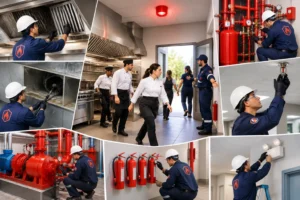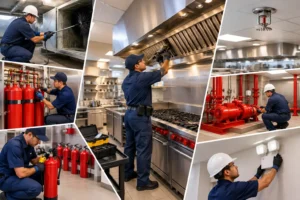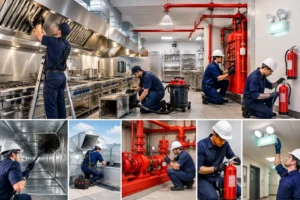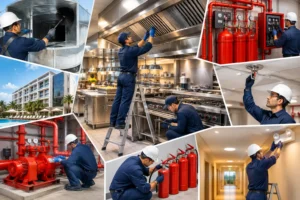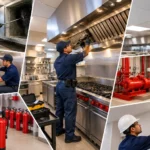

A failed kitchen inspection rarely starts on inspection day. It starts weeks earlier, when grease builds up in hidden duct sections, nozzle caps go missing, fusible links stay past replacement intervals, or cleaning logs stop reflecting actual conditions. An auditoría cocina industrial is not just a sanitation review. In high-volume foodservice, it is a direct test of fire risk control, code compliance, documentation quality, and operational discipline.
For hotels, restaurants, resorts, commissaries, and institutional food operations, that matters because one finding can trigger much more than a corrective note. It can delay reopening, affect insurance standing, expose management to liability, and force emergency service that costs far more than scheduled preventive work. When the kitchen supports revenue around the clock, audit readiness is part of business continuity.
What an auditoría cocina industrial really evaluates
Many operators assume the audit is limited to visible cleanliness, food handling, and employee habits. That is only part of the picture. In a commercial kitchen, the real exposure often sits in the systems that protect the facility when heat, grease, and fuel create the conditions for rapid fire spread.
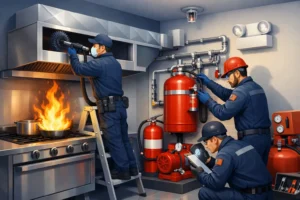
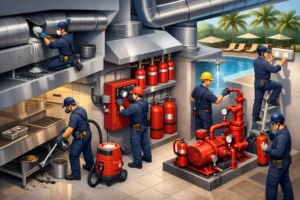
A proper review typically crosses several control areas at once. It looks at hood and duct hygiene, condition of the wet chemical fire suppression system, nozzle alignment and cleanliness, fusible link status, cylinder pressure, manual pull station accessibility, appliance placement under protected zones, alarm interface, and evidence that prior deficiencies were corrected. If the operation follows HACCP-based controls, the auditor will also evaluate whether critical monitoring records match actual field conditions.
This is where many facilities get surprised. A kitchen can appear orderly and still fail on risk controls. Clean prep tables do not offset an obstructed nozzle, an overdue suppression inspection, or grease accumulation above the filters. From a compliance standpoint, surface appearance and life safety are not interchangeable.
Why fire protection is central to the audit
In a commercial kitchen, fire protection is not a standalone system. It is part of the operational chain that keeps the facility open. Standards such as NFPA 17A and NFPA 96 shape how suppression systems, exhaust cleaning, and cooking operations must be maintained. When those requirements are ignored, the gap shows up quickly during an audit.
The suppression system has to be more than installed. It has to be serviceable, correctly configured for the appliances in use, and supported by documentation. If a line was changed, equipment was relocated, or a new fryer was added without adjusting coverage, the system may no longer protect the hazard it was designed for. That is a common audit failure, especially in busy kitchens where operational changes happen faster than safety updates.
There is also a practical issue. Grease does not stay where staff can see it. It migrates through the exhaust path, increasing fuel load in areas that can carry fire beyond the cooking line. That is why hood and duct cleaning records matter during an auditoría cocina industrial. Auditors are not only asking whether cleaning happened. They are asking whether it happened at the right frequency, to the right standard, and with evidence that supports the claim.
The most common findings in a commercial kitchen audit
The same deficiencies appear repeatedly across hospitality and foodservice sites. Some are obvious, others are procedural, but all of them point to weak preventive control.
One common issue is incomplete or outdated service documentation. A kitchen may have received technical service, but if tags, reports, pressure readings, corrective action records, or photo evidence are missing, the facility still struggles to prove compliance.
Another frequent problem is suppression equipment that has not been inspected as required. That includes overdue fusible link replacement, blocked or grease-coated nozzles, compromised caps, inaccessible manual actuation points, and cylinders outside acceptable pressure conditions. None of these should be discovered during an audit for the first time.
Grease accumulation remains one of the most serious findings because it directly affects fire growth potential. Filters may be cleaned while plenum sections, ducts, and fan components are neglected. Auditors notice the difference immediately.
Appliance layout changes also create exposure. When cooking equipment is moved without reviewing nozzle coverage and hazard overlap, the system may discharge correctly and still fail to suppress the fire source effectively. That is not a paperwork issue. It is a system performance issue.
How to prepare for an auditoría cocina industrial
Preparation starts with accepting that audit readiness is an operating condition, not a last-minute project. If management waits until a scheduled visit is announced, most of the meaningful corrections will either be rushed or missed.
The first step is a full technical review of the kitchen protection environment. That means checking the suppression system, exhaust system cleanliness, manual activation devices, alarm interface where applicable, gas or electric shutoff functions, and service history. The review should compare current field conditions against the protected appliance line, not against an old installation assumption.
Next comes documentation control. Reports should be organized, current, and consistent with what is physically installed. If a nozzle was replaced, the report should show it. If duct cleaning was completed, the scope and date should be verifiable. If deficiencies were found in a prior visit, there should be a record of corrective action, not just an open recommendation.
Staff coordination matters too. A kitchen team does not need to be expert in NFPA language, but supervisors should know where pull stations are located, what to do after a discharge, which changes require technical review, and why temporary fixes create long-term liability. Audits often reveal a management gap more than a maintenance gap.
What documented evidence should include
Strong audit performance depends on traceability. In practice, that means the facility should be able to show not just that service was scheduled, but that it was completed properly and tied to actual conditions in the field.
Useful documentation usually includes inspection reports, pressure verification records, nozzle inspection notes, fusible link replacement dates, cleaning service records for hood and duct systems, alarm integration test results where applicable, and photographic evidence of deficiencies and corrections. Photos are especially valuable because they reduce dispute over whether a condition existed before service or was corrected afterward.
For multi-unit operators or large hotel properties, consistency is critical. If one site keeps clean records and another relies on verbal confirmation, the portfolio is harder to manage and easier to expose during insurer or authority review. Standardized reporting closes that gap.
Audit readiness is not the same as minimum compliance
This distinction matters. A facility can meet the minimum requirement for one inspection cycle and still operate with elevated risk between visits. That usually happens when service is treated as a box-checking exercise instead of a preventive control program.
For example, a suppression system may pass a scheduled inspection, but if the kitchen changes menu mix, increases grease-producing equipment use, or extends operating hours, cleaning frequency and maintenance intervals may need adjustment. The same is true for hotels and resorts with seasonal demand. High occupancy periods put different stress on the kitchen than low-volume months.
That is why the best audit outcomes usually come from scheduled inspection planning, corrective action tracking, and periodic field verification. The goal is not simply to pass. The goal is to reduce the chance of a fire event, an operational shutdown, or a failed review at the worst possible time.
When outside technical support becomes necessary
Some facilities can manage daily controls internally, but specialized fire protection and compliance review should not be improvised. If there are recurring findings, undocumented equipment changes, inconsistent duct hygiene, or uncertainty about suppression system condition, outside technical service is the safer decision.
A qualified kitchen-focused contractor can identify whether the issue is maintenance, design drift, cleaning frequency, or documentation failure. That distinction matters because not every deficiency is solved the same way. Replacing components will not fix poor inspection intervals. Extra cleaning will not correct improper nozzle coverage. And a clean kitchen still remains exposed if alarm integration or shutdown functions do not perform as required.
For operators who need an audit-ready process, not just a one-time repair, this is where a specialized provider such as Fire Patrol adds value. The difference is in coordinated inspections, standards-based corrective action, and technical reporting built to stand up under review.
A commercial kitchen does not fail an audit by accident. It fails because warning signs were left in place until someone external documented them. The safest approach is to find those signs first, correct them with evidence, and keep the kitchen ready before the next inspection is on the calendar.