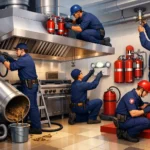
A commercial kitchen rarely gives much warning before a grease fire moves from a small flare-up to a reportable incident. One missed hood cleaning, one clogged nozzle, or one overloaded cooking line can be enough. If you need to reduce grease fire risk in kitchens, the priority is not a single product or one-time service. It is a controlled system of cleaning, inspection, suppression readiness, and disciplined daily operation.
For restaurants, hotels, resorts, and high-volume foodservice operations, grease fire risk is tied directly to uptime, audit performance, insurance exposure, and life safety. The problem is not limited to what staff can see on the cookline. The highest-risk conditions often develop inside hoods, ducts, filters, fan components, and suppression system hardware that may appear functional until an emergency reveals otherwise.
What actually causes grease fire risk in commercial kitchens
Grease fires start when cooking oils or grease-laden vapors reach ignition conditions, but the root cause is usually cumulative neglect. Surface grease on appliances is an obvious concern, yet the more serious issue is the hidden path grease takes through the exhaust system. As vapors rise, they condense and accumulate on hood interiors, duct walls, filters, and exhaust fans. Once buildup reaches a certain level, flame can travel beyond the appliance and into the ventilation system.
That is where operational risk escalates. A contained cooktop fire is one event. Fire migration into hoods or ducts becomes a facility event with potential structural damage, shutdowns, and code implications. NFPA 96 addresses this risk because grease extraction systems are not passive fixtures. They require ongoing inspection and cleaning based on actual cooking volume and grease production.
High-output operations face greater exposure. Charbroilers, fryers, wok ranges, and solid-fuel cooking equipment produce heavier grease loads than lower-volume electric cooking lines. A cleaning frequency that may be acceptable for one kitchen can be dangerously inadequate for another. This is why fixed schedules without field verification often fail.
To reduce grease fire risk in kitchens, start with the exhaust system
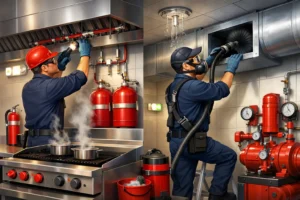
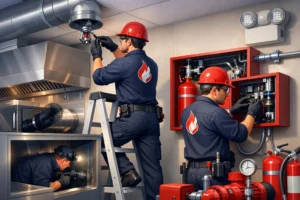
If the exhaust system is not clean, the rest of the fire prevention plan is compromised. Hoods, filters, ducts, and exhaust fans must be cleaned to bare metal where required, not just wiped for appearance. Cosmetic cleaning does not reduce fire load. Grease left inside duct transitions or fan housings remains an ignition hazard regardless of how clean the visible kitchen looks.
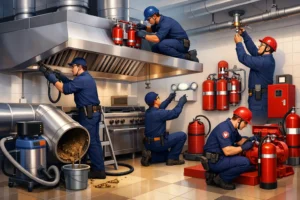
This is also where many facilities underestimate risk. Staff can remove and wash filters, but internal duct cleaning and fan access require trained service procedures, proper containment, and documentation. A visual check from floor level is not an inspection. If grease thickness, fan condition, or access panel issues are not being documented, management does not have a reliable record of system condition.
The right cleaning interval depends on the cooking process. High-volume kitchens may require monthly service. Moderate-volume operations may justify a quarterly schedule. Low-volume or seasonal facilities can sometimes operate on a longer interval, but only when the condition of the system supports it. The trade-off is straightforward: extending intervals may reduce short-term service cost, but it increases fire load and makes failed inspections more likely.
Fire suppression reliability matters as much as cleaning
A clean hood system is critical, but it is not enough. Wet chemical suppression systems are the primary engineered control for commercial cooking fire events, and they must operate exactly as designed. If they do not discharge correctly, a manageable appliance fire can spread before staff can react.
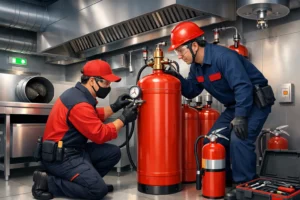
This is why suppression system inspections should never be treated as routine paperwork. Nozzle caps must be present and clean. Fusible links must be replaced at required intervals. Cylinders must be in acceptable condition and pressure range. Detection lines, pull stations, fuel shutoff interlocks, and alarm connections must all be verified. Mechanical discharge testing, where applicable, provides additional confidence that system actuation will occur as intended.
A common failure point is the assumption that a system is ready because it has not been used. In reality, inactivity can hide problems. Grease contamination, obstructed nozzles, painted components, damaged pipework, inaccessible pull stations, and undocumented modifications all reduce system reliability. In audited environments, missing tags or incomplete service records create another layer of risk because they raise compliance concerns even before physical deficiencies are confirmed.
Daily kitchen practices that lower ignition risk
The strongest fire prevention program still depends on operator discipline. Daily habits determine whether grease accumulation stays manageable or accelerates between service visits. Line staff should understand that cleanup is part of fire prevention, not just sanitation.
Fryer management is one of the biggest factors. Oil levels need to stay within manufacturer limits, and boil-outs or filtration schedules must be followed. Overflowing oil, excessive crumb accumulation, and poorly maintained fryer batteries create predictable ignition conditions. Cooking equipment also needs proper clearance from combustibles, and portable appliances should not be placed under protected areas unless the suppression design allows for them.
Another frequent issue is heat source misuse. Staff may leave burners running under empty pans, delay shutdown during cleaning, or improvise with foil, racks, or accessories that interfere with airflow and grease capture. These shortcuts often develop during peak periods when production pressure is highest. That is exactly when controls need to be strongest.
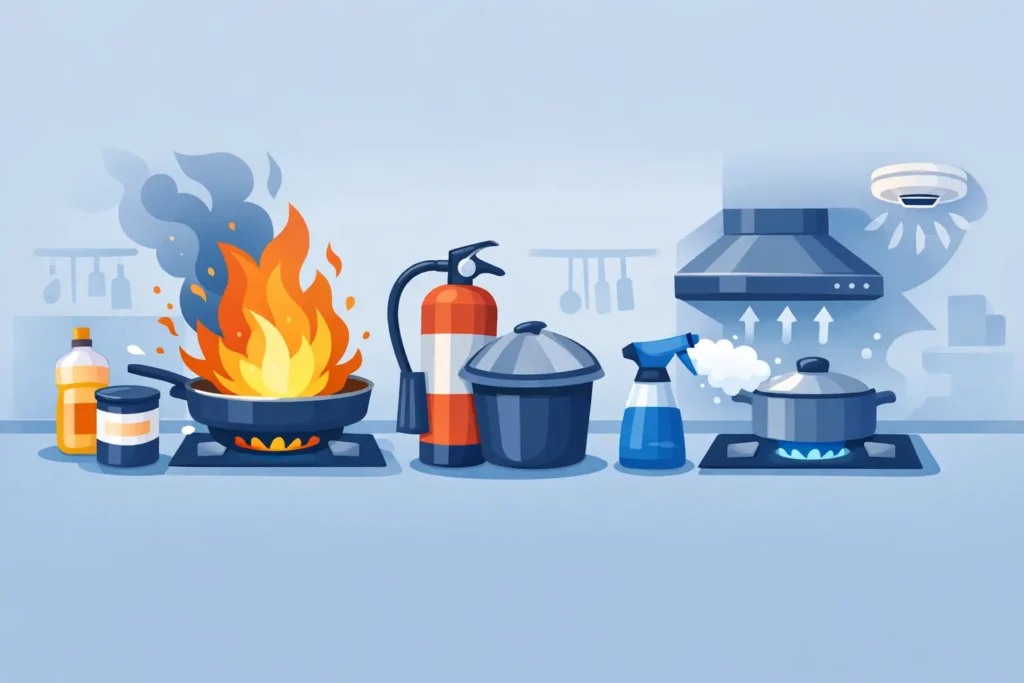
Training must be practical and repeated. Employees should know how to activate the manual pull station, when to use a Class K extinguisher, and when not to attempt manual firefighting. They should also understand that water on a grease fire can rapidly intensify the incident. A written procedure is necessary, but hands-on orientation and supervisor enforcement matter more.
Inspections should be built around compliance, not guesswork
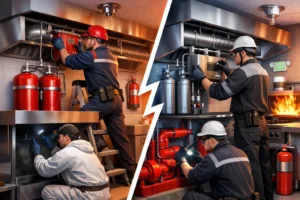
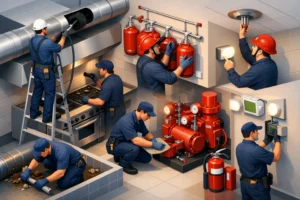
The fastest way to lose control of kitchen fire risk is to separate cleaning, suppression service, and compliance documentation into disconnected tasks. When vendors work in silos, deficiencies are easier to miss. A hood may be cleaned without noting nozzle obstruction. A suppression inspection may be completed without addressing fan hinge access, grease conditions, or changes to cooking equipment layout.
A compliance-driven inspection process looks at the kitchen as one risk environment. That includes suppression components, exhaust cleanliness, appliance coverage, discharge path integrity, fuel and power shutdown coordination, and alarm interface where required under NFPA 72. It also means documenting findings with enough detail that management can act on them before an AHJ visit, insurance review, or internal audit.
Photographic reporting is especially useful in multi-unit operations, hotels, and resorts where the decision-maker may not be on site. It turns a technical issue into a visible operational item. If a duct section shows heavy accumulation or a nozzle is misaligned over a fryer battery, there is less room for delay or misunderstanding.
The hidden cost of postponing corrective action
Most operators do not ignore fire risk intentionally. They postpone action because the kitchen is busy, the problem does not appear urgent, or the equipment still seems to work. That logic is expensive. Grease-related incidents rarely happen at a convenient time, and the cost is not limited to damage repair.
There is also business interruption, spoiled inventory, canceled bookings, staff displacement, emergency cleanup, reputational damage, and possible insurance disputes if service records are incomplete. For hospitality facilities, one kitchen shutdown can affect guest experience across multiple revenue areas. For restaurants, even a short closure can break labor scheduling and cash flow.
Corrective maintenance is almost always less disruptive than emergency response. The challenge is that prevention requires structure. Someone has to own the schedule, review the findings, approve repairs, and verify that the work was completed. This is why many commercial operators move toward ongoing inspection and maintenance programs rather than isolated service calls.
A practical standard for safer kitchens
If your goal is to reduce grease fire risk in kitchens, set a standard that can be defended during an inspection and relied on during a real incident. That means matching hood and duct cleaning frequency to actual grease production, maintaining suppression systems to code and manufacturer requirements, replacing worn or expired components on time, and training staff on fire response without shortcuts.
It also means reviewing changes in menu, equipment, and production volume. A kitchen that expands fryer output, adds a charbroiler, or extends service hours changes its risk profile immediately. Safety controls must change with it. What passed six months ago may already be outdated.
For operators who need audit readiness as well as protection, the strongest approach is documented preventive service from specialists who understand commercial cooking hazards, wet chemical system performance, and the compliance expectations around NFPA 17A and NFPA 96. Fire Patrol works in that space because kitchen fire prevention is not a side service. It is a technical discipline.
The safest commercial kitchens are not the ones that look clean right before an inspection. They are the ones managed consistently enough that a surprise inspection, a dinner rush, and a fire event all meet the same prepared system.