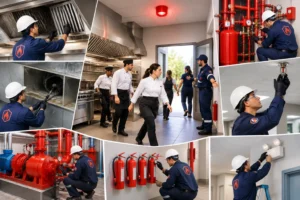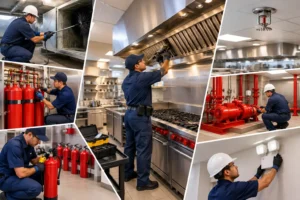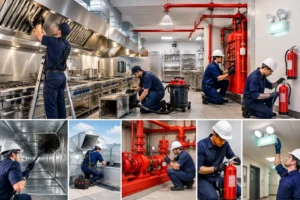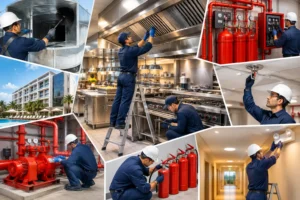
An inspection rarely shuts down a commercial kitchen because of one dramatic failure. More often, closure happens after small, repeated gaps were left unresolved – grease in the duct, missing records, blocked nozzles, expired fusible links, poor sanitation, or an alarm interface that does not respond as required. If you are asking cómo evitar cierre por inspección, the answer is not a last-minute cleanup. It is a documented, standards-based maintenance program that keeps the kitchen ready before the inspector arrives.
For restaurants, hotels, resorts, and high-volume foodservice operations, the stakes are operational as much as regulatory. A failed inspection can stop service, affect guest experience, trigger corrective deadlines, complicate insurance claims, and expose ownership to liability. In busy kitchens, compliance cannot depend on memory or emergency calls. It has to be scheduled, verified, and recorded.
Cómo evitar cierre por inspección starts with control, not reaction
The kitchens that pass consistently tend to operate the same way. They do not wait for visible problems. They maintain fire suppression systems, exhaust hoods, ducts, refrigeration areas, and sanitation controls on a fixed cycle, and they keep service evidence organized.
This matters because inspectors do not evaluate only whether equipment exists. They evaluate whether it is functional, accessible, properly maintained, and supported by records. A suppression system installed five years ago is not automatically compliant today. If nozzles are capped incorrectly, cylinders are out of range, detection components are overdue, or discharge mechanisms have not been tested, the system may be treated as deficient even if it looks intact.
That same logic applies to grease management. Hood and duct cleaning is not cosmetic work. Excess grease is both a fire load and an inspection red flag. Under NFPA 96, the condition of the exhaust system is tied directly to fire risk. If grease accumulation is significant, the issue moves beyond cleanliness and into life safety.
The inspection failures that lead to closure most often
In commercial kitchens, closure risk usually builds around a combination of fire protection, sanitation, and documentation failures. When those categories overlap, the operator has less room to negotiate corrective time.
Fire suppression deficiencies
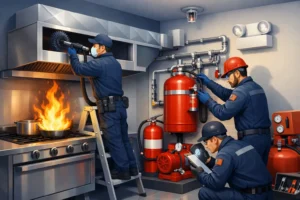
Wet chemical suppression systems must be inspected and maintained as installed and listed. That includes cylinder pressure review, nozzle inspection and cleaning, fusible link replacement where applicable, mechanical actuation review, and verification that the system will shut down fuel or power when required. If the system protects cooking appliances but key components are impaired, the kitchen may be considered unsafe to operate.
A common mistake is treating the suppression system as a sealed box that only matters after a fire. In reality, inspectors look for the opposite – proof that the system is routinely serviced and ready to discharge correctly.
Hood and duct grease buildup
Grease accumulates gradually, which makes it easy to ignore until it becomes obvious. Inspectors do not ignore it. Heavy buildup in hoods, filters, ducts, or fans suggests poor preventive control and increases the chance of flame spread beyond the cooking line. Even if the suppression system is current, a dirty exhaust path can still trigger serious findings.
Missing or weak documentation
A kitchen may be better maintained than it appears, but without records, it can fail as if no work was done. Service reports, inspection tags, cleaning records, corrective action logs, and photo documentation all matter. For larger hospitality groups, documentation also supports corporate audits and insurance review.
Sanitation and operational neglect
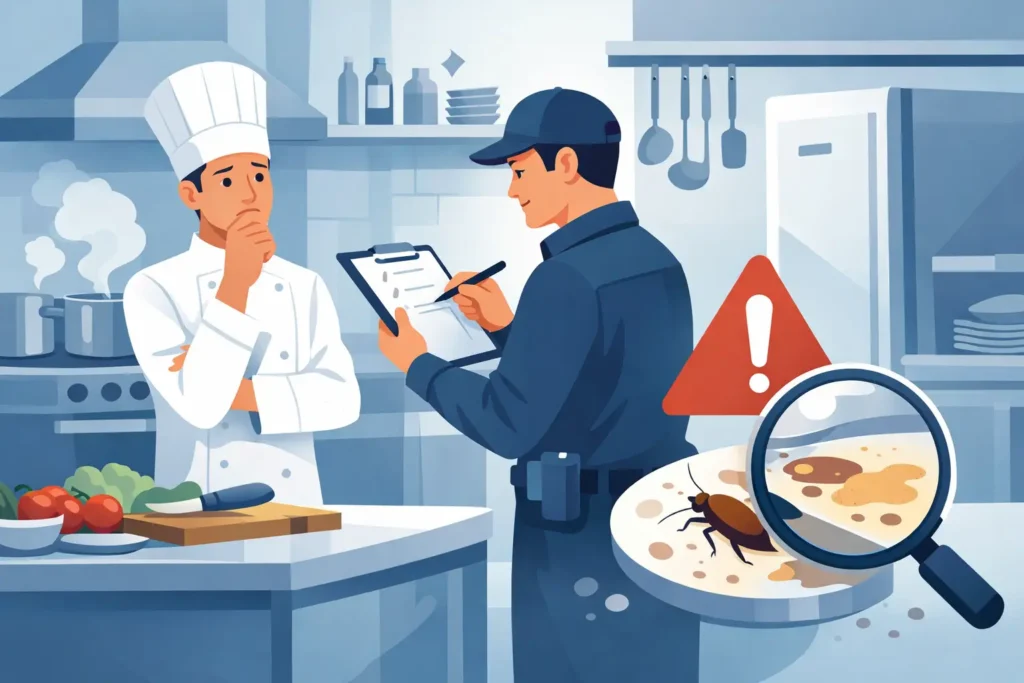
Food debris, blocked access to safety equipment, poor housekeeping around cooking lines, and neglected refrigeration issues can all reinforce an inspector’s decision that the facility is not under control. Not every sanitation issue causes immediate closure, but when paired with fire code deficiencies, the overall risk profile rises fast.
What a closure-prevention program should include
If your goal is to understand how to avoid closure by inspection in practical terms, build your program around recurring verification instead of isolated service calls.
Scheduled suppression system inspections
The suppression system should be inspected on a defined frequency consistent with applicable standards, manufacturer requirements, local authority expectations, and the actual use level of the kitchen. High-volume cooking, greasy processes, and long operating hours increase wear and contamination. A calendar-based schedule is the minimum. A risk-based schedule is better.
Inspection should include more than a visual look. Pressure condition, nozzle alignment and cleanliness, actuation components, pull station accessibility, control head condition, and shutdown integration should all be reviewed. In many kitchens, the issue is not total system failure but partial impairment – enough to fail inspection when discovered.
Hood, duct, and exhaust cleaning based on production load
A quarterly cleaning interval may be appropriate for one kitchen and inadequate for another. The cooking process matters. Solid fuel, wok cooking, charbroiling, and heavy frying create different grease loads than lighter menu formats. The right schedule depends on actual production, not assumptions.
Documentation should identify what was cleaned, what could be accessed, what conditions were found, and whether further corrective work is required. A vague invoice is weaker than a technical report with site-specific observations.
Corrective actions with closure risk in mind
Not every deficiency has the same urgency. A missing report and a blocked nozzle should not be treated alike. Operators need a correction process that ranks findings by risk, assigns responsibility, and sets deadlines that reflect inspection exposure.
This is where many facilities lose time. They complete the inspection but delay the repair. From an enforcement perspective, identifying a problem without correcting it does not reduce risk. It confirms it.
Documentation is part of compliance, not paperwork
One of the clearest ways to reduce inspection exposure is to make records immediately available and technically credible. That means service dates, test results, noted deficiencies, completed corrections, and photographic evidence when relevant. In multi-unit operations, this should be standardized across sites.
Inspectors and auditors want to see continuity. They want evidence that the kitchen is not being prepared only for the day of inspection. A clean binder or digital file with current reports, suppression service records, hood cleaning confirmations, and follow-up actions creates confidence that the facility is under active control.
For operators with insurance concerns, this documentation also matters after an incident. If a fire occurs and service history is incomplete, questions about compliance and maintenance can affect claim review.
How managers can reduce risk between service visits
Even strong contractors cannot protect a kitchen that is neglected daily. The operating team has to preserve the condition of the systems between formal inspections.
Managers should verify that nozzles remain unobstructed, appliance placement has not changed beyond protected coverage, pull stations are accessible, and staff are not hanging items on pipes, cables, or detection lines. Filters should be in place, grease containers managed, and visible buildup addressed before it becomes systemic.
Training also matters. Staff should know what the suppression system does, what not to touch, and who to call when there is damage, discharge, or unusual equipment behavior. A kitchen can fall out of compliance simply because someone removed a cap, shifted a fryer, or ignored a fault condition.
Cómo evitar cierre por inspección in multi-unit and hospitality environments
Hotels, resorts, and multi-location brands face an extra challenge: inconsistency. One property may have a strong engineering team while another relies on reactive maintenance. One outlet may keep records organized while another cannot produce a current tag. Inspectors do not grade on corporate intention. They grade the site in front of them.
That is why closure prevention in hospitality requires central oversight with local execution. Service frequencies, report formats, deficiency tracking, and proof of correction should be standardized. Otherwise, weak locations become repeat risks.
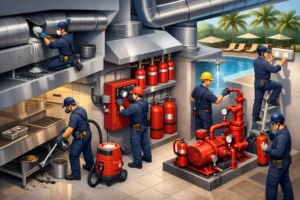
For this reason, many operators work with specialized kitchen compliance providers rather than general maintenance vendors. A technical partner familiar with NFPA 17A, NFPA 96, alarm integration expectations under NFPA 72, and audit-ready reporting can identify issues before the AHJ, health department, insurer, or brand auditor does. That is the operational value companies like Fire Patrol bring when the objective is not just service, but uninterrupted operation.
When last-minute preparation is not enough
There are times when a facility can clean aggressively, organize records, and correct a few obvious items before an inspection and still fail. That usually happens when the underlying maintenance cycle has been neglected for too long. Expired components, inaccessible duct sections, poor discharge testing history, damaged piping, and recurring sanitation gaps are not same-day fixes.
The hard truth is simple: inspection success is usually decided weeks or months before the inspector enters the building. If your kitchen only becomes compliant under pressure, it is not truly compliant.
The most reliable path is to treat inspection readiness as part of normal operations. Schedule technical service before problems become visible. Track deficiencies until they are closed. Keep records current. Review high-risk equipment more often than the minimum when production demands it. When your kitchen is maintained that way, inspection stops being a disruption and becomes a verification of the work already done.
A commercial kitchen stays open when safety systems, sanitation controls, and documentation all tell the same story – this facility is being managed before risk has a chance to manage it.