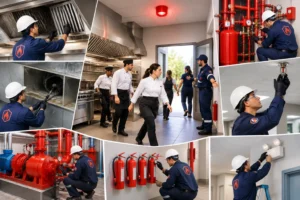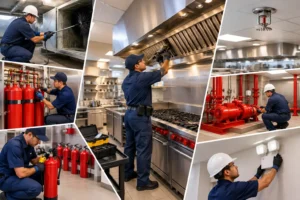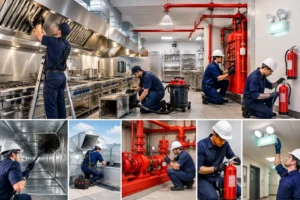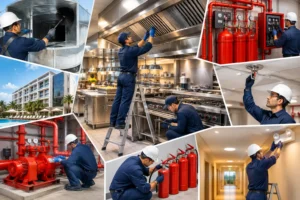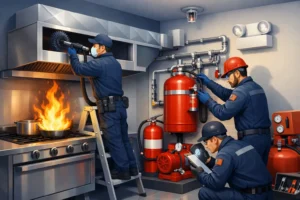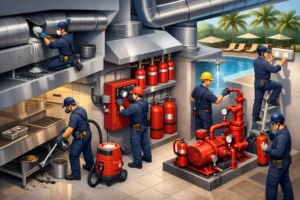
A kitchen suppression system usually gets attention only when an inspector asks for records or when a fire risk becomes impossible to ignore. That is the wrong moment to think about mantenimiento sistema ANSUL restaurante. In a commercial kitchen, delayed service is not just a maintenance issue – it is a compliance gap, an insurance exposure, and a direct threat to continuity of operations.
For restaurants, hotels, resorts, and institutional foodservice operations, the ANSUL wet chemical system is part of a larger life safety chain. If one part of that chain is compromised – blocked nozzles, missing caps, grease contamination, low cylinder pressure, damaged detection line, expired fusible links, poor alarm interface – the system may not perform as designed during a fire event. A tag on the tank is not enough. What matters is whether the system is serviceable, documented, and aligned with applicable standards.
What maintenance of an ANSUL restaurant system actually involves
The mantenimiento sistema ANSUL restaurante is not limited to a quick visual check. In a code-driven environment, maintenance means structured inspection, functional review, corrective action, and documented evidence. The objective is simple: verify that the suppression system will detect, actuate, discharge, and support shutdown functions when a cooking fire occurs.
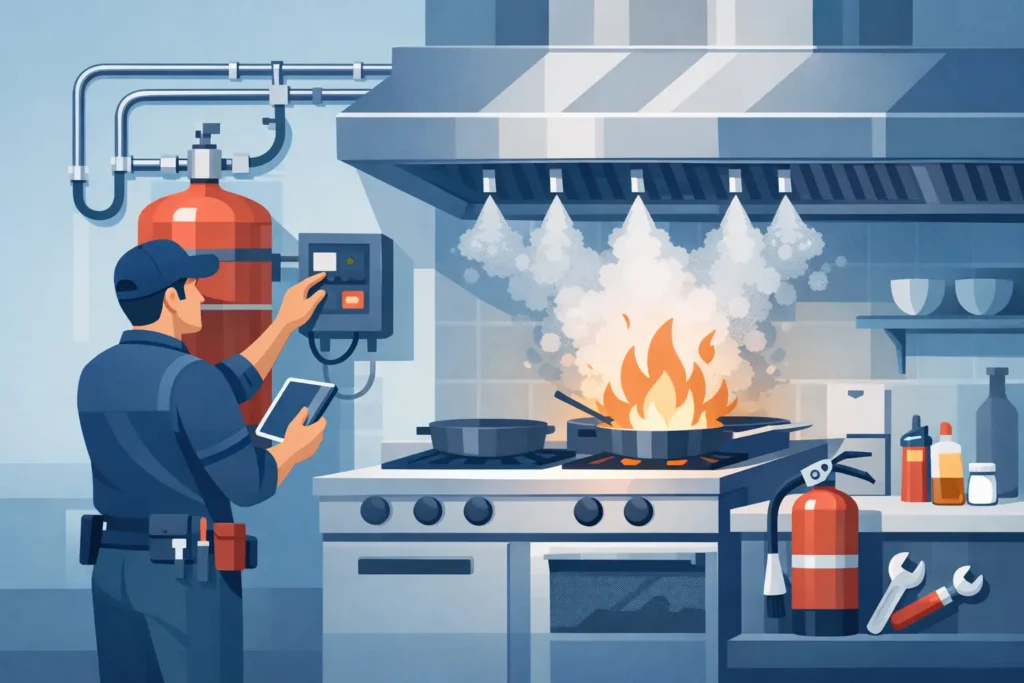
A proper service visit typically includes verification of cylinder condition and pressure status, inspection of nozzles and blow-off caps, review of piping integrity, examination of manual pull stations, confirmation of mechanical or pneumatic actuation components, and replacement of fusible links when required by the service schedule or environmental condition. It also includes confirming appliance coverage and making sure equipment layout has not changed since the system was designed.
That last point is often overlooked. Restaurants move fryers, griddles, charbroilers, and range equipment more often than many operators realize. If cooking appliances are added, removed, or shifted without updating suppression coverage, the system may leave part of the hazard unprotected. From a compliance and liability standpoint, that is a serious problem.
Why restaurant ANSUL maintenance cannot be treated as routine housekeeping
Grease-laden commercial kitchens create harsh operating conditions. Heat, vapor, cleaning chemicals, vibration, and airborne grease affect suppression components over time. Even when the system looks intact from the outside, hidden deficiencies can build up between service intervals.
Nozzles are a common example. If caps are missing or grease buildup enters the discharge path, the wet chemical agent may not distribute correctly over the hazard area. Fusible links may also degrade faster in kitchens with heavy production volume, high ambient temperatures, or poor hood and duct hygiene. In those settings, maintenance intervals may require closer operational attention even when formal inspection frequencies remain fixed.
There is also a business reality here. A restaurant that fails a fire inspection, insurance review, brand audit, or safety assessment can face forced corrections, reputational damage, and possible interruption of service. For hospitality operators, downtime is expensive. For multi-unit brands and hotels, it can also affect guest experience and corporate compliance reporting.
Inspection frequency and service intervals
Most operators know there is a recurring inspection requirement, but fewer understand what that schedule is supposed to accomplish. Service frequency for a wet chemical kitchen suppression system is typically tied to applicable standards, manufacturer requirements, system condition, and the operating environment. Semiannual inspection is commonly expected for commercial kitchen fire suppression systems, but frequency alone does not guarantee compliance.
A six-month visit that skips documentation, ignores damaged components, or fails to identify appliance changes is not a complete maintenance program. The real standard is not whether someone showed up. The real standard is whether the system was inspected, deficiencies were identified, corrective actions were clearly documented, and the kitchen can demonstrate readiness during an audit or claim review.
For high-volume kitchens, older systems, or facilities with recurring grease accumulation issues, a more disciplined preventive approach is often warranted. Hood and duct cleaning, refrigeration and HVAC performance, and suppression condition are connected operationally. Excess heat, poor airflow, and grease loading can increase fire risk even when the suppression system itself has not yet failed.
Key failure points found during mantenimiento sistema ANSUL restaurante
In the field, the same deficiencies appear repeatedly. Some are minor and correctable on the spot. Others create immediate compliance concerns and require prompt repair before the kitchen should continue operating at full risk.
One frequent issue is obstructed or contaminated nozzles. Another is missing nozzle caps, which leaves the discharge opening exposed to grease and debris. Technicians also find fusible links that were never replaced on schedule, cylinders outside acceptable pressure condition, worn or damaged detection cable, inaccessible pull stations, and disconnected electrical or gas shutdown interfaces.
Alarm integration matters as well. If the system discharges but the required notification, fuel shutoff, or equipment shutdown sequence does not occur, the suppression event may not fully control the hazard. This is where coordination under NFPA 72 and related fire alarm practices becomes operationally significant, especially in larger hospitality facilities.
Documentation failures are just as serious as hardware failures. If there is no service record, no deficiency report, no photographic evidence, and no corrective action trail, the operator may struggle to prove compliance after an incident or during a formal inspection.
The standards side: why documentation matters
Restaurant operators do not need to memorize every code section, but they do need to understand the compliance framework that governs these systems. Wet chemical suppression systems in commercial cooking operations are generally maintained within the expectations of NFPA 17A and NFPA 96, along with manufacturer instructions and local authority requirements.
That means maintenance is not a casual service call. It is a technical procedure with compliance consequences. The technician should evaluate the condition of the system, identify code-impacting deficiencies, and issue records that support audit readiness. A professional maintenance file should show service date, findings, corrective actions, replaced components where applicable, and the current status of the system.
This is especially relevant for hotels, resorts, franchised restaurants, and institutional kitchens where third-party audits are common. The absence of proper records can raise concerns even when the equipment appears functional. In many operations, paperwork is part of the protection strategy.
Maintenance and kitchen operations are directly connected
There is a tendency to treat suppression maintenance as separate from kitchen productivity. In practice, they are tightly linked. A poorly maintained ANSUL system increases the chance of a small cooking fire becoming a shutdown event. It also complicates reopening timelines, insurance coordination, and post-incident reporting.
Good maintenance planning reduces disruption. Service can be scheduled around production windows, and corrective actions can be prioritized before they become urgent. For high-output kitchens, that level of planning matters. It protects service continuity while keeping the operation inspection-ready.
This is also where specialized providers add value. A contractor focused on commercial kitchen environments understands the relationship between suppression systems, hood and duct conditions, appliance lineups, sanitation pressures, and audit demands. Fire Patrol, for example, approaches service from that operational and compliance perspective rather than treating the system as an isolated device.
When a restaurant should schedule service sooner
Operators should not wait for the next routine inspection if warning signs appear. Service should be requested sooner when there has been a kitchen remodel, equipment relocation, discharge event, visible grease contamination on suppression components, failed inspection, alarm interface issue, or uncertainty about the last fusible link replacement.
The same applies when tags are missing, records are incomplete, or the kitchen has changed ownership or management. Transition periods often expose gaps in maintenance history. If no one can confirm what was inspected, replaced, tested, or corrected, the safest approach is to schedule a full technical review.
Choosing the right maintenance approach
Not every service vendor delivers the same level of technical control. For restaurant operators, the right approach is preventive, documented, and kitchen-specific. That means more than checking a box. It means understanding hazard coverage, verifying discharge readiness, reviewing interfaced shutdowns, and issuing records that support insurance, AHJ review, and internal compliance programs.
A lower-cost service call may appear attractive, but it can become expensive if deficiencies are missed and the system fails during an event. On the other hand, an overly aggressive replacement recommendation is not always justified either. The right decision depends on system age, condition, parts availability, code status, and whether the installed equipment still matches the cooking hazard.
That is why disciplined inspection matters. It provides a technical basis for repair, continued service, or system upgrade.
Restaurant fire protection is measured before the emergency happens. If your kitchen relies on ANSUL suppression, maintenance should be treated as a controlled safety process with records, frequency, and corrective action – not as a last-minute response before the next inspection.