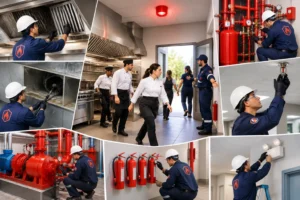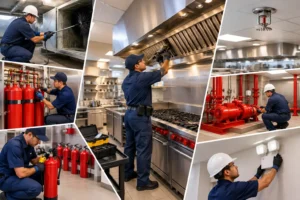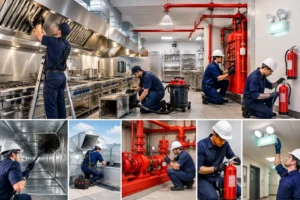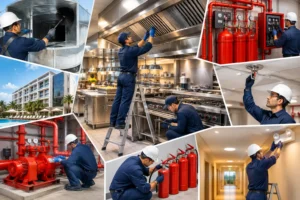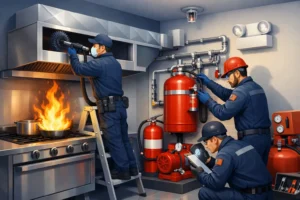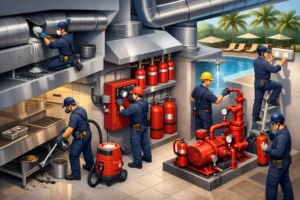
A failed kitchen inspection rarely starts with the fire suppression tank. It usually starts above the cookline, where grease has been collecting out of sight in the hood, filters, plenum, and ductwork. That is why nfpa 96 hood cleaning requirements matter to every restaurant, hotel, resort, and institutional kitchen that depends on continuous operation and audit readiness.
NFPA 96 is the standard that governs ventilation control and fire protection of commercial cooking operations. For operators, it is not just a cleaning guideline. It is a risk-control standard tied directly to fire spread, system performance, insurance scrutiny, and the condition of the entire exhaust system. If grease is allowed to accumulate beyond acceptable levels, the hazard is no longer cosmetic or sanitary. It becomes a fuel load inside a fire pathway.
What NFPA 96 hood cleaning requirements actually cover
When people refer to hood cleaning, they often mean only the visible canopy over the cooking line. NFPA 96 takes a much broader view. The standard applies to the entire commercial kitchen exhaust system, including the hood, grease removal devices, fans, ducts, and other appurtenances associated with the system.
That distinction matters during inspections. A hood that looks clean from the kitchen floor can still fail compliance if the duct riser, fan base, hinge area, or plenum contains grease deposits. In practical terms, a compliant cleaning service must address the full system, not just the surfaces that are easy to access.
The standard also expects cleaning to remove combustible grease deposits to bare metal where accessible. That phrase is important. It sets the benchmark above superficial wiping. If grease remains layered on interior exhaust surfaces, the work may not satisfy the requirement even if the hood appears improved visually.
Cleaning frequency under NFPA 96
One of the most misunderstood parts of nfpa 96 hood cleaning requirements is frequency. NFPA 96 does not impose one universal schedule for every kitchen. It sets cleaning intervals based on the type and volume of cooking operation.
High-volume operations such as 24-hour cooking, charbroiling, or wok cooking generally require more frequent service. Moderate-volume kitchens often fall on a quarterly cycle. Low-volume operations may be inspected and cleaned less often, while seasonal or low-grease facilities can sometimes justify different scheduling. Solid fuel cooking introduces its own higher-risk profile and often demands stricter attention.
This is where operators get into trouble. Many businesses assume that a fixed calendar schedule means they are compliant. In reality, the correct interval depends on grease production, menu type, cooking methods, and actual system condition. A kitchen running fryers, griddles, and charbroilers for extended service periods will build deposits much faster than a pantry kitchen or limited-use café.
For that reason, a proper service program should be based on both standard interval categories and field observation. If grease accumulation exceeds acceptable levels before the next scheduled service, the schedule is already too loose.
Typical cleaning interval ranges
NFPA 96 commonly aligns cleaning frequency with operational demand. High-volume systems may need monthly service. Moderate-volume kitchens are often scheduled quarterly. Lower-volume operations can extend to semiannual service, while annual service may apply only to very limited-use systems. The key point is that the kitchen must be cleaned often enough to prevent dangerous accumulation, not merely often enough to satisfy internal budgeting.
Inspection is what drives the schedule
The standard places strong emphasis on inspection. That matters because cleaning frequency should be supported by what a qualified technician actually finds in the system.
A documented inspection reviews grease buildup, fan condition, duct access, filter status, plenum contamination, and any deficiencies that could interfere with fire safety. If access panels are missing, fan hinges are damaged, or the system cannot be fully reached, cleaning quality and compliance both suffer.
This is also where operational reality comes in. Two kitchens with similar equipment can require very different schedules based on menu, throughput, staffing practices, and filter maintenance. A busy hotel kitchen serving breakfast, banquet, and late-night menus may generate far more residue than a restaurant with narrower service periods.
In a compliance-driven environment, inspection is not paperwork after the job. It is the basis for determining whether the current service interval is adequate.
What a compliant hood cleaning should include
A proper exhaust cleaning scope should address all accessible areas of the grease exhaust system. That includes the hood interior, filters, plenum, horizontal and vertical duct runs, and exhaust fan components. If the fan discharges grease onto the roof or the hinge area is packed with deposits, the system is not under control.
Cleaning should also be coordinated carefully around fire protection components. Nozzles, detection lines, fusible links, pull stations, gas or electric shutoff interfaces, and alarm connections should not be damaged, obstructed, or contaminated during service. This is one of the reasons kitchen operators benefit from contractors who understand both NFPA 96 and suppression system requirements under NFPA 17A.
There is a practical trade-off here. A low-cost cleaning provider may focus on visible surfaces and work fast during off-hours, but that can leave hidden hazards in place. A standards-based service takes more effort because it verifies access, protects system components, identifies deficiencies, and documents conditions that affect compliance.
Bare metal is the standard, not visual improvement
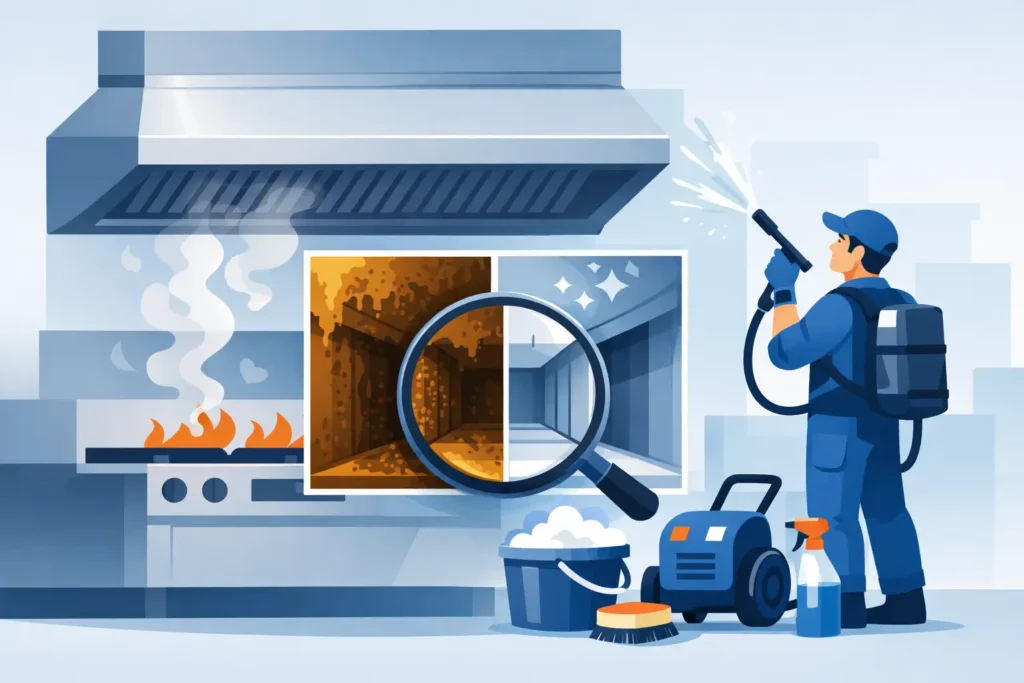
NFPA 96 is concerned with combustible residue. If the hood interior still has grease film, sludge, or layered deposits after cleaning, the fire load remains. This is why photographic documentation before and after service is so valuable. It establishes what was present, what was cleaned, and whether additional corrective action is needed.
Documentation is part of compliance
Operators often treat hood cleaning as a vendor task instead of a compliance record. That is a mistake. If a fire incident, insurance review, health audit, or authority having jurisdiction asks for evidence, you need more than a verbal assurance that the hood was serviced.
A strong documentation package should identify the serviced location, service date, observed conditions, cleaned components, inaccessible areas if any, and recommended corrective actions. Photo records are especially useful when there are deficiencies such as damaged access doors, excessive grease accumulation, fan belt issues, or deteriorated components.
Service labeling matters as well. NFPA 96 commonly expects a label or certificate to indicate when the system was cleaned and by whom. That label is not the entire compliance file, but it is part of the field record and often one of the first things inspectors look for.
For multi-unit operators, documentation also supports internal consistency. It helps maintenance directors compare locations, identify repeat deficiencies, and defend preventive maintenance decisions across properties.
Common reasons kitchens fall out of compliance
Most exhaust system compliance failures are not caused by one major event. They build gradually through small omissions. Filters are not cleaned often enough. Fan access is poor. The contractor does not reach the full duct run. Heavy production increases, but the cleaning interval stays the same. Roof grease discharge is ignored. Suppression components are left exposed to contamination.
Another common issue is confusing kitchen sanitation with exhaust compliance. A kitchen may be clean at the line level and still have hazardous deposits in the plenum or duct. Sanitation teams and hood cleaners do different work. Operators need both.
There is also the problem of disconnected service vendors. If hood cleaning, suppression inspection, alarm integration, and corrective repairs are handled without coordination, gaps appear quickly. A kitchen can pass one service visit and still carry unresolved risk in another system.
How operators should manage NFPA 96 hood cleaning requirements
The safest approach is a structured preventive program, not on-demand cleaning after a failed inspection. That program should pair scheduled service with condition-based review. If cooking volume changes, the service interval should be reevaluated. If deficiencies are found, corrective actions should be documented and closed.
For hotels, resorts, and high-output restaurants, this usually means treating the exhaust system as part of a larger life-safety process. Hood cleaning should align with suppression inspections, fusible link replacement, nozzle condition review, and documented system readiness. Fire Patrol approaches this work from that operational perspective because kitchen risk is never isolated to one component.
The real goal is not simply to have a clean hood on the day an inspector walks in. It is to maintain an exhaust system that does not carry avoidable fuel load, does not compromise suppression performance, and does not create a preventable shutdown scenario.
If you are reviewing your current schedule, ask a harder question than whether the vendor came last quarter. Ask whether the full exhaust system is being inspected, cleaned to the required standard, and documented well enough to protect your operation when scrutiny arrives.