A failed suppression system rarely gives a second warning. In a commercial kitchen, a blocked nozzle, low cylinder pressure, damaged fusible link, or disconnected alarm tie-in can turn a manageable flare-up into a shutdown, an insurance dispute, or a major loss event. That is why a commercial kitchen fire suppression inspection is not a routine checkbox. It is a critical control that protects life safety, equipment, operations, and compliance.
For restaurants, hotels, resorts, commissaries, and institutional kitchens, the inspection process has to do more than confirm that a tank is hanging on the wall. It must verify that the wet chemical system can detect a fire, discharge correctly, shut down fuel or power where required, and protect the specific appliances sitting under the hood today – not the appliance layout from two years ago. In high-volume foodservice, small changes in kitchen configuration often create major compliance gaps.
What a commercial kitchen fire suppression inspection is supposed to verify
A proper inspection evaluates whether the suppression system remains serviceable, code-aligned, and matched to current kitchen risk. In most commercial cooking environments, that means checking the wet chemical fire suppression system in relation to NFPA 17A requirements, hood and duct conditions associated with NFPA 96, and system interfaces that may also involve alarm monitoring and notification.
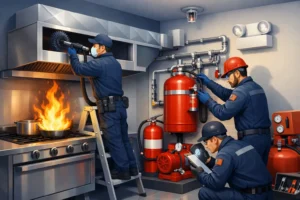
The inspection should confirm that cylinders are properly charged, nozzles are in place and protected, caps are intact where required, detection lines and fusible links are in acceptable condition, and manual pull stations are accessible and identified. It should also verify that the system has not been compromised by grease buildup, corrosion, vibration, appliance relocation, or undocumented service work.
That last point matters more than many operators realize. A kitchen may look clean and active while the protection system above the line no longer matches the actual hazard below it. Replace a fryer, add a charbroiler, move a range, or install a new appliance under the hood without adjusting nozzle coverage, and the system may no longer perform as designed.
Why inspection failures happen in operating kitchens
Most failures are not dramatic. They are gradual. Grease accumulates. Staff bump components during cleaning. A contractor disconnects something during equipment replacement. A nozzle cap goes missing. A fusible link ages past acceptable service life. A cylinder shows pressure loss that no one notices because the kitchen is still running.
In hospitality environments, another common problem is deferred maintenance caused by operating pressure. Managers do not want to interrupt service, especially in hotels, resorts, or multi-outlet facilities. But delaying inspection or corrective work does not reduce risk – it concentrates it. If an AHJ, insurer, brand auditor, or fire marshal identifies deficiencies first, the corrective timeline becomes tighter and the operational exposure becomes more expensive.
There is also a documentation problem in many facilities. Operators may have invoices from general service vendors, but not the detailed technical reporting needed to show what was inspected, what was tested, what deficiencies were found, and whether corrective actions were completed. For audit readiness and insurance defensibility, vague service history is not enough.
Key components checked during a commercial kitchen fire suppression inspection
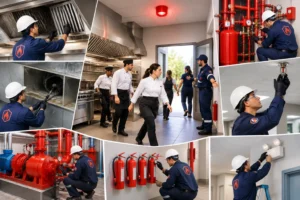
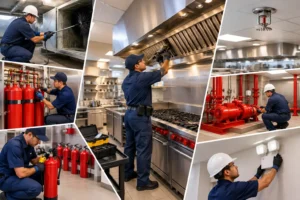
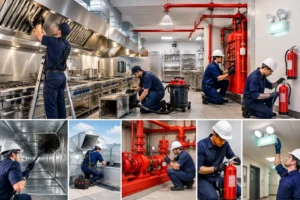
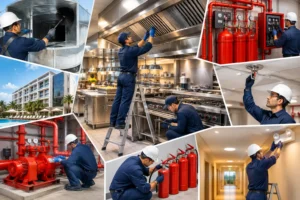
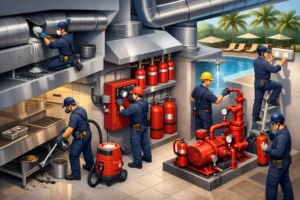
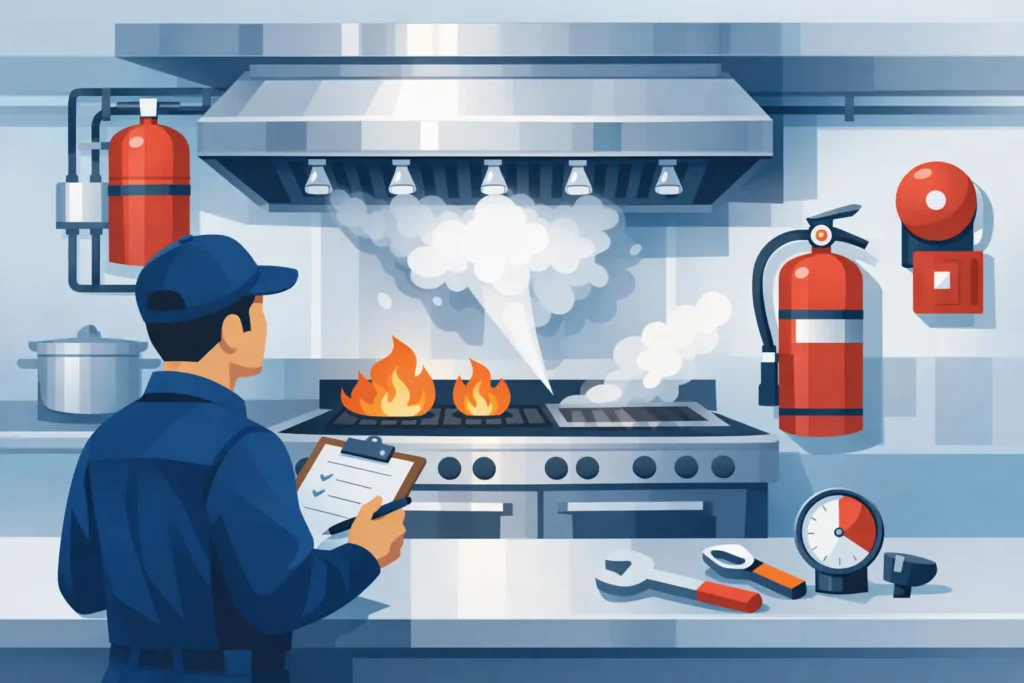
A credible inspection goes component by component and function by function. The cylinder assembly is reviewed for pressure condition, physical integrity, mounting, tamper status, and service date requirements. Detection devices and fusible links are checked for contamination, damage, and replacement interval issues. Distribution piping and discharge nozzles are inspected for blockage, misalignment, missing caps, corrosion, or evidence of tampering.
The inspection should also verify the manual actuation device, mechanical or electrical shutdown functions, and fuel or appliance interlocks where applicable. If the system is designed to shut off gas or electric supply upon discharge, that function must be confirmed as part of the inspection and testing scope. A suppression system that discharges but fails to cut fuel can still leave the kitchen exposed to reflash or ongoing fire conditions.
Alarm integration is another area where oversights are common. In some facilities, kitchen suppression activation must transmit a signal or interface with the fire alarm system under NFPA 72-related requirements. If those connections are disabled, bypassed, or undocumented, the deficiency is larger than the kitchen itself. It affects the building’s overall life safety response.
Inspection frequency is not where operators should cut corners
Many commercial kitchen suppression systems are inspected on a semiannual basis, but frequency alone does not guarantee compliance. The real question is whether the scope of work is complete and whether changing kitchen conditions are being captured between service visits. A busy operation with heavy grease production, frequent menu changes, or recurring equipment movement may need closer attention than the bare minimum calendar interval suggests.
This is where experienced kitchen-focused service providers add value. They understand that suppression cannot be treated as an isolated device. Hood condition, duct cleanliness, airflow performance, nozzle obstruction, appliance placement, and staff access to pull stations all affect readiness. A technically correct inspection considers the kitchen as an operating fire environment, not just a line item on a maintenance schedule.
What good documentation should include
If your provider finishes an inspection and leaves only a sticker, that is not enough. Professional reporting should identify the system type, protected appliances, inspection date, findings, deficiencies, corrective recommendations, and test results where applicable. Photo documentation is especially useful for showing nozzle condition, fusible link status, cylinder readings, appliance coverage, and any field issues that need follow-up.
For operators managing multiple kitchens, detailed records are not just administrative. They support capital planning, maintenance prioritization, and audit response. When an insurer, franchise reviewer, corporate risk manager, or authority requests proof of service, complete documentation shortens the conversation and reduces uncertainty.
This is also where a specialist company such as Fire Patrol fits naturally into the needs of hospitality operators. The value is not limited to inspection itself. It includes scheduling discipline, standards-based reporting, corrective action visibility, and service coordination that keeps kitchens compliant without unnecessary disruption.
Common deficiencies that should trigger immediate action
Some deficiencies can wait for scheduled corrective service. Others should not. Missing nozzle caps, obstructed nozzles, discharged or under-pressurized cylinders, expired fusible links, inaccessible pull stations, damaged detection lines, and failed shutdown interfaces should be treated as urgent. These conditions directly affect whether the system can activate and suppress fire as intended.
Operators should also act quickly when appliance layouts change. Even if the suppression hardware appears intact, coverage may be wrong. That is a design and compliance issue, not a cosmetic one. The system must protect the actual hazard footprint present today.
There are trade-offs, of course. Immediate corrective work may require brief downtime, access coordination, or after-hours scheduling. But the alternative is accepting a known impairment over an open-flame or high-heat cooking line. For most commercial kitchens, that is not a defensible operating decision.
How to choose the right inspection partner
Not every fire protection vendor is specialized in commercial kitchens. That distinction matters. Kitchen systems operate in grease-laden, high-heat, high-cleaning-frequency environments where components degrade differently than in standard building fire systems. The right provider should understand wet chemical systems, appliance hazard classifications, hood and duct conditions, shutdown sequences, fusible link replacement practices, and the documentation standards required for audits and insurance review.
Ask how deficiencies are reported, whether photos are included, whether mechanical discharge testing or interface verification is available when needed, and how corrective actions are scheduled. A provider focused on kitchen operations will speak in those terms. A generalist may only confirm that a tag was updated.
The strongest inspection programs are preventive, recurring, and documented. They do not wait for a failed audit, a denied claim, or an actual fire event to reveal gaps.
A commercial kitchen fire suppression inspection should give you more than a compliance date. It should give you confidence that the system above your cooking line will perform when heat, grease, and seconds are working against you.