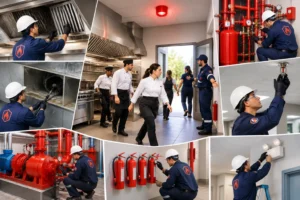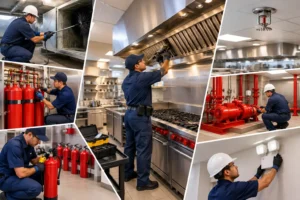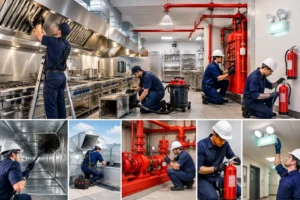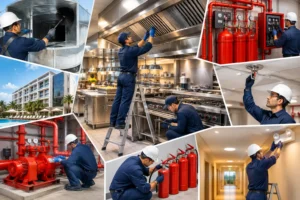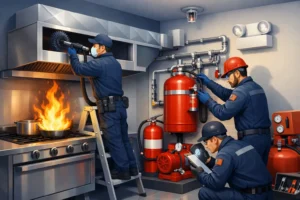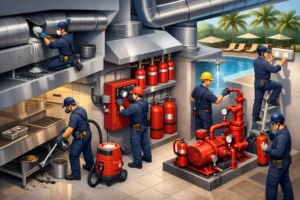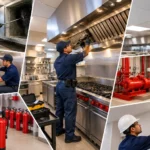
A kitchen fire does not wait for a convenient time. It happens during peak service, under a grease-loaded hood, with hot oil, open flame, electrical equipment, and staff moving fast. That is why wet chemical fire suppression system service is not a maintenance extra for commercial kitchens. It is a life safety requirement tied directly to fire control, code compliance, insurance protection, and business continuity.
In restaurants, hotels, resorts, commissaries, and institutional kitchens, the suppression system above the cooking line is only as reliable as its last documented inspection and the condition of its components. A system can look intact from the floor and still fail where it matters most – clogged nozzles, missing caps, worn fusible links, incorrect cylinder pressure, obstructed pull stations, or poor integration with fuel shutoff and alarm signaling. Service is what confirms the system will actually discharge as designed.
What wet chemical fire suppression system service actually covers
Proper wet chemical fire suppression system service goes beyond a quick visual check. In a compliant commercial kitchen program, service includes inspection, testing, cleaning, verification of mechanical and electrical functions, and documented reporting for audit and insurance review.
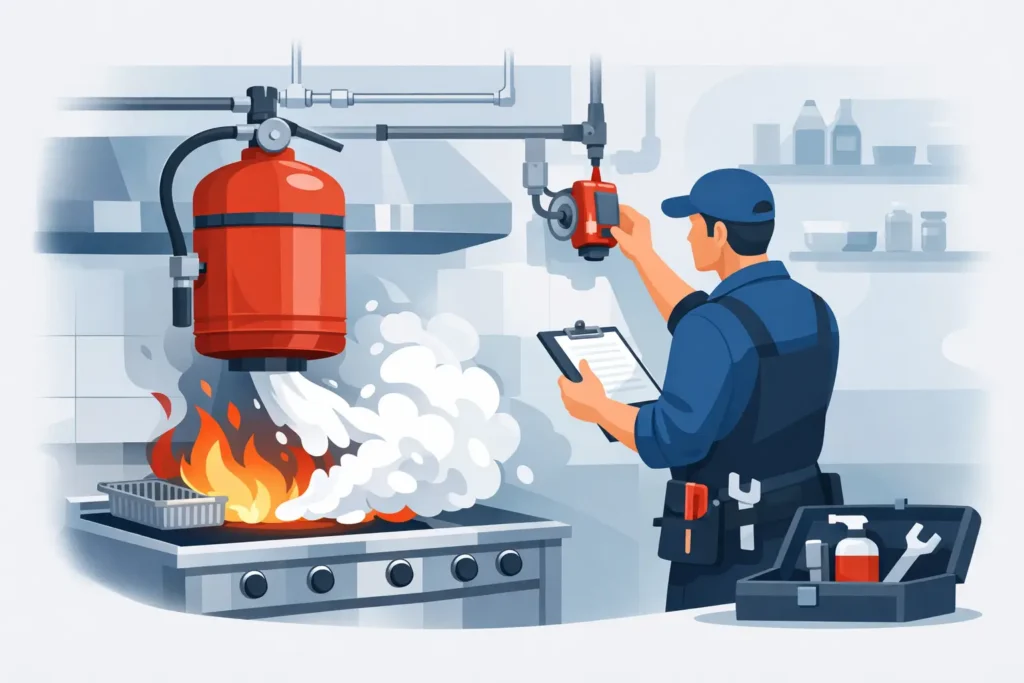
For most kitchen hazard applications, the system is designed to detect fire at the appliance level and discharge a wet chemical agent that suppresses flames and helps prevent reflash. That performance depends on several field conditions being correct at the same time. Detection lines or fusible links must be in place and suitable for the appliance layout. Nozzles must be correctly aimed, unobstructed, and protected. The agent cylinder must be charged within specification. Manual actuation must be accessible and functional. Fuel and power shutoff devices must respond correctly. Where required, alarm monitoring and interconnection must align with NFPA 72 signaling expectations.
If one part of that sequence fails, the entire protection strategy is weakened. That is why service has to be systematic, not improvised.
Why scheduled service matters in commercial kitchens
Commercial cooking environments are harsh on fire protection equipment. Heat, grease vapor, vibration, cleaning chemicals, equipment movement, and daily production all affect system condition over time. A kitchen can pass a casual walkthrough and still carry hidden deficiencies that surface only during a fire event or an authority having jurisdiction inspection.
Scheduled service reduces three immediate risks. First, it lowers the chance of discharge failure during a grease fire. Second, it helps avoid failed inspections that can delay openings, renewals, or operating approvals. Third, it supports insurance defensibility by showing the owner maintained the protection system according to applicable standards and manufacturer requirements.
This is especially important in hospitality operations where downtime carries outsized consequences. A shut-down kitchen affects guest service, banquet schedules, room operations, tenant obligations, and brand reputation. In multi-unit operations, one neglected suppression system can create enterprise-level exposure.
Wet chemical fire suppression system service and code compliance
For commercial kitchens, service should always be viewed through a compliance lens. NFPA 17A governs wet chemical extinguishing systems, and NFPA 96 sets the operational fire safety framework for ventilation control, grease management, and cooking equipment protection. These standards are not abstract references. They shape what gets inspected, how often service occurs, and what deficiencies require corrective action.
A compliant service visit typically confirms that the protected appliances still match the system design. This point is often missed after equipment changes. If a fryer is replaced, a griddle is added, or an appliance is relocated, nozzle coverage and hazard classification may no longer be correct. The suppression system might still be present, but no longer properly engineered for the actual cooking line.
Documentation is just as important as the physical work. Inspectors, insurers, and risk managers want evidence of service dates, findings, corrective actions, pressure condition, link replacement, nozzle status, and system tagging. If there is no clear record, the service may be difficult to defend during an audit or post-loss investigation.
What a qualified service technician should inspect
A technical inspection should be disciplined and repeatable. The technician is not just checking for visible damage. The goal is to verify system readiness under real operating conditions.
That includes reviewing cylinder pressure or weight as applicable, confirming the condition of cartridge-operated or stored-pressure components, examining detection hardware, replacing fusible links at the proper interval, checking manual pull stations, and verifying that gas valves, electrical shunt trips, or other utility shutdown functions operate correctly. Nozzle inspection and cleaning are also critical because grease contamination can block discharge patterns.
The surrounding kitchen environment matters too. Hood and duct conditions, appliance placement, and access to pull stations can all affect suppression performance. If grease accumulation is excessive, if nozzle caps are missing, or if cooking equipment has shifted outside the protected zone, the system may no longer provide the intended protection.
In higher-accountability facilities, reporting should include photos and clear deficiency notes. That gives operators, maintenance teams, and compliance managers a usable record instead of a generic service sticker.
Common problems found during service calls
In active kitchens, the same issues appear repeatedly. Fusible links are often overdue for replacement. Nozzles may be coated with grease or painted over after ceiling or hood work. Appliance lineups are changed without updating system coverage. Pull stations are blocked by shelving, carts, or stored materials. Cylinder pressure can drift out of range. In some cases, alarm tie-ins or gas shutoff devices have been bypassed or left untested after other contractor work.
None of these problems are minor. A system that discharges late, incompletely, or without shutting down the fuel source can allow fire spread beyond the appliance. That increases the likelihood of hood, duct, and structural involvement, followed by longer closures and more expensive recovery.
This is where preventive service has a clear advantage over reactive repair. If the only time the system gets attention is after a failed inspection or emergency discharge, the operator is already behind.
Service intervals, scheduling, and operational planning
Most commercial kitchen operators benefit from a fixed inspection calendar rather than an as-needed approach. Semiannual service is common for many systems, but the exact schedule should reflect code requirements, manufacturer instructions, system type, and the kitchen’s production intensity.
High-volume operations usually need tighter coordination because grease output, equipment wear, and layout changes happen faster. Hotels, resorts, and institutional kitchens also tend to have more stakeholders involved – culinary leadership, engineering, housekeeping, risk management, and ownership. Without a structured service plan, responsibilities become fragmented and deficiencies stay open longer than they should.
A well-managed program aligns suppression system service with hood and duct cleaning, corrective maintenance, and internal safety reviews. That does not mean every task happens on the same day, but the records should tell one coherent compliance story. If the hood was cleaned, the nozzles inspected, the links replaced, the cylinder reviewed, and the shutdown functions tested, there should be traceable documentation connecting those actions.
Choosing the right service partner
Not every fire protection vendor is equipped for commercial kitchen environments. Kitchen systems require field familiarity with grease hazards, appliance-specific protection, ventilation conditions, and hospitality operating constraints. A provider should be able to service systems from major manufacturers such as ANSUL, Kidde, PyroChem, Range Guard, Captive Air, and ProTex while also understanding the surrounding code environment.
The difference shows up in the details. A qualified provider identifies whether the issue is cosmetic, functional, or compliance-related. They know when a deficiency can be corrected on-site and when a redesign or system update is necessary. They provide technical reporting that helps the operator make decisions quickly and defend those decisions during inspections.
For many foodservice operators, the best service partner is the one who helps prevent surprises. That means scheduled visits, documented findings, prompt corrective recommendations, and coordination that respects peak service periods. Fire Patrol approaches this work as an ongoing compliance program, not a one-time call, which is the right model for kitchens that cannot afford failure.
What operators should do before the next inspection
If your kitchen has not had recent documented service, do not assume the system is ready because the tag is still in place. Confirm the service date, review the last report, check whether deficiencies were closed, and verify that appliance changes have not altered the hazard. If records are incomplete, treat that as a risk signal, not just a paperwork issue.
The safest path is simple: keep the system inspected, keep the documentation organized, and correct deficiencies before they become violations or losses. In commercial kitchens, fire protection is never just about equipment on the wall. It is about whether the operation can keep cooking, keep serving, and keep its people safe when conditions turn critical.