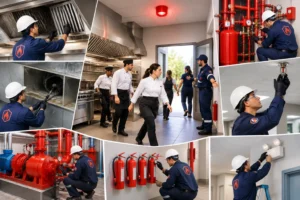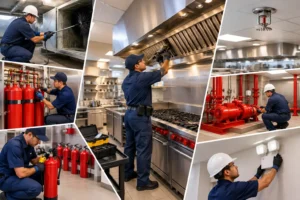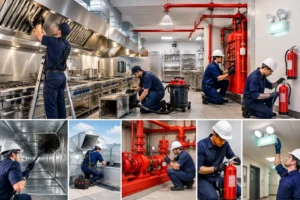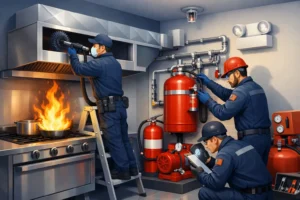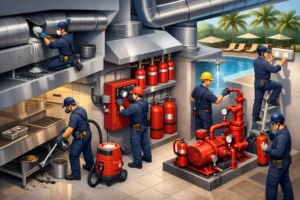

A missed discharge function is not a minor defect in a commercial kitchen. It is the kind of failure that stays hidden until a grease fire, an inspection, or an insurance review exposes it at the worst possible moment. A mechanical discharge test kitchen system is designed to confirm that the fire suppression system can actually release when the manual pull station or automatic detection line activates. For operators responsible for kitchen safety, that test is not optional housekeeping. It is part of proving that the system will respond under real conditions.
What a mechanical discharge test kitchen system actually verifies
In practical terms, this test checks the mechanical release path of the wet chemical suppression system without creating unnecessary disruption or confusion about what has and has not been inspected. The purpose is straightforward. A technician confirms that the control head, cable or linkage, releasing mechanism, pull station, and related activation components operate as intended.
That distinction matters because many kitchen managers assume a visual inspection tells the full story. It does not. A system can look complete from the outside and still have binding cables, worn components, obstructed release parts, improper tension, or field modifications that interfere with discharge. If the release sequence is compromised, the protected appliance line is exposed even when the cylinders, nozzles, and piping appear serviceable.
Under NFPA 17A and NFPA 96 expectations, the performance of the suppression system is tied to more than visible condition. The system must be inspected and maintained so it remains capable of operating properly. A mechanical discharge test supports that objective by validating function, not just presence.
Why a mechanical discharge test kitchen system matters during inspections
Commercial kitchens operate in a high-risk environment where grease vapor, heat, vibration, and cleaning chemicals all affect equipment condition over time. In hotels, resorts, restaurants, and institutional foodservice operations, suppression systems are exposed to daily wear that can gradually affect the release assembly.
This is where the test becomes operationally important. A compliant kitchen is not simply one with tags attached to the cylinders. It is one where the suppression system has been evaluated in a way that can stand up to an authority having jurisdiction, a life safety audit, a brand inspection, or an insurance claim review.
When mechanical discharge function is not properly tested, several problems can develop quietly. Cables may seize. Fusible link lines may be out of adjustment. Manual pull stations may not transmit enough force to trip the mechanism. Gas valves or electrical shutoffs may fail to coordinate with system actuation. During an actual fire event, those failures can increase flame spread, extend downtime, and complicate post-loss reporting.
For multi-unit operators and hospitality groups, the trade-off is clear. Testing takes planning, but a failed system activation can lead to kitchen shutdowns, damaged equipment, business interruption, and questions about whether maintenance was handled according to standard practice.
How the test is typically performed
A proper mechanical discharge test kitchen system procedure should be handled by trained personnel familiar with the specific manufacturer, release assembly, and shutdown sequence installed at the site. The exact method depends on whether the system is ANSUL, Kidde, PyroChem, Range Guard, ProTex, or another approved configuration, because release components and testing steps are not identical across brands.
The technician starts by identifying the protected appliances, the nozzle layout, the cylinder condition, the detection line arrangement, and all connected utility shutoffs. From there, the release mechanism is isolated and prepared so that function can be verified safely, without creating an uncontrolled discharge or leaving the kitchen in an unknown state.
The core of the test is confirming that the mechanical actuation path works from end to end. That includes manual pull activation where applicable, release movement through the mechanical assembly, and proper trip engagement at the control head. In many cases, associated fuel or power shutoffs must also be checked because suppression without appliance shutdown is an incomplete protection response.
This is also the point where hidden deficiencies show up. A cable that looked acceptable during visual inspection may drag under load. A release assembly may trip late. A pull station may have travel issues. A microswitch or alarm interface may not signal as intended. These are not cosmetic concerns. They affect whether the kitchen system reacts fast enough when flame and grease are already established.
What the test does not replace
A common mistake is treating mechanical discharge testing as a substitute for full inspection and maintenance. It is not. It should be part of a broader service program that includes nozzle inspection and cleaning, fusible link replacement, cylinder pressure review, hazard coverage confirmation, manual pull station inspection, detector line evaluation, and documented review of appliance changes.
For example, if a cooking line has been modified since the last service call, the system may still mechanically trip but no longer provide proper nozzle coverage for the actual hazard. In that case, the discharge test confirms release capability, but not code-compliant protection layout. The same issue applies when grease accumulation, blocked nozzles, or damaged caps interfere with agent distribution.
This is why compliance-driven service providers document both function and condition. Kitchen fire protection should never be reduced to a single checkbox.
When to schedule a mechanical discharge test kitchen system service
The timing depends on the system type, operating conditions, local enforcement expectations, and any deficiencies identified during routine inspection. High-volume kitchens with heavy grease production, frequent menu shifts, or repeated appliance movement typically require closer attention because the suppression system is more likely to be affected by wear and unauthorized changes.
There are also clear trigger points when additional testing should be considered. If the manual pull station feels stiff, if the cable path shows corrosion, if utility interlocks have been altered, if fusible links are overdue, or if recent service notes mention release concerns, delaying action creates unnecessary risk. The same applies after renovations, hood work, or line reconfiguration.
Operators should also think beyond code minimums. A kitchen that supports banquet production, all-day dining, or resort occupancy has a much higher cost of interruption than a low-volume site. In those environments, preventive testing is not just about passing inspection. It protects continuity.
Documentation is part of the protection
A mechanical discharge test has limited value if the result is not documented clearly. Commercial kitchen operators need service records that show what was tested, which components were evaluated, what deficiencies were found, what corrective action was taken, and whether the system was returned to proper service condition.
That documentation matters for several reasons. It supports audit readiness, helps maintenance teams track recurring defects, and gives ownership a defendable record if a regulator, insurer, or investigator asks how the fire suppression system was maintained. Photographic evidence, component notes, and clear recommendations reduce ambiguity.
For large hospitality properties, this recordkeeping also improves coordination between engineering, risk management, and kitchen operations. A failed release test in one area may indicate a broader maintenance issue across similar kitchen lines.
Choosing the right service partner
Not every contractor approaches kitchen suppression testing with the same discipline. A credible provider should understand wet chemical systems as operational life safety equipment, not just tagged devices. That means familiarity with code requirements, manufacturer procedures, shutdown integration, and kitchen-specific hazards.
Ask direct questions about how the mechanical discharge test is performed, whether utility shutoffs are verified, how deficiencies are documented, and whether the technician evaluates related issues such as nozzle condition, fusible links, cable integrity, and coverage changes. If the answer is vague, the service probably is too.
Fire Patrol approaches this work as part of a broader compliance and risk-prevention program for commercial kitchens, where the goal is not merely to service components but to keep the site inspection-ready and operationally protected.
A kitchen suppression system should never leave doubt about whether it will actuate when needed. If the release path has not been mechanically verified, you are relying on assumption instead of evidence – and assumption is a poor safety plan when open flame, hot oil, and occupied buildings are involved.