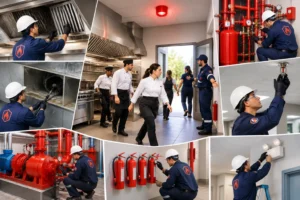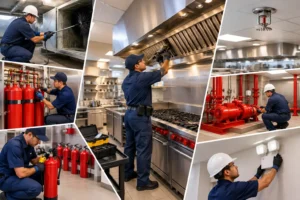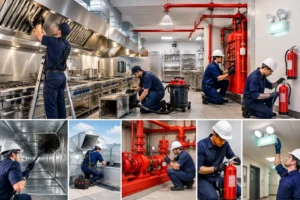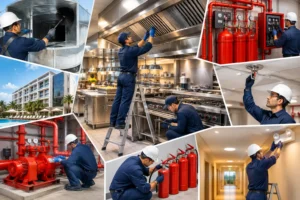
A wet chemical system hidden above the hood is easy to forget until an inspector asks for records, a fusible link is overdue, or a discharge leaves a kitchen down during service. That is exactly why Kidde kitchen suppression system maintenance cannot be treated as a box-checking exercise. In a commercial kitchen, maintenance is part of fire protection, audit readiness, and operational continuity.
For restaurants, hotels, resorts, and institutional foodservice operations, the real risk is not only fire. It is system failure at the moment of need, failed inspections under NFPA 17A and NFPA 96, insurance scrutiny after a loss, and avoidable downtime caused by neglected service items. A Kidde system is engineered to protect cooking equipment, plenum areas, and exhaust hoods, but its performance depends on scheduled inspection, clean discharge paths, correct actuation components, and documented corrective action.
What Kidde kitchen suppression system maintenance actually covers
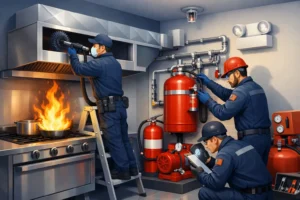
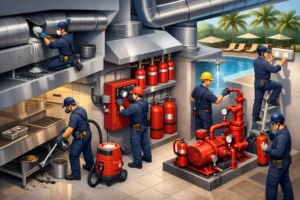
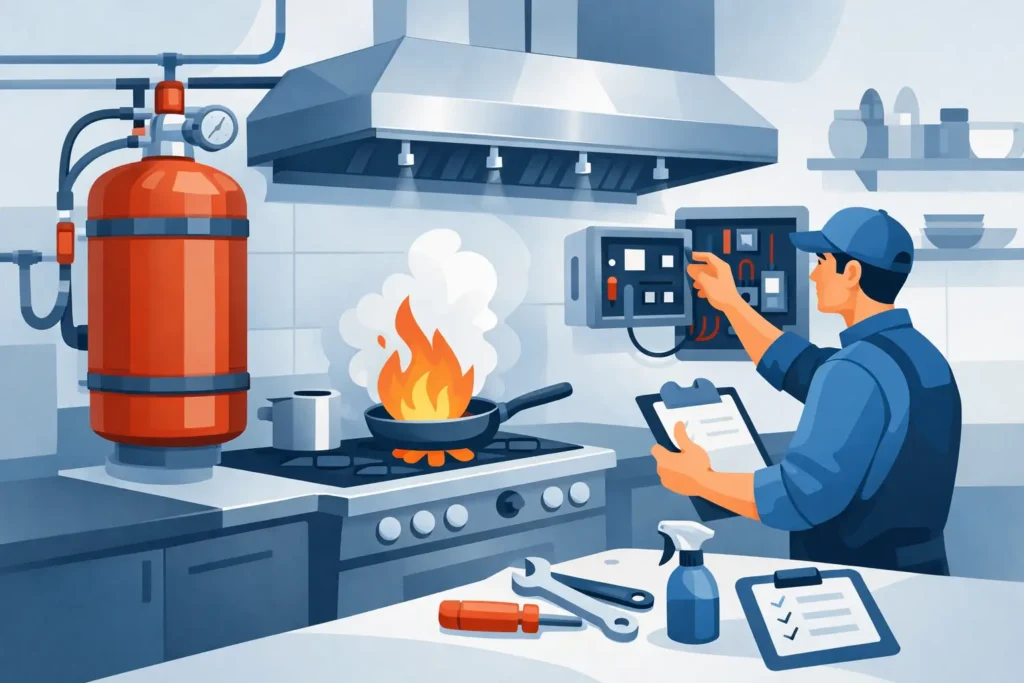
In practice, maintenance is much more than looking at the control head and checking a tag. A proper service visit evaluates the full operating condition of the system. That includes cylinder pressure status where applicable, piping and fittings, nozzle caps, nozzle alignment, fusible links, pull station accessibility, appliance coverage, gas or electric shutdown interface, and signs of grease contamination that can interfere with detection or discharge.
A technician should also verify whether the cooking line still matches the original protected design. This is where many kitchens fall out of compliance. Equipment gets moved, fryers are replaced, charbroilers are added, and hood layouts are modified, but the suppression system is not updated to match. A Kidde system that was compliant two years ago may now have coverage gaps if the appliance lineup changed.
Maintenance also includes documentation. If a service provider cannot clearly show what was inspected, what was found, and what was corrected, the kitchen is left with weak support during audits, internal reviews, and insurance questions.
Why maintenance intervals matter
Most operators know their system requires periodic inspection, but fewer understand why timing matters. Wet chemical systems are mechanical life-safety equipment installed in one of the harshest environments in a facility. Heat, vapor, airborne grease, vibration, corrosion, and repeated cleaning activity all affect system condition.
Delaying service creates a compounding problem. Grease buildup can obstruct nozzles or contaminate caps. Fusible links can become loaded with residue and lose reliability. Manual pull stations can be blocked by storage or relocated equipment. Mechanical and electrical shutdown functions can drift out of coordination with cooking operations. None of these failures announce themselves during a busy lunch shift.
The code-driven inspection schedule exists because these systems degrade in small ways before they fail in critical ways. A compliant maintenance program identifies those changes early enough to correct them without disruption.
The role of NFPA standards
For commercial kitchens, NFPA 17A and NFPA 96 are central to maintenance expectations. These standards shape inspection frequency, protected hazard review, system condition checks, and coordination with hood and duct cleanliness. A suppression system cannot be evaluated in isolation from the cooking environment around it.
That matters because even a well-maintained Kidde unit is exposed to risk if the hood and duct system is carrying heavy grease accumulation, if appliances are producing flare-up conditions beyond design assumptions, or if utility shutoffs do not function as intended during actuation.
The failures most often found during Kidde system service
The most common deficiencies are usually not dramatic. They are ordinary maintenance problems that linger because nobody owns them until inspection day. Nozzle caps may be missing or stuck in grease. Fusible links may be overdue for replacement or coated with residue. Pull stations may not be clearly accessible. Cylinders may show pressure concerns or service issues. Appliance protection may no longer align with the current line.
Another frequent issue is poor coordination between suppression maintenance and hood cleaning. If hood cleaning crews, maintenance teams, and fire protection vendors are working separately with no shared reporting, conditions get missed. A nozzle can be painted over, misdirected, or contaminated after cleaning or equipment work. A gas valve trip can be altered during repairs. These are small errors with major consequences.
Kitchens with high turnover or frequent menu changes are especially exposed. When operations evolve faster than the protection system is reviewed, the fire risk increases quietly.
What a disciplined maintenance visit should look like
A serious Kidde kitchen suppression system maintenance program follows a technical process, not a casual visual check. First, the technician confirms system identification, protected appliances, and field condition against the installed design. Then the physical components are inspected for damage, contamination, obstruction, tampering, or signs of wear.
Nozzles should be checked for correct placement, cleanliness, and proper protective caps. Fusible links should be reviewed for age, condition, and replacement requirements. Manual actuation points should be visible and usable. Remote shutdowns for fuel or electric supply should be verified according to system configuration. Where required, mechanical or electrical test procedures should confirm that the suppression sequence performs correctly.
The kitchen environment should also be reviewed. Excess grease, damaged hood sections, missing filters, and altered cooking layouts affect how the suppression system will perform in an actual event. Good maintenance catches those operational realities instead of pretending the system exists in a clean drawing set.
The final step is reporting. Deficiencies should be documented clearly, ideally with photographs, code-based references, and a defined corrective scope. That gives management something actionable rather than a vague service note.
Maintenance is not the same as inspection only
This distinction matters for owners and facility teams. An inspection identifies condition. Maintenance addresses service items needed to keep the system ready. If a provider simply notes deficiencies without replacing expired fusible links, cleaning affected nozzles, adjusting components, or coordinating corrective work, the kitchen may still be exposed after the visit.
There is also a difference between basic periodic service and system modification. If appliances were added or moved, maintenance alone may not be enough. The system may need redesign, reconfiguration, or reapproval to match the current hazard. Operators should not assume that replacing a few parts restores compliance when the protected cooking line itself has changed.
How poor maintenance affects audits, insurance, and uptime
For hospitality and foodservice operators, the cost of neglected maintenance is rarely limited to repair expense. Failed inspections can delay openings, trigger corrective action deadlines, or expose recurring deficiencies across multiple locations. Insurance carriers may scrutinize maintenance records after a fire event, especially if the suppression system did not activate correctly or coverage did not match the hazard.
There is also the direct operational impact. If a system discharges because of poor component condition, false actuation, or unmanaged cooking hazards, cleanup can shut down part or all of the kitchen. If the system fails to discharge when needed, the loss is far worse. Structural damage, business interruption, staff injury exposure, and reputation damage can follow quickly.
That is why maintenance should be scheduled around risk, not only around convenience. High-volume kitchens, heavy grease production, and frequent equipment changes justify tighter operational oversight even when the formal inspection interval remains fixed.
Choosing a service partner for Kidde kitchen suppression system maintenance
Not every fire protection vendor is built for commercial kitchen environments. The right provider should understand wet chemical systems in active foodservice operations, not just general fire equipment. That includes familiarity with nozzle protection, fusible link replacement cycles, appliance hazard review, shutdown integration, and the interaction between suppression equipment and hood cleanliness.
Just as important, the provider should deliver documentation that stands up during audits. Clear reports, identified deficiencies, photographic evidence, and scheduled follow-up matter because kitchen managers, engineering teams, and ownership groups need a record they can act on.
For operators managing compliance across restaurants, hotels, or resorts, consistency is critical. The service process should be repeatable from one site to another, with findings translated into corrective priorities instead of scattered handwritten notes. That is the difference between reactive fire protection and a preventive maintenance program.
Fire Patrol supports this approach through kitchen-focused inspection, maintenance, corrective service, and documentation aligned with commercial food operations and code-driven compliance requirements.
When to act sooner than the next scheduled visit
Do not wait for the next routine service if the kitchen has changed. A new appliance, a relocated fryer, repeated flare-ups, visible grease contamination on nozzles, missing caps, difficulty accessing the pull station, or uncertain fuel shutdown performance are all reasons to request immediate review.
The same applies after hood work, line renovations, or any maintenance activity that may have affected piping, appliance placement, or discharge coverage. In commercial kitchens, small physical changes can create large protection gaps.
A dependable suppression system is not defined by the label on the tank or the date on the tag. It is defined by whether the system still matches the hazard, still functions as designed, and still has the records to prove it when someone asks. Treat maintenance that way, and the system becomes what it is supposed to be – a working layer of protection, not a hidden liability.