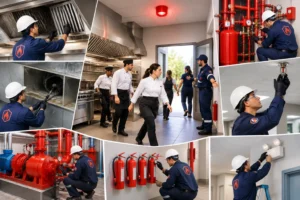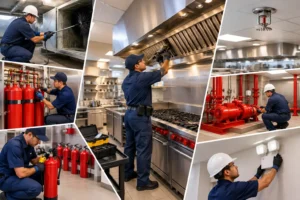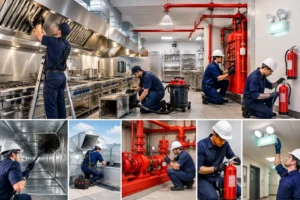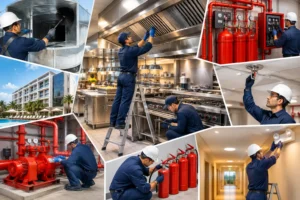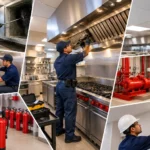
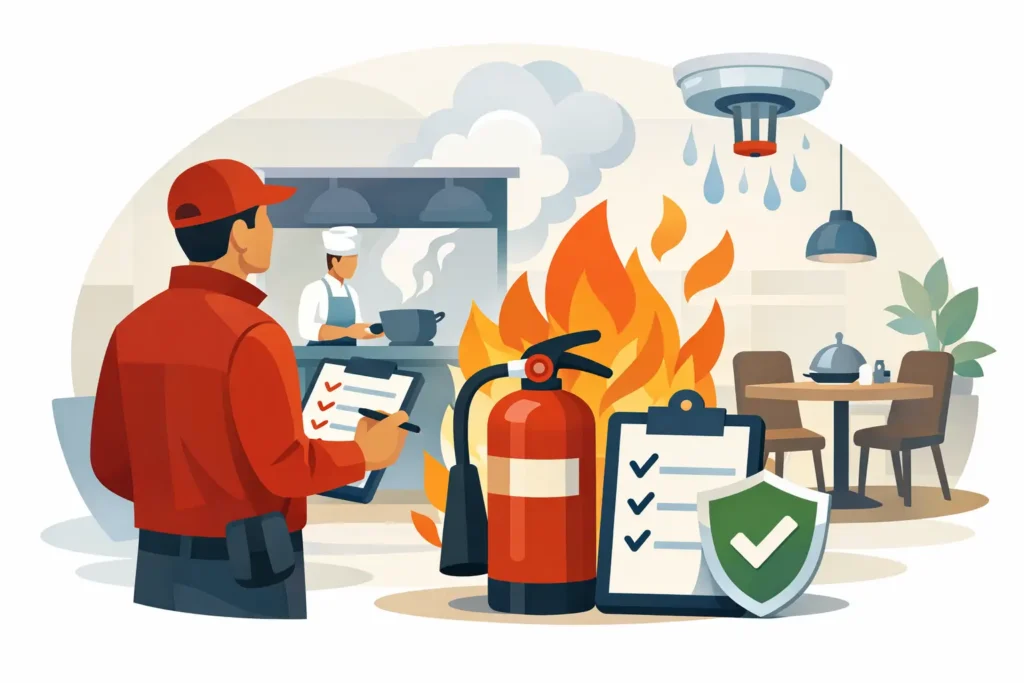
A restaurant can fail a fire inspection over something as small as a capped nozzle, a missing fusible link record, or grease buildup that staff stopped noticing weeks ago. If you are searching for how to pass fire inspection restaurant requirements, the answer is not luck on inspection day. It is documented readiness, verified equipment condition, and a kitchen that meets code every day it operates.
For owners, chefs, facility managers, and hospitality operators, a failed inspection creates more than paperwork. It can trigger corrective deadlines, interrupted service, insurance concerns, and reputational risk. In a commercial kitchen, the fire inspector is not looking for effort. The inspector is looking for compliance.
What inspectors actually check in a restaurant kitchen
Most restaurant fire inspections focus on the same high-risk areas because those areas directly affect ignition, fire spread, and suppression performance. The kitchen hood and duct system, wet chemical fire suppression system, portable extinguishers, alarm interface, gas and electric shutoff functions, housekeeping, and means of egress all matter.
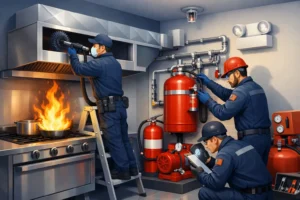
The fire suppression system usually receives the closest attention. Inspectors want to confirm the system is installed correctly, serviced on schedule, free from obstruction, and capable of discharging as designed. That includes nozzle caps in place where required, nozzles clean and correctly aimed, cylinders in proper pressure range, fusible links replaced at required intervals, pull stations accessible, and mechanical or electrical shutdowns working properly.
Grease is another major factor. A kitchen can have a certified suppression system and still fail if the hood, plenum, filters, and ductwork show excessive grease accumulation. Under NFPA 96, grease-laden vapors and residue are not minor housekeeping issues. They are fuel.
Documentation also matters more than many operators expect. If you cannot produce service records, deficiency reports, or proof of corrective action, the inspector may treat the condition as noncompliant even if the system appears acceptable at a glance.
How to pass fire inspection restaurant requirements before the inspector arrives
Passing starts well before an inspection notice. The strongest approach is to treat fire compliance as an operating standard, not a last-minute cleanup project.
Start with the hood suppression system
Your wet chemical system should be on a recurring professional inspection schedule consistent with the applicable code and manufacturer requirements. In most commercial kitchens, that means semiannual service at minimum, though conditions and local authority requirements can affect frequency.
During service, a qualified technician should inspect cylinder pressure, verify agent condition where applicable, examine detection components, replace fusible links, clean and verify nozzles, check cartridge and actuator condition, inspect pull stations, and confirm appliance coverage has not changed. If cooking equipment has been moved, replaced, or added without updating nozzle layout and design coverage, that alone can cause failure.
A common mistake is assuming the system is compliant because the tank is still mounted and the tags are present. Inspectors know the difference between a system that exists and a system that is serviceable.
Confirm shutdown and alarm functions
If the suppression system activates, fuel and power shutoff must operate correctly where required, and alarm signaling must interface properly when designed to do so. This is where many kitchens have hidden deficiencies. A suppression system may look complete, but if gas continues flowing after discharge or the alarm connection is inoperative, the system is not ready.
Mechanical discharge testing, alarm integration review under NFPA 72, and verification of utility shutoff functions should be treated as part of inspection readiness, not as optional extras.
Eliminate grease buildup before it becomes a violation
Inspectors pay attention to grease because it shows both fire risk and poor maintenance discipline. Filters, hoods, ducts, and fan components should be cleaned on a schedule based on cooking volume and grease production. A high-output kitchen, charbroiler line, or hotel operation with extended service hours will need more frequent cleaning than a low-volume facility.
This is one of the biggest it-depends areas in restaurant compliance. Operators often ask how often cleaning is needed, but the real answer depends on use, not preference. If residue is visible, the schedule is already too loose.
Verify portable extinguishers and placement
Portable extinguishers should be current on inspection and maintenance, correctly mounted, fully accessible, and appropriate for the hazard. In commercial kitchens, Class K coverage is essential near cooking operations. General-purpose extinguishers may also be required in adjacent areas depending on layout and occupancy.
Do not let storage, delivery racks, or temporary equipment block extinguisher access. A compliant extinguisher that cannot be reached quickly is a predictable inspection issue.
The documentation that helps you pass
A clean kitchen helps, but paperwork closes the loop. Fire inspectors, insurance representatives, and internal auditors all want proof that maintenance is happening on time and deficiencies are being corrected.
You should be able to produce current suppression system service records, hood and duct cleaning reports, extinguisher inspection tags and maintenance records, alarm and shutdown test documentation where applicable, and notes showing corrective action for prior deficiencies. Photographic reporting is especially useful because it shows condition before and after service.
For hospitality groups, resorts, and multi-unit operators, centralized recordkeeping is not just convenient. It reduces the chance that one overlooked site creates a larger compliance problem. If your records are split between paper folders, old emails, and vendor invoices, you are relying on luck.
Common reasons restaurants fail fire inspection
Restaurants rarely fail for mysterious reasons. Most failures come from a short list of repeat conditions.
Grease accumulation is one of the most common. Another is an overdue suppression inspection or missing service tag. Dirty or obstructed nozzles, missing nozzle caps, expired fusible links, inaccessible pull stations, blocked extinguishers, and uncorrected prior deficiencies also appear frequently.
Equipment changes are another major risk. When a line cook swaps appliance positions or a contractor installs a new fryer without reviewing suppression coverage, the system may no longer protect the hazard correctly. Operators often focus on menu output and utility connection, while the inspector focuses on whether the suppression design still matches the cooking line.
Exit access can also cause problems outside the hood area. Blocked egress paths, damaged emergency lighting, or poorly maintained fire doors can turn a kitchen-focused inspection into a wider facility citation.
Build a restaurant fire inspection checklist that matches real operations
A useful checklist should reflect the way your kitchen actually runs. It should include the suppression system, hood and duct cleanliness, extinguisher visibility, pull station access, employee awareness, shutoff function status, and record availability. It should also account for shift realities. The night team may notice leaks, blocked access, or grease patterns that management never sees during office hours.
The best checklists are short enough to use and technical enough to matter. A generic form with boxes for clean and not clean will not catch system-specific issues. A more effective process assigns responsibility, sets inspection frequency, and requires documented corrective action.
That is especially important for high-volume operations where maintenance problems return quickly. Passing one inspection is not the same as maintaining a compliant kitchen.
Training matters, but training does not replace service
Staff should know where pull stations are located, how to report grease hazards, what must never be stored under the hood, and why nozzle caps and system components cannot be touched or altered. They should also understand that extinguishers are part of emergency response, not something to move for convenience.
Still, training has limits. Employees cannot certify suppression systems, test discharge components, or validate code compliance after equipment changes. Professional inspection and maintenance remain essential. The trade-off is straightforward: relying only on in-house checks may save time in the short term, but it increases the chance of a failed inspection, equipment impairment, or noncompliant condition that goes unnoticed.
When to bring in a specialized kitchen fire protection contractor
If your restaurant has recurring grease issues, overdue suppression service, unclear documentation, recent equipment changes, or prior violations, bring in a contractor who works specifically in commercial kitchen fire protection. General maintenance vendors often handle surfaces well enough, but inspectors are evaluating code performance, not appearance.
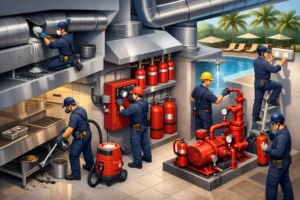
A specialized provider can review nozzle placement, cylinder pressure, fusible links, shutdown functions, alarm integration, hood and duct condition, and service records as one connected system. That matters because kitchen fire safety failures are rarely isolated. A dirty duct, an impaired nozzle, and missing documentation often show up together.
For operators who need audit readiness across restaurants, hotels, or institutional kitchens, a structured preventive maintenance program is usually the most reliable path. Companies such as Fire Patrol support that process with inspections, corrective action, and documented reporting built around NFPA 17A and NFPA 96 expectations.
Passing is really about staying ready
If you want to know how to pass fire inspection restaurant standards consistently, focus less on inspection day and more on system condition every week the kitchen is active. Keep the suppression system current, keep grease under control, verify shutdowns and alarms, protect access to extinguishers and exits, and keep records organized enough to prove the work was done.
The kitchens that pass with fewer issues are usually not the ones that cleaned up fastest. They are the ones that treated compliance as part of operations before anyone from the fire department walked through the door.