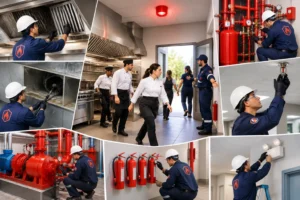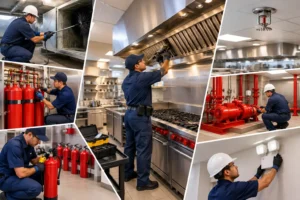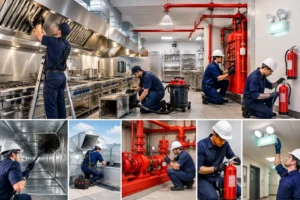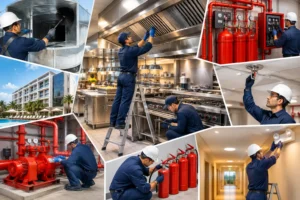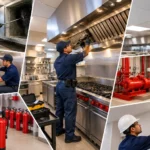
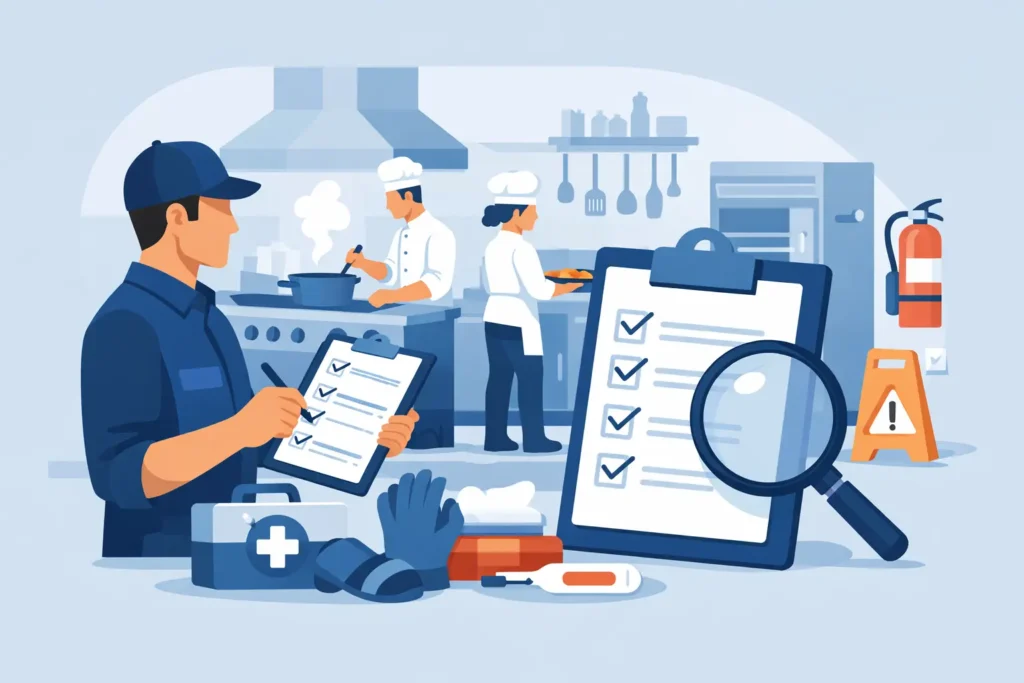
A failed line inspection during breakfast service is not a paperwork problem. In a hotel, it can disrupt room service, banquet production, guest satisfaction, and insurance exposure at the same time. A proper hotel kitchen safety audit checklist helps operators catch fire hazards, sanitation failures, equipment issues, and documentation gaps before they become shutdowns, claims, or reportable incidents.
Hotels face a different risk profile than stand-alone restaurants. They often run multiple foodservice points under one roof, with high-volume production, extended operating hours, and shared responsibility across culinary, engineering, housekeeping, and risk management. That means audits cannot stop at surface-level cleanliness. They need to verify system condition, staff practices, code compliance, and whether corrective actions are actually being closed.
What a hotel kitchen safety audit checklist should cover
A useful checklist is not just a cleaning list. It should measure operational readiness in the areas most likely to trigger injury, fire spread, contamination, equipment damage, or failed inspections. In hotel environments, that usually includes fire protection systems, exhaust and grease conditions, cooking equipment, refrigeration, chemical storage, food safety controls, electrical safety, and audit documentation.
The most effective audits are also repeatable. If one property engineer performs the check this month and a different executive chef performs it next month, the findings should still be consistent. That is why the checklist should follow recognized standards, internal SOPs, and inspection intervals instead of relying on individual judgment alone.
Fire suppression and hood system inspection points
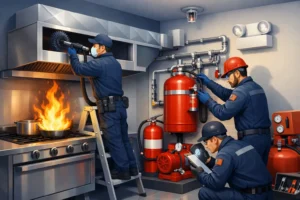
For most hotels, the highest-consequence risk starts above the cookline. If the hood suppression system is impaired, a routine flare-up can escalate into duct fire, structural damage, business interruption, and insurance complications. A kitchen audit should verify that the wet chemical suppression system is installed correctly, serviced on schedule, and free of visible deficiencies.
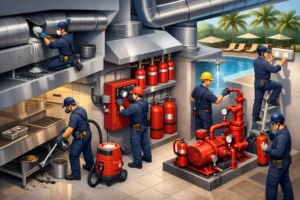
Check that nozzles are present, correctly aimed, and protected with proper caps where required. Confirm that fusible links are clean, correctly rated, and replaced at the required service interval. Review cylinder pressure, control head condition, manual pull station accessibility, and whether the system shows signs of tampering, corrosion, or unauthorized modifications. If appliances have been moved, replaced, or added, nozzle coverage and appliance protection layout should be reviewed immediately. This is one of the most common audit failures in active hotel kitchens.
The exhaust hood and duct system should also be reviewed for grease accumulation, access panel condition, and cleaning records. NFPA 96 compliance is not optional in high-volume kitchens. Grease buildup inside ducts, on hood surfaces, and around fan components increases ignition risk and weakens overall fire control. A visually clean canopy does not confirm a clean duct run, so documentation matters.
Alarm and interlock verification
A suppression system is only part of the protection sequence. The audit should confirm that fuel and power shutoff functions operate as designed and that alarm notification interfaces are active where required. If the suppression system discharges but gas does not shut off, the event can continue feeding heat into the hazard area. Hotels should also verify that changes to kitchen equipment have not bypassed interlocks or created conflicts with the fire alarm system.
Cooking equipment and utility safety
A strong hotel kitchen safety audit checklist must include the condition and placement of cooking equipment. Operators should look for damaged gas hoses, missing restraints on movable appliances, heat-damaged wiring, unstable fryer positions, and blocked access around emergency shutoffs. Deep fryers, charbroilers, ranges, and tilt skillets each present different exposure points, so the audit should reflect actual equipment in use rather than a generic form.
Equipment should be inspected for excessive grease on sides, backsplashes, and concealed spaces behind the line. Drip trays, filters, and grease containers should be maintained and not allowed to overflow. It also matters whether staff can clean safely without moving heavy or fixed equipment improperly. In some hotels, cramped cookline layouts create risks that are not obvious until a detailed audit is performed.
Electrical safety deserves the same level of attention. Frayed cords, overloaded outlets, damaged plugs, missing junction box covers, and improvised repairs should be treated as immediate corrective items. Kitchens are hot, wet, and fast-moving environments. Small electrical defects can become ignition points or shock hazards very quickly.
Food safety and sanitation controls
A kitchen can pass a visual cleanliness check and still fail an operational audit. Hotels need to verify HACCP-related controls, temperature discipline, cross-contamination prevention, and chemical management. Refrigeration units should hold safe temperatures consistently, not just at the moment someone opens the door to inspect them. Gaskets, condensate lines, shelving, and airflow clearance also matter because poor refrigeration performance can quickly affect inventory, service continuity, and guest safety.
Dry storage should be organized, labeled, and protected from contamination. Chemicals must be segregated from food and food-contact items, with clear labeling and SDS availability where required by policy. Sanitizer concentration should be verifiable, and dishwashing areas should be reviewed for final rinse performance, drainage issues, and slip hazards.
Waste handling often gets less attention than it should. Overflowing grease containers, leaking trash areas, and poor floor drainage create both sanitation and fire concerns. In hotel operations, where public areas and back-of-house systems are closely connected, these issues can travel beyond the kitchen quickly.
Staff practices during the audit
A checklist should not focus only on fixed assets. Observe how the kitchen is being operated. Are portable extinguishers accessible and inspected? Are staff storing items under suppression-protected appliances? Are emergency exits and aisles clear? Are employees using equipment as intended, or are workarounds becoming normal? Unsafe habits are often the reason a technically compliant kitchen still experiences incidents.
Documentation that supports audit readiness
If there is no record, many auditors will treat the task as not completed. Hotels should maintain current reports for suppression system inspections, hood and duct cleaning, fusible link replacement, cylinder condition review, mechanical testing where applicable, and corrective actions taken after deficiencies were identified. Photographic evidence is valuable because it shows condition, not just a completed signature line.
Inspection tags should match service records. Dates should be current, deficiencies should be closed or actively tracked, and any out-of-service condition should have a documented response. This is especially important in hotels with multiple kitchens, banquet prep areas, bars, and employee dining operations, where one missed service interval can be overlooked if records are decentralized.
For that reason, many operators move from reactive service calls to scheduled compliance programs. A structured service calendar reduces the risk of missed inspections and creates a clearer chain of accountability across engineering, culinary leadership, and third-party contractors. Companies such as Fire Patrol support this model by combining inspection, corrective service, and documented reporting in one process aligned with kitchen risk.
How to use the checklist without slowing operations
The best checklist is the one your team will actually use. In a hotel, that usually means dividing the audit into frequencies. Some items should be checked daily by kitchen leadership, such as extinguisher access, visible grease conditions, refrigeration temperature control, and blocked shutoffs. Other items belong on a weekly or monthly schedule, including detailed equipment pull-out inspections, utility condition review, and record verification. Certified suppression inspections and hood cleaning follow their own required service intervals.
There is also a trade-off between internal audits and specialist inspections. Internal teams are essential for frequent checks and immediate corrections. But they should not replace licensed or certified technical service where code, manufacturer requirements, or insurer expectations apply. A hotel engineer may spot a damaged nozzle cap, for example, but the suppression system still requires proper service, testing, and documentation by qualified personnel.
A checklist becomes more useful when every finding is assigned a priority. Some items are housekeeping corrections that can be closed the same shift. Others, such as obstructed nozzles, failed interlocks, overdue suppression service, or heavy duct grease, should be treated as urgent risk conditions. Not every deficiency carries the same consequence, and your audit process should reflect that.
The most reliable hotel kitchens are not the ones with the fewest issues on paper. They are the ones that identify deficiencies early, document them clearly, and correct them before an inspector, fire event, or guest complaint forces the issue. A disciplined hotel kitchen safety audit checklist does exactly that – it turns hidden risk into scheduled action, and that is what keeps the kitchen operating when the property can least afford disruption.