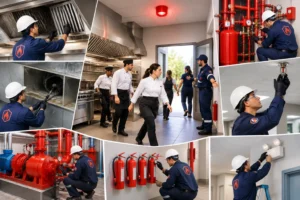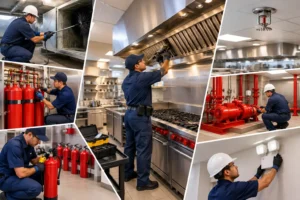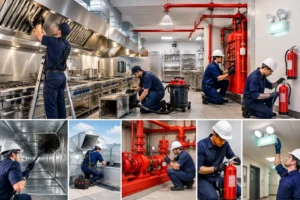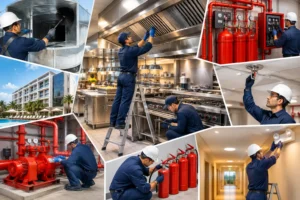

A failed line check at 10:30 a.m. can turn into a failed audit by noon. In a high-volume food operation, small control gaps compound fast – unlabeled prep, poor temperature logs, grease accumulation, missing corrective actions, or a suppression system that has not been serviced on schedule. A HACCP audit for commercial kitchen operations is not just a food safety exercise. It is a direct test of whether the facility is controlling risk in a disciplined, documented, and repeatable way.
For restaurants, hotels, resorts, catering facilities, and institutional kitchens, that audit pressure is real. Inspectors, corporate standards teams, franchise compliance staff, insurance stakeholders, and third-party auditors all look for the same thing: evidence that hazards are identified, controls are in place, and deviations are corrected before they become incidents. Passing depends less on last-minute cleanup and more on whether the kitchen is managed as a controlled environment every day.
What a HACCP audit for commercial kitchen operations really examines
Most operators associate HACCP with time and temperature control, cross-contamination prevention, and sanitation. Those remain central, but a proper audit goes further. Auditors look at how hazards are analyzed across receiving, storage, preparation, cooking, cooling, holding, and service. They also review whether the kitchen can prove that controls are functioning as intended.
That means records matter. Temperature logs, cleaning schedules, pest control records, staff training verification, calibration checks, product labeling, corrective action reports, and maintenance documentation all support the same question: can this operation demonstrate control, not just claim it?
In a commercial kitchen, the answer often depends on operational discipline. A cooler may be within range today, but if there is no consistent monitoring process, no escalation protocol, and no maintenance history, the control is weak. The same applies to ventilation, grease management, suppression system readiness, and equipment condition. HACCP is built around food safety hazards, but auditors routinely notice adjacent failures that increase operational risk.
Why kitchen safety systems affect audit performance
Food safety and fire safety are often managed in separate lanes. In practice, they overlap more than many facilities admit. Excess grease in the hood and duct system is a sanitation issue, an air quality issue, and a fire load issue. Poor equipment cleaning affects hygiene and can interfere with safe operation. Deferred maintenance creates undocumented hazards that weaken the entire control program.
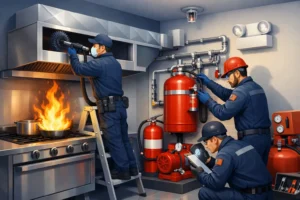
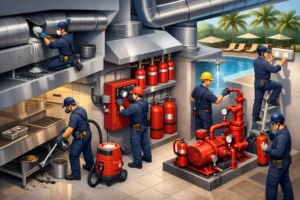
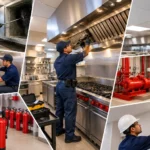
A kitchen that appears clean during service can still fail under audit review if key technical controls are neglected. Fire suppression inspection tags that are out of date, blocked nozzles, missing fusible links, poor cylinder pressure conditions, or undocumented corrective work all raise questions about the site’s preventive maintenance culture. Auditors may not inspect every system to the depth of a licensed service technician, but visible neglect is enough to trigger concern.
For hospitality operators, this creates a practical reality: audit readiness is not only about the HACCP binder. It is about whether the physical kitchen supports the documented program. If the hood system is contaminated, refrigeration performance is unstable, or emergency response equipment is not inspection-ready, the operation is harder to defend.
The records that usually decide the outcome
Most failed audits do not come from one dramatic event. They come from repeated small omissions. Logs are incomplete. Corrective actions are vague. Staff know the procedure verbally but there is no documented evidence. Cleaning tasks are assigned but not verified. Equipment issues are noted informally and never closed out.
The strongest audit files have a simple pattern. They show the standard, the monitoring activity, the exception, and the correction. If hot holding drops below the critical limit, the record should show what happened to the food, who responded, and what was done to prevent recurrence. If a refrigeration unit shows unstable temperatures, the file should include maintenance review, not just a rewritten temperature sheet.
This is where many commercial kitchens lose points. They monitor, but they do not verify. They correct, but they do not document. They clean, but they do not validate the schedule against actual grease load, soil conditions, or production volume.
Common failures during a HACCP audit for commercial kitchen sites
Certain gaps appear repeatedly across foodservice operations. Time and temperature violations remain common, especially during cooling, thawing, and hot holding. Labeling and date marking failures also persist, particularly in multi-shift kitchens where prep responsibility changes hands.
Another recurring issue is weak corrective action structure. Auditors want to see more than a note that says “item discarded” or “staff retrained.” They want evidence that root cause was addressed. If the same cooler, station, or shift keeps producing deviations, the operation is not controlling the hazard effectively.
Sanitation failures also show up in less obvious places. Ice machines, gaskets, drains, shelving, hood filters, and hard-to-reach surfaces are common trouble spots. In many facilities, these areas are cleaned inconsistently because they sit between departments or outside routine line responsibilities.
Then there is the maintenance side. Broken thermometers, poor door seals, unstable refrigeration, inadequate airflow, damaged wall surfaces, and grease accumulation all undermine HACCP controls. These are not secondary issues. They affect the kitchen’s ability to maintain critical limits and demonstrate sanitary conditions under review.
Building an audit-ready kitchen instead of preparing for one
The most reliable way to pass an audit is to stop treating it as an event. Audit-ready kitchens run on scheduled verification, documented maintenance, and clear accountability. That starts with realistic SOPs. If a procedure cannot be followed during peak service, it will fail under pressure and become meaningless on paper.
Managers should review critical control points against actual workflow, not ideal workflow. Where does product sit too long? Which stations skip label checks during rush periods? Which cooling steps depend on staff memory instead of timed verification? Those are the weak points that need control.
It also helps to separate daily monitoring from periodic validation. Line staff can complete operational logs, but supervisors need to verify accuracy, review exceptions, and escalate recurring failures. Technical contractors should support the physical systems that keep the kitchen compliant – suppression systems, hood and duct conditions, refrigeration performance, alarm interfaces, and related safety equipment.
A disciplined preventive maintenance program changes the audit conversation. Instead of reacting to observed deficiencies, the facility can show inspection history, service reports, photographic documentation, and closure of corrective items. That is especially valuable in hotels, resorts, and multi-unit operations where corporate oversight and insurance exposure are higher.
How to align HACCP with maintenance and fire protection
This is where many operators gain ground quickly. HACCP programs improve when facility maintenance and kitchen safety services are included in the same compliance rhythm. Monthly reviews should not only cover logs and sanitation. They should also confirm that hood cleaning intervals match grease production, suppression components are unobstructed, nozzles are clean and correctly capped, cylinders are within service parameters, and alarm integration is functioning where required.
The point is not to force fire compliance into the food safety plan. The point is to remove system weaknesses that can derail operations, create visible nonconformities, or expose the business during a broader inspection. A kitchen cannot claim controlled risk if critical infrastructure is being ignored.
For operators managing complex foodservice environments, working with a specialized contractor helps close this gap. Fire Patrol supports commercial kitchens with inspection, maintenance, technical reporting, and corrective action tracking built around audit readiness and operational continuity. That kind of support matters when the goal is not just passing once, but staying compliant without interrupting service.
What auditors respect most
Auditors know the difference between a polished visit and a controlled operation. They respect consistency more than perfection. If a facility has occasional deviations but identifies them quickly, documents them clearly, and closes them with credible corrective action, that usually carries more weight than a spotless binder with no operational honesty behind it.
They also pay attention to leadership. When managers can explain the hazard analysis, show verification habits, and produce maintenance and sanitation records without scrambling, the kitchen presents as controlled. When answers are unclear or records appear reconstructed, confidence drops fast.
The strongest commercial kitchens are not the ones with the fewest risks. They are the ones that know where the risks are, control them through procedure, and back every claim with records.
A HACCP audit should never be the moment you discover how the kitchen is really performing. It should be the moment your daily discipline becomes visible.