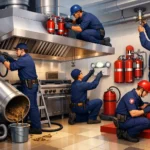
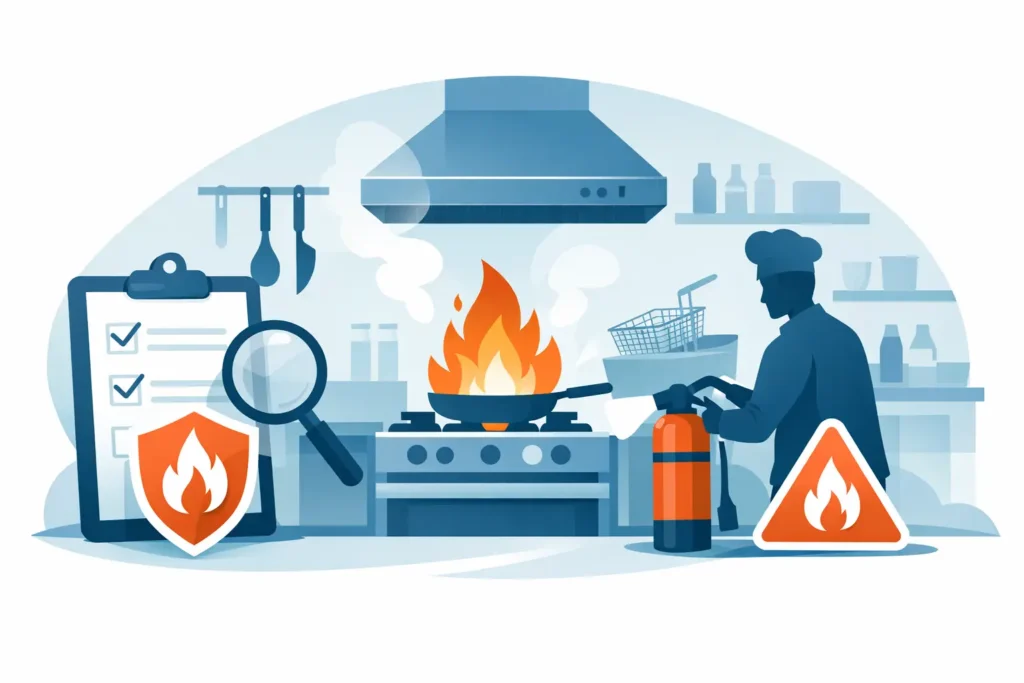
A fryer flare-up rarely starts with a dramatic warning. More often, the conditions have been building for weeks – grease loading in the duct, a blocked nozzle, missing fusible links, an untested gas shutoff, or a suppression system that looks intact but is no longer service-ready. That is why a commercial kitchen fire risk assessment is not a paperwork exercise. It is a technical review of how fire actually starts, spreads, and defeats protection systems in working foodservice environments.
For restaurants, hotels, resorts, institutional kitchens, and high-volume catering operations, the real issue is not whether a fire extinguisher is mounted on the wall. The issue is whether the entire cooking line, exhaust system, suppression system, and maintenance routine can withstand the risks created by grease-producing appliances under daily production pressure. A credible assessment looks at ignition sources, fuel loads, system condition, housekeeping, staff practices, and compliance exposure at the same time.
What a commercial kitchen fire risk assessment should cover
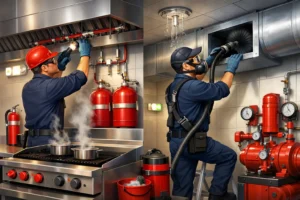
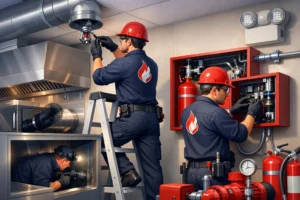
A proper commercial kitchen fire risk assessment starts at the cookline, but it cannot stop there. Open-flame appliances, charbroilers, fryers, ranges, griddles, and high-BTU equipment create predictable fire conditions. Oil, grease vapor, and residue move upward into hoods, filters, ducts, and fans. If those areas are not cleaned and inspected on the right schedule, the fire load grows beyond what the suppression system was designed to control.
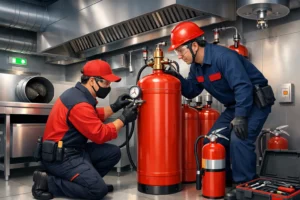
The assessment should also verify whether the installed wet chemical fire suppression system matches the current appliance layout. This point is often missed after kitchen remodeling, equipment replacement, or menu changes. A nozzle aimed for one appliance arrangement may no longer provide proper coverage after line changes. An added fryer or relocated charbroiler can create unprotected hazard areas, even if the system tag appears current.
Control functions matter just as much as suppression discharge. If a system activates, fuel and power shutoffs must respond as intended. Manual pull stations must be accessible. Detection components must be in place and within service intervals. Alarm integration, where required, must be functional. If one of these layers fails, a containable appliance fire can escalate into structural damage, business interruption, and reportable loss.
The highest-risk conditions found in commercial kitchens
Most serious findings are not hidden. They are overlooked because the kitchen remains operational, and that creates false confidence. Grease accumulation is one of the clearest examples. Light residue at the hood edge often signals heavier contamination deeper in the duct. When grease is allowed to build, flame spread becomes faster, hotter, and more difficult to control.
Another common risk is deferred suppression maintenance. Nozzles can become obstructed by grease caps, paint, residue, or improper handling. Fusible links may be overdue for replacement. Cylinders may show pressure concerns. Mechanical components can bind or corrode. These conditions may not trigger visible trouble until an actual discharge is needed, which is the worst time to discover them.
Housekeeping and sanitation issues also affect fire performance. Improper storage near cooking equipment, combustible packaging left in hot zones, and neglected plenum cleaning all increase exposure. In some facilities, the problem is operational drift. Staff begin using portable equipment under the hood that was never included in the suppression design. Others disable components temporarily for convenience and fail to restore them correctly.
Human factors are part of the assessment as well. Staff may not know how to report grease-related hazards, where the pull station is located, or what to do after a suppression discharge. A kitchen can have compliant equipment on paper and still carry unnecessary risk because procedures are weak in practice.
Why standards and documentation matter
Commercial kitchen fire protection is not judged by appearance alone. Inspectors, insurers, and safety managers want documented evidence that systems are being maintained according to applicable standards and manufacturer requirements. In kitchen environments, NFPA 17A and NFPA 96 are central references because they govern wet chemical suppression and ventilation control in grease-producing operations.
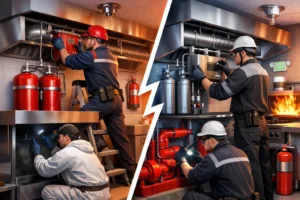
This is where many operators run into trouble. They assume an annual visit is enough, or they rely on fragmented vendors who clean the hood but do not assess nozzle condition, or inspect the system but do not report duct contamination that affects overall risk. A useful fire risk assessment connects these findings instead of treating each issue in isolation.
Good documentation should identify deficiencies clearly, show their location, note the level of exposure, and define corrective action. Photographic reporting is especially valuable in hospitality and multi-site operations because it gives owners, chefs, maintenance teams, and compliance leaders the same visual record. That reduces delay, supports budgeting, and helps demonstrate due diligence during audits or insurance review.
When an assessment should be performed
The short answer is before there is a problem, not after a near miss. New kitchen commissioning, ownership changes, menu changes, equipment replacement, failed inspections, insurance renewal periods, and recurring grease issues are all strong triggers for a formal review. The same applies after any suppression discharge, whether the fire was minor or not.
High-volume kitchens need more attention than low-use spaces. A resort buffet line, a 24-hour hotel kitchen, and a busy quick-service operation do not generate the same grease load as a lightly used prep kitchen. Assessment intervals should reflect actual use conditions, appliance type, cooking method, and the facility’s maintenance history.
It also depends on the age and condition of the existing system. Older installations may remain serviceable, but they often need closer evaluation for compatibility, wear, and documentation gaps. If records are incomplete, tags are inconsistent, or prior corrective actions cannot be verified, risk increases even before a physical defect is confirmed.
What decision-makers should expect from the process
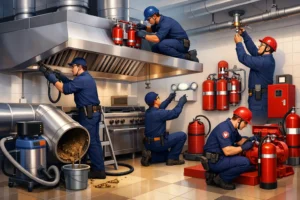
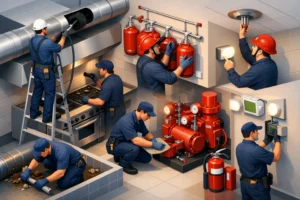
A serious assessment should not end with a generic checklist. It should produce a technical picture of the kitchen’s fire exposure and the actions needed to reduce it. That means reviewing suppression components, detection line condition, fusible links, cylinders, nozzle coverage, pull stations, fuel shutoff response, hood and duct cleanliness, appliance placement, and visible housekeeping conditions.
Just as important, the findings should be prioritized. Not every issue carries the same urgency. A missing nozzle cap, an overdue cleaning cycle, and a failed gas shutoff do not represent equal operational risk. Facility managers need to know what creates immediate exposure, what can jeopardize inspection results, and what should be corrected during the next preventive maintenance window.
For multi-unit operators, consistency matters. One site may appear compliant while another carries repeat deficiencies that expose the broader brand. Standardized assessments and reporting help leadership compare sites, identify recurring failures, and plan corrective action across the portfolio instead of reacting location by location.
This is where a specialized provider adds value. Companies focused on kitchen fire protection, such as Fire Patrol, understand that compliance, serviceability, sanitation, and continuity are linked. The best assessments are designed to keep kitchens open safely, not simply produce a pass-fail document.
The cost of getting it wrong
A poor assessment, or none at all, usually shows up in one of four ways. The first is system failure during an actual fire event. The second is a failed inspection that forces corrective work under deadline pressure. The third is insurance scrutiny after a loss, especially if maintenance records are incomplete or known deficiencies were not addressed. The fourth is operational shutdown – sometimes temporary, sometimes extended – while contamination, damage, and code issues are resolved.
Those outcomes carry direct cost, but they also affect reputation. In hospitality environments, a kitchen fire does not stay in the back of house. Guests notice. Staff confidence drops. Management attention shifts from service delivery to crisis control. For resorts, hotels, and branded restaurant groups, the reputational impact can exceed the repair cost.
A commercial kitchen fire risk assessment is therefore less about checking compliance boxes and more about controlling predictable failure points before they interrupt business. The kitchens that perform best under inspection are usually the ones where prevention is built into operations – cleaning schedules are enforced, suppression systems are maintained correctly, deficiencies are documented, and corrective work is not postponed until an auditor, insurer, or fire event forces action.
If your kitchen produces grease, runs at volume, or supports guest-facing operations, the right time to assess fire risk is before the next service period makes the warning signs harder to see.