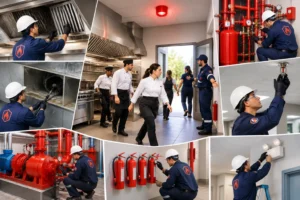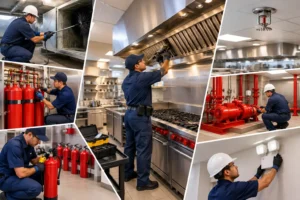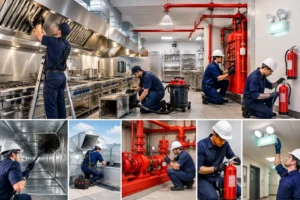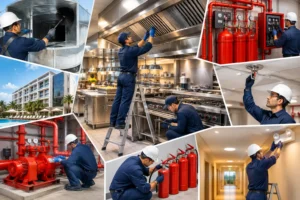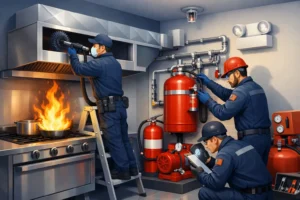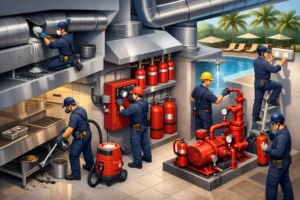
A missed fusible link, a capped nozzle, or a cylinder outside pressure range can turn a code-compliant kitchen into a shutdown risk fast. That is why ansul system inspection requirements matter well beyond a service sticker. For restaurants, hotels, resorts, and institutional kitchens, inspection is not just maintenance – it is a control point for life safety, insurance protection, and uninterrupted operation.
What ANSUL system inspection requirements really mean
In commercial kitchens, an ANSUL wet chemical system is only as reliable as its inspection status. The system may look intact from the outside, but compliance depends on whether the detection line, releasing mechanism, agent tank, nozzles, piping, fuel shutoff, and alarm interfaces are all in proper operating condition.
The baseline reference is not a single brand rule. Inspection requirements are shaped by the manufacturer listing and by applicable standards, especially NFPA 17A for wet chemical extinguishing systems and NFPA 96 for ventilation control and cooking operations. Local fire code, the authority having jurisdiction, insurance carriers, and corporate risk policies may add stricter expectations.
For most commercial kitchen operators, the practical takeaway is simple: the system must be inspected, tested, and documented at regular intervals by qualified personnel, with deficiencies corrected promptly. Anything less creates exposure.
Required inspection frequency for commercial kitchens
The most common interval is semiannual service. In practice, that means the fire suppression system should be professionally inspected every six months. This cadence aligns with the expectations commonly applied to pre-engineered wet chemical systems protecting cooking equipment.
Some sites need more attention. High-volume kitchens, 24-hour operations, heavy grease production environments, coastal properties, and facilities with recurring sanitation issues may require closer monitoring between formal service visits. Semiannual inspection is the minimum benchmark in many cases, not a substitute for routine operational oversight.
If a kitchen has been remodeled, equipment has been moved, appliance lines have changed, or hood work has been performed, the system should also be reviewed immediately. Protection coverage can be compromised when appliance layout shifts even a few inches. A nozzle that was correctly aimed before the change may no longer protect the hazard after it.
What a compliant inspection should include
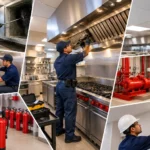
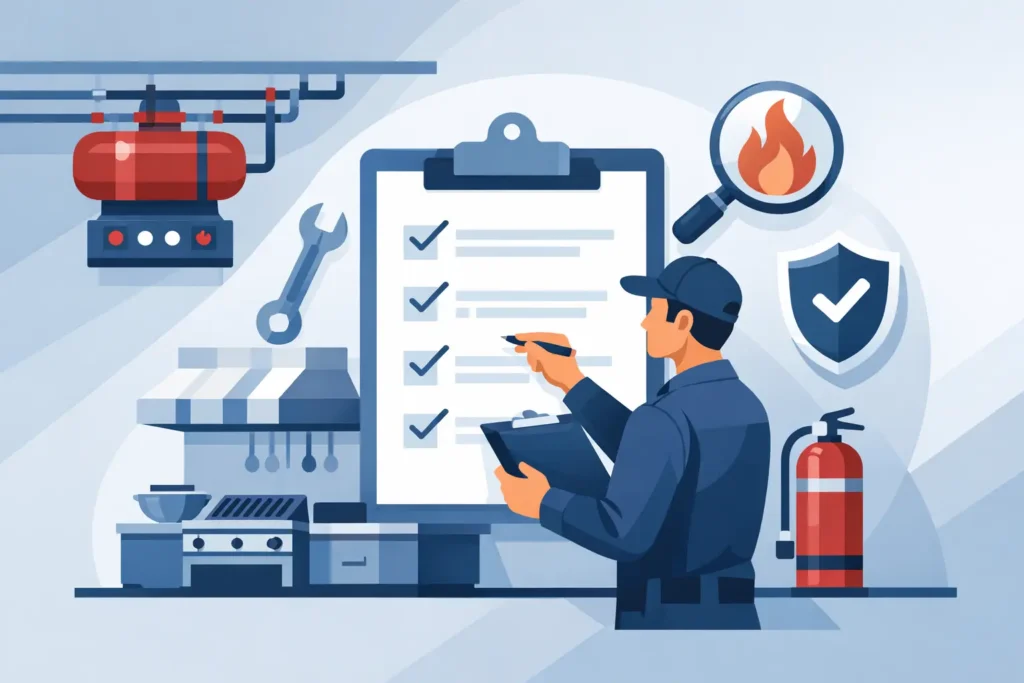
A real inspection goes far beyond checking whether the tank is still mounted on the wall. The technician should verify the condition and function of the full suppression assembly and the associated shutdown sequence.
Detection and actuation components
Fusible links must be the correct type, installed in the proper sequence, and free of grease loading, paint, or corrosion. Detection cable or wire rope assemblies should move correctly and show no signs of binding, fraying, or improper routing. The releasing mechanism must be secure, accessible, sealed where required, and capable of operating as intended.
Manual pull stations also need attention. They should be visible, unobstructed, properly labeled, and connected to the releasing circuit. If staff cannot reach the pull station quickly during a range fire, the system may be technically installed yet operationally ineffective.
Agent cylinder and pressure condition
The wet chemical tank or cartridge must be checked for nameplate legibility, mounting security, tamper indicators, and pressure status within manufacturer limits. Stored pressure readings matter. An underpressurized or overpressurized cylinder can affect discharge performance and may require immediate corrective action.
Technicians should also confirm that service dates are current and that any hydrostatic test or internal maintenance intervals required by listing, code, or manufacturer have not been missed.
Nozzles, caps, and appliance coverage
Nozzles must be in the correct positions, fitted with proper blow-off caps, and aimed at the appliances and hood or duct plenum areas they are intended to protect. Grease accumulation, cap damage, substitutions, or missing nozzle parts are common deficiencies.
This is also where kitchen modifications create problems. New fryers, different griddles, added charbroilers, or replacement ranges can invalidate the original design. The suppression system has to match the current cooking line, not the layout from years ago.
Piping, mechanical integrity, and discharge path
Inspection should confirm that pipe runs are secure, free from obvious damage, and not altered in ways that affect system performance. Where the system includes a mechanical gas valve or electrical shutdown interface, those components must also be evaluated.
A proper service visit should assess whether the system can discharge without obstruction and whether the protected hazards remain consistent with the approved installation configuration.
Testing requirements tied to ANSUL system inspection requirements
Inspection is one part of compliance. Functional testing is another. The exact scope depends on the system type, site conditions, and local enforcement, but certain checks are consistently expected.
The technician should verify operation of the manual pull station and releasing mechanism, usually through approved mechanical trip testing rather than live chemical discharge during routine service. Fuel shutoff devices should activate correctly. Electric appliance power interruption, if part of the design, should be confirmed. If the suppression system is tied into the fire alarm or monitoring system, those signals should also be tested in coordination with alarm requirements and site procedures.
This is an area where shortcuts cause serious liability. A visual-only visit may leave a failed microswitch, disconnected gas valve, or inoperative alarm interface undiscovered. The system could release agent but fail to shut down the heat source, which defeats a critical part of kitchen fire control.
Documentation is part of compliance
A kitchen can fail an audit even when the equipment appears functional if the records are incomplete. Inspection documentation should identify the system, the protected appliances, the date of service, the technician, deficiencies found, and corrective actions recommended or completed.
Photographic reporting is especially valuable in hospitality and multi-site operations because it gives management clear evidence of conditions at the time of inspection. It also helps operators prove due diligence to insurers, brand auditors, and fire officials.
At minimum, keep service tags current and maintain accessible inspection reports. If deficiencies are noted, track corrective action to closure. An open deficiency with no follow-up is often treated as a management failure, not just a maintenance issue.
Common failures that put kitchens out of compliance
The most frequent issues are not dramatic. They are small oversights that accumulate until an inspector, insurer, or fire marshal flags them.
Grease-contaminated fusible links are common in busy kitchens that delay hood and duct cleaning. Missing nozzle caps show up after aggressive cleaning or equipment movement. Appliance changes are often made without updating suppression coverage. Manual pull stations get blocked by storage or new wall fixtures. Cylinders drift out of acceptable pressure range and remain in service too long.
There is also a coordination problem between trades. Hood cleaners, kitchen equipment installers, alarm contractors, and general maintenance teams may each touch part of the environment without reviewing suppression system impact. That gap creates hidden deficiencies.
Who should perform the inspection
ANSUL system inspection requirements are not satisfied by general maintenance staff doing a walk-through. Routine in-house checks are useful for spotting obvious issues, but formal inspection and testing should be handled by qualified technicians trained on pre-engineered kitchen fire suppression systems and the applicable code standards.
That distinction matters when documentation is reviewed after an incident. If the system fails to operate and the inspection history shows unqualified servicing, the legal and insurance consequences can be severe.
For operators managing multiple kitchens, consistency matters as much as technical skill. The best service model is scheduled, documented, and corrective-action driven. One-off visits after a failed inspection usually cost more in downtime, emergency repairs, and compliance exposure.
Building an inspection program that actually protects operations
A compliant kitchen does not rely on the six-month date alone. It relies on a preventive schedule that connects suppression service with hood cleaning, sanitation control, equipment changes, and alarm verification.
When those functions are treated separately, deficiencies stay hidden longer. When they are coordinated, operators can catch grease loading, nozzle obstruction, fuel shutoff problems, and coverage changes before they trigger a failed audit or a fire loss.
For hospitality groups and high-output kitchens, this is where a specialized contractor adds value. A disciplined service provider can align inspection cycles, identify code-impacting changes early, and issue documentation that stands up during audits. Fire Patrol supports that process with kitchen-focused reporting, standards-based inspection procedures, and corrective service planning designed for commercial food operations.
The safest kitchens are rarely the ones that react fastest after a problem. They are the ones that treat inspection as an operating requirement, not a calendar reminder.