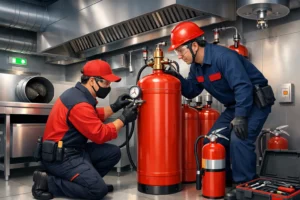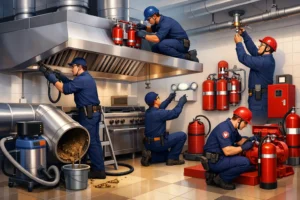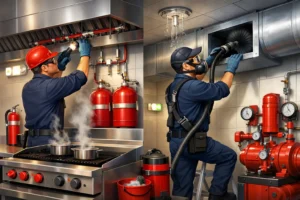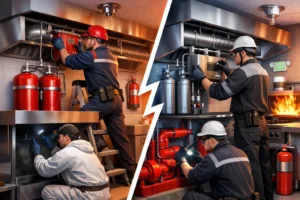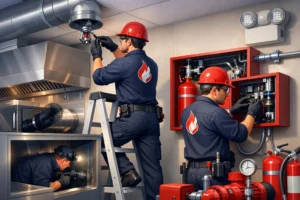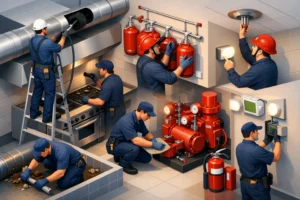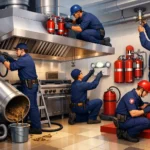
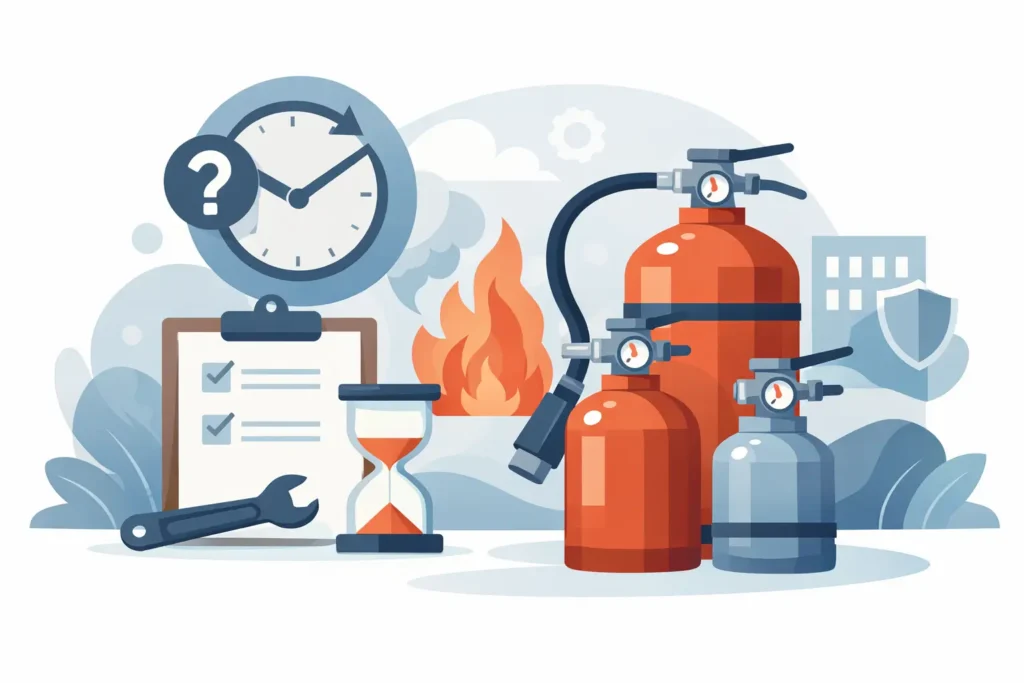
A cylinder can look fine on the wall and still put your kitchen at risk. That is the problem behind the question, when should suppression cylinders be replaced. In commercial kitchens, replacement is not based on appearance alone. It depends on age, hydrostatic test history, manufacturer requirements, physical condition, pressure status, and whether the cylinder remains compliant with NFPA standards and the listed system design.
For restaurants, hotels, resorts, and institutional kitchens, this is not a minor maintenance detail. A suppression cylinder that is overdue for testing, damaged, corroded, or no longer serviceable can lead to failed inspections, insurance concerns, and system failure during a fire event. The correct decision is not simply replacing cylinders on a guess. It is determining whether the cylinder is still approved for continued service.
When should suppression cylinders be replaced in a commercial kitchen?
The short answer is that suppression cylinders should be replaced when they can no longer be legally or safely returned to service. In many cases, that happens after failed hydrostatic testing, visible damage, corrosion, loss of required markings, valve or shell defects, obsolete system components, or manufacturer limits that prevent recharge or recertification.
That is different from routine service. A cylinder that is within its approved service life may only need inspection, pressure verification, or hydrostatic testing at the required interval. A cylinder that fails those checks must be removed and replaced.
For wet chemical kitchen fire suppression systems, the replacement decision should always be tied to the cylinder listing and the manufacturer’s technical manual. ANSUL, Kidde, PyroChem, Range Guard, ProTex, and similar systems have specific service requirements. A field judgment without reference to those requirements creates liability.
The main conditions that trigger cylinder replacement
Failed hydrostatic testing
Hydrostatic testing is one of the clearest replacement triggers. If the cylinder fails the required pressure test, it cannot be put back into service. This is a hard stop, not a judgment call.
A failed test may indicate weakened cylinder walls, deformation, leakage, or metal fatigue. In a kitchen environment, where heat, grease, moisture, and chemical exposure are common, that risk is real. Once a cylinder fails hydro, replacement is the correct corrective action.
Corrosion, dents, gouges, or physical damage
External condition matters. Surface contamination can hide more serious problems, especially near brackets, valve connections, and lower shell areas where moisture collects. If inspection reveals pitting, severe rust, deep dents, gouges, bulging, or thread damage, the cylinder may be condemned.
Not every cosmetic mark requires replacement. Light surface wear may be acceptable depending on manufacturer criteria. But once damage affects structural integrity or serviceability, the cylinder should be removed from the system.
Out-of-date or obsolete cylinder assemblies
Some systems remain in operation long after parts become difficult to support. If the cylinder assembly, valve, cartridge arrangement, or agent configuration is obsolete and approved replacement parts are no longer available, continued service becomes difficult to justify.
This matters during inspections and after discharge events. If the cylinder cannot be recharged or recertified according to the listed design, replacement is often the only compliant path. In older kitchens, this can become part of a broader system upgrade rather than a simple component swap.
Pressure loss or inability to maintain charge
A suppression cylinder that does not hold pressure as required is not reliable. Pressure loss may come from valve leakage, damaged seals, shell defects, or temperature-related issues that expose an existing weakness.
Pressure readings must be evaluated correctly. A gauge outside the acceptable range does not always mean the cylinder shell is bad, but it does mean the unit requires immediate service. If the problem cannot be corrected under the manufacturer’s maintenance procedure, replacement is necessary.
Missing labels, markings, or traceability
A cylinder must be identifiable and traceable. If original markings, test dates, nameplate data, or approval information are missing or illegible, that creates a compliance problem. Technicians need to confirm the cylinder specification, test interval, agent type, and listing compatibility.
If that information cannot be verified, the cylinder may not be eligible for continued service. In audit-driven environments, undocumented equipment is a recurring source of corrective action.
Age alone does not always answer the question
Many operators expect a fixed replacement age, but that is not how suppression cylinders are typically managed. Unlike disposable equipment, serviceable cylinders are often maintained through inspection, weighing or pressure review, and hydrostatic testing at prescribed intervals. A well-maintained cylinder may remain in service for years if it continues to meet requirements.
At the same time, age should never be ignored. Older cylinders deserve closer review because material condition, supportability, and documentation become more of a concern over time. A 20-year-old cylinder that passes all required tests and remains fully supported is one situation. A 20-year-old cylinder with corrosion, uncertain service history, and obsolete parts is another.
That is why the right question is not only how old the cylinder is. It is whether the cylinder is still approved, testable, and serviceable within the listed system.
Inspection findings that often lead to replacement decisions
Repeated service issues
If the same cylinder repeatedly shows pressure irregularities, leakage concerns, or valve problems, replacement may be more practical than continued corrective work. This is especially true in high-volume kitchens where downtime has operational cost.
A technically repairable condition is not always the best business decision. If a cylinder has become a recurring compliance risk, replacement may reduce future disruptions.
Environmental exposure in harsh kitchen conditions
Commercial kitchens are aggressive environments. Heat cycling, steam, degreasers, salt air in coastal hospitality properties, and poor cleaning practices can all shorten component life. Cylinders mounted in areas with chronic grease accumulation or moisture exposure should be evaluated carefully during every inspection.
This is one reason routine visual checks are not enough. A disciplined inspection program looks at mounting condition, accessibility, discharge line connection points, nozzle protection status, and overall system integrity, not just the cylinder shell.
Post-discharge or post-incident evaluation
After a system discharge, the cylinder must be handled according to the manufacturer’s recharge and inspection procedures. In some cases, the cylinder can be returned to service after proper maintenance and testing. In others, damage during discharge, contamination, or failed recertification leads to replacement.
After any fire event, documentation matters. Operators should not accept a simple recharge without confirmation that the cylinder itself remains serviceable.
When should suppression cylinders be replaced versus tested?
This is where many facilities make costly mistakes. Testing and replacement are not interchangeable.
Testing is appropriate when the cylinder has reached its required hydrostatic interval or needs qualification for continued service. Replacement is appropriate when the cylinder fails that process or shows a non-correctable condition that disqualifies it from service.
Replacing too early increases cost unnecessarily. Replacing too late creates a compliance and life-safety exposure. The correct timing comes from documented inspection findings, test records, and manufacturer criteria.
For hospitality operators, the safest approach is to treat cylinder service as part of a full suppression system maintenance program. Reviewing only the gauge once in a while is not enough. Cylinder condition must be assessed alongside fusible links, detection line condition, nozzle caps, manual pull stations, gas and electric shutoff integration, and reporting records needed for audits and insurers.
Why replacement decisions affect audits, insurance, and uptime
A questionable cylinder can affect more than the fire system itself. During an AHJ review, insurance inspection, brand audit, or internal safety assessment, unresolved cylinder deficiencies can trigger failed findings or forced corrective action. In some facilities, that means delayed openings, restricted kitchen use, or emergency service under pressure.
The financial impact usually appears in the wrong place first. It may show up as business interruption, temporary kitchen shutdown, failed hospitality inspection readiness, or exposure after a fire when service records are reviewed. The cylinder is a small component in appearance, but it carries large operational consequences.
That is why replacement should not be treated as an afterthought or deferred until discharge occurs. A suppression system is expected to work immediately, under heat, with no second chance.
A practical standard for operators
If you manage a commercial kitchen, do not wait for visible failure. Have suppression cylinders reviewed during scheduled semiannual inspections, confirm hydrostatic test status, verify pressure and condition, and document every deficiency with a corrective timeline. If a cylinder is damaged, obsolete, fails testing, cannot maintain charge, or cannot be verified against manufacturer and code requirements, replace it.
For operators with multiple properties, consistency matters even more. Standardized reporting, photo documentation, and service history make it easier to spot aging cylinders before they create an inspection problem or fire protection gap.
Fire Patrol works with kitchen-focused suppression systems where compliance is tied directly to operations. In that environment, the best replacement decision is never based on guesswork. It is based on evidence, standards, and whether the system can still be trusted when the hazard becomes real.
A suppression cylinder should stay in service only as long as it remains fully compliant, fully supported, and fully ready to discharge when your kitchen needs it most.