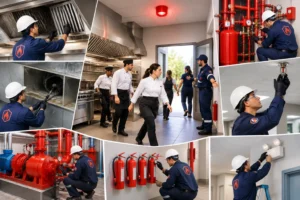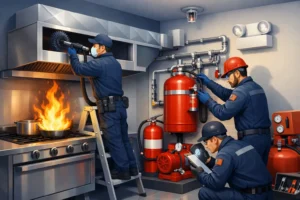
A kitchen suppression system rarely fails at a convenient time. It fails during service, during an inspection, or right after a small issue has been ignored long enough to become an operational problem. That is why preventive maintenance vs reactive repairs is not just a budgeting discussion for commercial kitchens. It is a risk-control decision that affects fire protection, compliance status, insurance exposure, and whether the kitchen stays open.
For restaurants, hotels, resorts, and institutional food operations, reactive work often looks cheaper only because the full cost is delayed. A clogged nozzle, discharged cylinder, worn fusible link, failed micro switch, grease-loaded duct, or noncompliant alarm interface may not stop production today. But once one of those issues triggers a failed inspection, a fire event, or a shutdown notice, the cost is no longer limited to a service call.
Why preventive maintenance vs reactive repairs matters in commercial kitchens
In a general building environment, reactive repairs can sometimes be tolerated for noncritical assets. Commercial kitchen fire protection is different. Wet chemical suppression systems, hood exhaust components, mechanical activation parts, fuel shutoff interfaces, and alarm communication devices operate inside a high-heat, grease-heavy environment where degradation is expected. The question is not whether components will wear, foul, drift, or lose pressure. The question is whether those conditions will be identified before they compromise performance.
NFPA-based maintenance exists for that reason. Standards such as NFPA 17A and NFPA 96 are not administrative paperwork. They reflect known failure points in kitchen fire protection systems and ventilation infrastructure. When inspections, cleaning, testing, and documented corrective actions are performed on schedule, operators are controlling predictable risks. When those tasks are postponed until there is a visible problem, the operation is accepting unknown exposure.
Reactive repairs also create a blind spot. They solve the symptom that interrupted service, but they do not always address the surrounding conditions that caused the failure. A replaced fusible link is useful. A replaced fusible link plus nozzle inspection, cap verification, cylinder pressure review, and discharge path evaluation is risk management.
What preventive maintenance actually includes
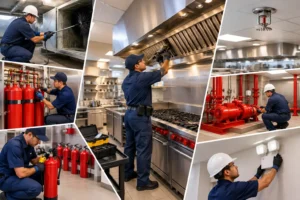
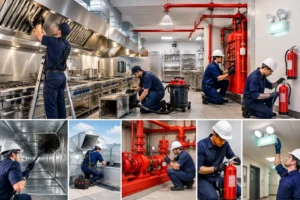
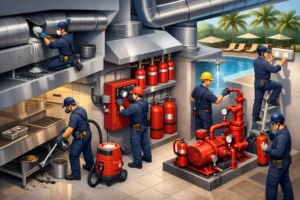
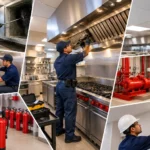
Preventive maintenance in a commercial kitchen is not a single visit and not a generic checklist. It is a scheduled program tied to system type, equipment layout, use intensity, grease load, and compliance obligations. In suppression work, that usually means regular inspection of cylinders, actuation mechanisms, pull stations, detection line components, nozzles, blow-off caps, gas or electric shutoff interlocks, and associated alarm reporting.
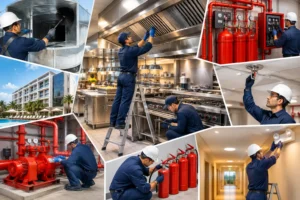
It also extends beyond the suppression tank. Hood and duct cleaning affects fire load and airflow performance. Refrigeration and air conditioning maintenance can affect equipment reliability and ambient operating conditions. Kitchen sanitation and HACCP-oriented reviews help identify practices that increase risk around ignition sources, grease accumulation, and housekeeping deficiencies.
The real value is not only the maintenance itself but the structure around it. A disciplined preventive program includes documented findings, photographs, corrective recommendations, service intervals, and proof that the operation has acted on deficiencies. For facilities facing brand audits, insurer reviews, health inspections, or authority having jurisdiction scrutiny, that documentation matters almost as much as the wrench work.
What reactive repairs usually look like
Reactive repairs begin after a failure, deficiency notice, alarm issue, visible leak, pressure problem, or inspection citation. In foodservice environments, this often means emergency calls for discharged systems, blocked nozzles, failed links, damaged piping, inoperative manual pull stations, or kitchen exhaust conditions that have reached an unacceptable level.
There are situations where reactive work is unavoidable. Mechanical parts can fail unexpectedly. Occupants can damage equipment. Construction changes can affect protected appliances. Emergency response will always be necessary in a real facility portfolio.
The problem starts when reactive response becomes the operating model. Then every service event is urgent, every deficiency is discovered late, and every repair has to compete with live kitchen schedules, occupancy demands, vendor coordination, and revenue pressure. That is when repair costs rise. After-hours labor, expedited parts, interrupted meal periods, temporary equipment shutdowns, and repeat technician visits all become more likely.
The cost difference is larger than the invoice
Some operators compare preventive maintenance and reactive repairs by looking only at the immediate service price. That comparison is incomplete.
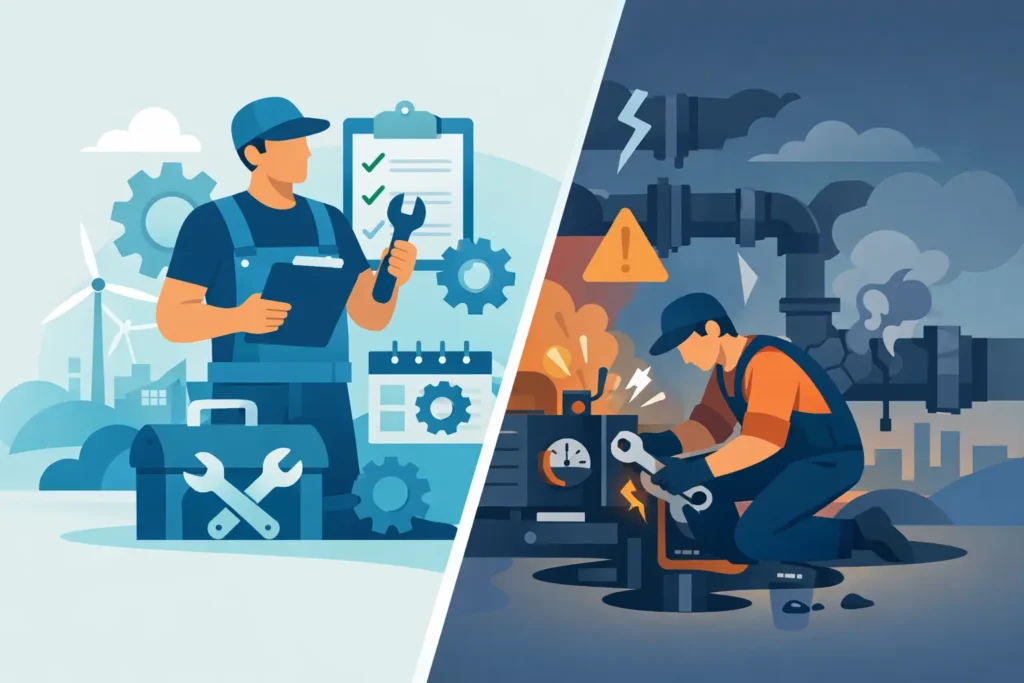
Preventive maintenance is a planned expense. It can be scheduled around production, grouped with inspection cycles, and coordinated with cleaning and compliance tasks. Reactive repairs are often unplanned and expensive in ways the invoice does not fully show. A failed inspection can delay openings, trigger reinspection fees, or create pressure from corporate compliance teams. A suppression deficiency can affect insurer confidence. A grease-related fire event can damage equipment, contaminate food areas, interrupt bookings, and create legal exposure if records are weak.
There is also the cost of uncertainty. Facility managers and executive chefs need to know whether systems are serviceable before peak occupancy periods, not during them. Preventive programs provide operating visibility. Reactive models provide surprises.
Compliance is where the gap becomes obvious
The debate around preventive maintenance vs reactive repairs usually ends once compliance enters the room. Commercial kitchens do not operate in a vacuum. They operate under inspection schedules, fire code requirements, insurer expectations, and internal audit programs. In that environment, waiting for something to break is not a neutral choice.
A noncompliant suppression system can produce several problems at once. The system may still appear intact, but expired maintenance intervals, obstructed nozzles, missing caps, low cylinder pressure, poor appliance coverage, or undocumented modifications can leave the site exposed. When records are requested, verbal assurances are not enough.
This is especially relevant in hospitality groups and multi-unit operations. One missed service interval or unresolved deficiency in a single kitchen can create wider reporting issues across the portfolio. Standardized preventive maintenance gives operators consistency. Reactive repairs produce fragmented records and uneven compliance performance.
Where reactive repairs still make sense
A balanced policy is better than an absolute one. Reactive repairs are appropriate for sudden failures that could not reasonably have been predicted, for accidental damage, and for one-time corrective actions identified during inspections. The issue is not whether reactive work should exist. It must.
The better question is what percentage of your fire protection and kitchen safety workload is reactive. If most service calls happen only after an issue disrupts operations, the maintenance program is too thin. If reactive work is limited to isolated exceptions found inside a strong inspection and maintenance schedule, the operation is in much better shape.
That distinction matters because no preventive program eliminates every repair. What it does is reduce frequency, reduce severity, and improve response quality because system conditions are already known.
How to choose the right model for your facility
For commercial kitchens, the right answer is rarely one or the other. The practical model is preventive-first with controlled reactive response. That means building service intervals around suppression inspections, hood and duct conditions, cylinder status, detection components, alarm integration, and documented corrective actions. It also means defining how emergency repairs will be handled when a deficiency appears between scheduled visits.
Operators should evaluate three things. First, how critical is the kitchen to revenue and guest service. Second, what is the compliance burden based on brand standards, insurers, and local enforcement. Third, how difficult would it be to absorb a shutdown during peak periods. In most hospitality environments, those answers point toward structured preventive maintenance, not wait-and-fix behavior.
This is where specialist contractors matter. A kitchen-focused provider does not just replace parts. The provider evaluates whether the suppression system, exhaust conditions, housekeeping practices, and records support compliance and operational continuity together. That approach is especially valuable in properties where multiple risks overlap and where deficiencies in one area can affect audit results in another.
Fire Patrol works in that exact space, where inspection scheduling, corrective actions, standards-based service, and photographic reporting need to function as one system rather than a set of disconnected calls.
The operational question behind the maintenance question
Most decision-makers already know that planned maintenance is the safer path. The hesitation usually comes from scheduling pressure, budget limits, or the assumption that a quiet system is a healthy system. In commercial kitchens, that assumption is dangerous. Many high-consequence deficiencies stay hidden until an inspection, discharge event, or fire exposes them.
A stronger maintenance strategy does not eliminate pressure in your operation. It reduces avoidable pressure. It replaces emergency decision-making with documented control, and that is what keeps kitchens open, protects people, and makes compliance defensible when someone asks for proof.
The best time to fix a suppression problem is before the kitchen needs the system to perform.