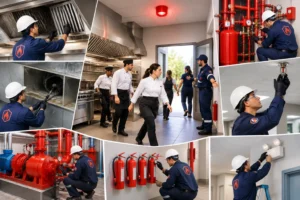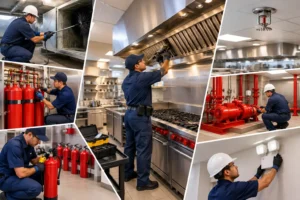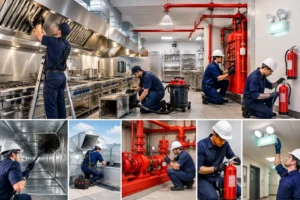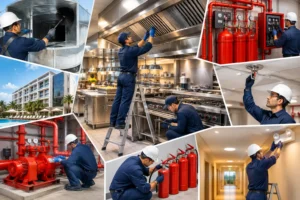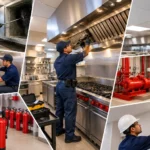

A missed inspection date usually does not cause problems until the day something goes wrong. In a commercial kitchen, that is exactly why fire suppression inspection frequency matters. If your wet chemical system is overdue, damaged, obstructed, or improperly documented, you are not just facing a code issue – you are exposed to shutdowns, failed audits, insurance disputes, and a system that may not operate as intended during a grease fire.
For restaurants, hotels, resorts, institutional kitchens, and multi-site food operations, inspection scheduling should be treated as a controlled compliance process, not a calendar reminder with no follow-up. The right frequency depends on the applicable standard, the type of equipment protected, system condition, and whether any changes have been made to the cooking line, hood, duct, gas shutoff, or alarm interface.
What fire suppression inspection frequency actually means
In commercial kitchen environments, fire suppression inspection frequency refers to how often the installed system must be examined, tested, serviced, and documented by qualified personnel. This is not limited to a quick visual look at the tank or pull station. A proper inspection involves the components that determine whether the system will discharge correctly and whether it still aligns with the hazard it was designed to protect.
For wet chemical systems installed to protect cooking equipment, the baseline requirement most operators need to know is that inspection is typically required at six-month intervals. That expectation is tied to NFPA 17A and NFPA 96 practices commonly applied in commercial kitchen fire protection programs. In practical terms, semiannual service is the standard starting point for most facilities.
That said, six months is not a free pass to ignore the system in between visits. A kitchen may still require corrective service earlier if a nozzle cap is missing, a fusible link is contaminated, cylinder pressure falls outside acceptable range, appliances are moved, new cooking equipment is added, or grease accumulation affects protected areas. Frequency sets the minimum recurring interval. It does not replace ongoing condition monitoring.
The six-month standard and where operators get caught off guard
Many managers assume that if the tag shows a recent date, the system is compliant. That is only partly true. A current inspection tag matters, but so does the actual field condition of the system on the day of an audit or incident.
Semiannual inspection is the standard benchmark because kitchen environments are aggressive. Heat, grease vapor, cleaning chemicals, vibration, and equipment movement all affect suppression hardware over time. Nozzles can become obstructed. Detection lines can be compromised. Fusible links can become loaded with grease. Manual pull stations can be blocked by storage or altered layouts. Alarm monitoring and fuel shutoff functions can also drift out of compliance if electrical or mechanical changes were made after the last service.
This is where operators get caught off guard. They think of the system as a sealed life safety asset that stays ready until the next scheduled visit. In reality, commercial kitchens change constantly. Menu changes lead to equipment swaps. Temporary line additions become permanent. Contractors move appliances without evaluating nozzle coverage. A six-month inspection interval only works when it is backed by day-to-day control of the protected hazard.
What a proper inspection should cover
A credible suppression inspection is technical, not cosmetic. The goal is to verify that the system remains matched to the cooking hazard and capable of proper automatic and manual operation.
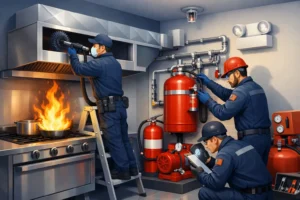
The inspection should evaluate the cylinder condition and pressure, detection line integrity, fusible links, nozzle placement, nozzle caps, appliance coverage, manual pull station accessibility, mechanical actuation, fuel or power shutoff interface, and alarm connection where required. Inspectors should also verify that the hood, plenum, and duct conditions do not undermine system performance. Excessive grease buildup is not just a sanitation problem – it increases fire load and can affect how a fire spreads beyond the initial appliance.
Documentation is just as important as field work. Service records should identify deficiencies, corrective actions, replaced components, dates, technician qualifications, and evidence that the system was tested or inspected according to applicable standards and manufacturer requirements. In audit-driven environments such as hotels, resorts, and institutional foodservice, undocumented work often creates the same operational problem as work that was never done.
When fire suppression inspection frequency needs to increase
The standard interval is semiannual, but some kitchens should apply tighter internal review and faster corrective response. High-volume operations, 24-hour kitchens, heavy frying lines, solid fuel cooking, and properties with repeated grease management issues all face higher exposure. The suppression system may still be formally inspected every six months, yet the site should not wait that long to identify developing failures.
Facilities with frequent equipment changes also need closer control. If you relocate fryers, add charbroilers, replace appliance dimensions, or alter the hood footprint, the original suppression layout may no longer provide proper coverage. In those cases, the system should be evaluated immediately rather than left unchanged until the next routine date.
Multi-unit operators face a different problem: inconsistency. One location may have excellent maintenance discipline while another delays service, loses records, or allows kitchen modifications without review. For those portfolios, inspection frequency is only part of the solution. Standardized scheduling, centralized documentation, and follow-up on deficiencies are what keep one overdue store from becoming the source of a failed corporate audit or uninsured loss.
Common reasons a compliant-looking system still fails inspection
A system can look intact from the floor and still fail a technical review. This happens often in hospitality environments where visual housekeeping is strong but life safety details are not being tracked closely.
One common issue is nozzle obstruction or missing caps. Another is contaminated or outdated fusible links. Manual pull stations are sometimes blocked by shelving, décor changes, or temporary storage. Appliance replacement is another major factor. If a protected fryer is swapped for a different model or a new cooking battery is installed, nozzle alignment and agent distribution may no longer match the hazard.
Pressure issues also matter. A cylinder outside its specified range can compromise discharge performance. The same applies to damaged detection cable, corroded fittings, disconnected gas shutoff mechanisms, or alarm interfaces that were never reconnected after electrical work. None of these problems are solved by having a recent inspection sticker alone.
How to manage inspection frequency without disrupting operations
The most effective approach is to treat suppression service like a planned operating control. Schedule semiannual inspections in advance, but also build in checks tied to kitchen changes, maintenance events, and cleaning cycles. If your hood and duct cleaning vendor reports heavy grease accumulation, that should trigger closer review of the suppression environment. If maintenance teams move equipment for flooring, tile, refrigeration, or utility work, the suppression layout should be reverified before the line returns to full service.
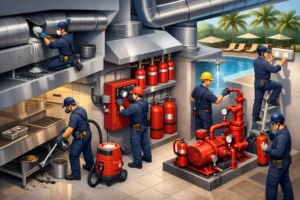
For hotels and large foodservice operations, it helps to align suppression inspections with broader compliance activity. Pairing service visits with hood and duct review, cylinder pressure checks, nozzle cleaning, fusible link replacement, and alarm interface verification creates better control than isolated service calls. It also produces cleaner documentation for insurers, brand audits, health and safety reviews, and internal risk management.
This is where a specialist contractor adds real value. In kitchen fire protection, frequency is only one piece. The bigger issue is whether inspections are performed by technicians who understand wet chemical systems, cooking hazards, discharge mechanics, and the documentation standards expected in commercial hospitality environments.
A practical standard for owners and facility managers
If you oversee a commercial kitchen, use six months as the minimum service interval unless a stricter requirement applies from the authority having jurisdiction, insurer, manufacturer, or site-specific risk program. Then ask a second question: what has changed since the last inspection?
That question is what separates audit-ready operations from reactive ones. Changes to appliances, grease conditions, staffing practices, cleaning quality, and maintenance scope can all affect system readiness long before the next scheduled service date arrives. A disciplined inspection program should capture those changes early, document them clearly, and correct them before they become a fire event, a citation, or a denied claim.
In high-risk foodservice environments, the right fire suppression inspection frequency is not just about meeting the calendar. It is about maintaining a system that will actually perform when the kitchen is under its worst possible conditions.