A kitchen can pass a health review and still fail the fire side of an audit. That is where NFPA 96 restaurantes becomes a serious operational issue, especially for facilities running high-volume cooking, extended hours, and grease-producing equipment. For restaurant owners, chefs, facility managers, and hotel operators, this standard is not just about code language. It directly affects fire risk, inspection outcomes, insurance exposure, and the ability to keep service running without interruption.
NFPA 96 governs ventilation control and fire protection for commercial cooking operations. In practical terms, it sets the baseline for how hoods, grease ducts, exhaust systems, filters, fans, and related fire protection components must be installed, inspected, cleaned, and maintained. If your kitchen produces grease-laden vapors, NFPA 96 is part of your risk profile whether you manage one restaurant or a multi-site hospitality operation.
Why NFPA 96 restaurantes matters in daily operations
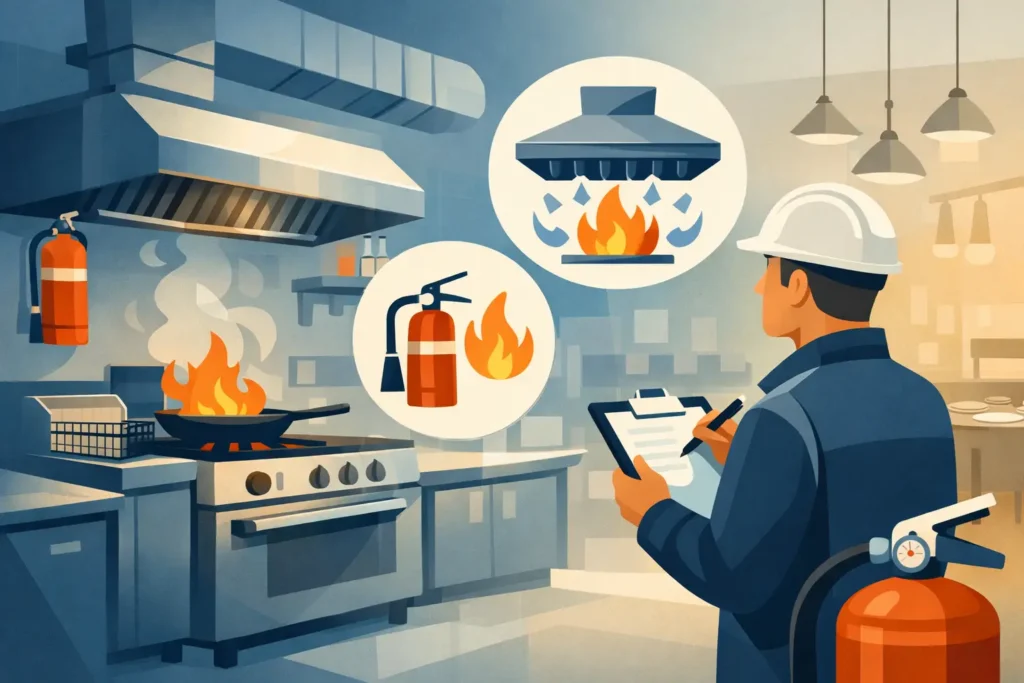
Many operators think about kitchen fire protection only in relation to the suppression system. That is a costly mistake. A wet chemical system may be correctly installed and still be compromised by neglected duct conditions, missing grease filters, inaccessible fan sections, or excessive buildup in concealed areas. NFPA 96 addresses the full path of grease vapor movement, from the cooking surface to the point of discharge.
This matters because kitchen fires do not stay confined to appliances for long. Once grease accumulates in ducts, fans, and hood plenums, ignition can spread beyond the original source. That raises the potential for structural damage, shutdowns, failed inspections, and disputes with insurers over maintenance history. A compliant system is not simply one that exists. It is one that has been maintained, documented, and kept in serviceable condition.
For restaurants, hotels, resorts, commissaries, and institutional kitchens, the standard also affects continuity. If a deficiency is identified during an inspection by the authority having jurisdiction, the result may be more than a corrective note. Depending on severity, it can lead to operational restrictions or a forced service interruption. In busy foodservice environments, even a short shutdown can trigger lost revenue, canceled events, staffing issues, and reputational damage.
What NFPA 96 covers in a commercial kitchen
NFPA 96 is often discussed as if it were only a hood cleaning standard. It is broader than that. The standard covers the construction, installation, operation, inspection, and maintenance of cooking ventilation systems and the components connected to them.
Hoods, grease removal devices, and exhaust airflow
The hood must be appropriate for the equipment below it and able to capture grease-laden vapors effectively. Filters and grease removal devices must be present, correctly installed, and maintained in a condition that allows proper airflow. If filters are damaged, missing, or incorrectly placed, grease can bypass the intended path and accumulate in hazardous areas.
Airflow is another common problem. A system can look acceptable at a glance and still perform poorly because of fan issues, belt wear, access problems, or design modifications made after the original installation. When capture and containment fail, heat and grease spread where they should not.
Ducts, access panels, and discharge points
Grease ducts must be constructed and maintained to limit leakage, resist fire spread, and allow access for inspection and cleaning. This is where many facilities fall short. Hidden sections above ceilings or inside shafts are often overlooked until an inspection reveals inaccessible or heavily contaminated areas.
Access panels are not a minor detail. If technicians cannot reach critical duct sections, proper inspection and cleaning cannot be completed. That creates a documentation gap and a real fire hazard at the same time.
Rooftop fans and hinge kits
The exhaust fan is part of the grease path, not a separate mechanical item. Fans must be in a condition that supports safe cleaning and inspection. Where required, hinge kits and access provisions matter because they allow safe servicing without damaging duct connections or creating maintenance shortcuts. A fan that cannot be properly opened and inspected is a liability.
Clearance, protection, and system condition
NFPA 96 also addresses clearance to combustibles, protection of surrounding construction, and the overall condition of the exhaust system. Unauthorized field modifications, damaged components, or grease leakage at joints are signs that the system requires corrective action, not just routine cleaning.
NFPA 96 restaurantes and cleaning frequency
Cleaning frequency is one of the most misunderstood areas. Operators often ask for a fixed interval, but the right answer depends on cooking volume and grease production. A solid-fuel concept, a 24-hour hotel kitchen, and a low-volume prep facility do not create the same contamination rate.
NFPA 96 requires inspection of grease buildup at intervals based on usage and system type. The frequency of cleaning should follow those findings and the nature of the operation. Some systems need monthly attention. Others can support a longer interval. What matters is documented evidence that the schedule matches the real risk.
This is where generic service plans create trouble. If a contractor places every kitchen on the same cycle without considering menu, equipment load, and operating hours, the result may be over-servicing in one location and dangerous neglect in another. Compliance is not built on guesswork. It is built on inspection-based scheduling.
Common deficiencies that put operators at risk
In commercial kitchen audits, the same issues appear repeatedly. Grease accumulation in ducts and fan housings is one of the most serious. Missing or heavily damaged filters are another. Technicians also find blocked access panels, unsealed openings, fans without proper service access, and poor housekeeping around the hood line.
There is also a recurring gap between the ventilation system and the fire suppression system. Operators may replace cooking equipment, modify hood lines, or change appliance layout without reviewing nozzle coverage, detector placement, and appliance-specific protection requirements. Once that happens, the installation may no longer match the hazard.
Another problem is weak documentation. A kitchen may have been serviced, but if the reports are incomplete, if photos are missing, or if corrective actions were never formally closed, the facility has little protection during an insurance review or authority inspection. In high-liability environments, undocumented maintenance is often treated as maintenance that did not happen.
How compliance should be managed
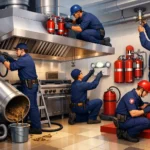
The right approach to NFPA 96 restaurantes is preventive, scheduled, and technical. It starts with a qualified inspection of the hood, filters, duct runs, fan assembly, and visible fire protection interfaces. From there, any deficiency should be categorized by risk level, with corrective actions documented clearly.
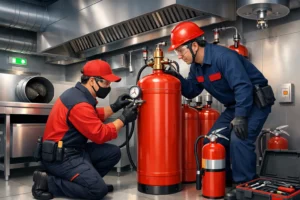
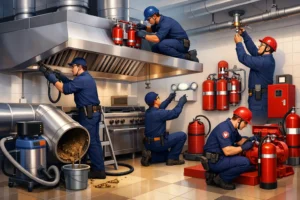
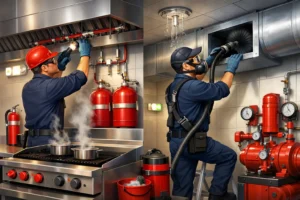
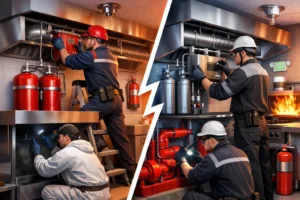
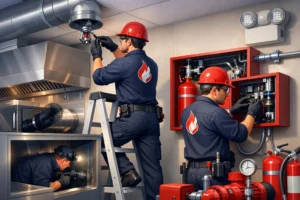
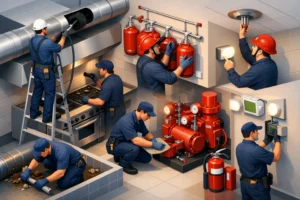
For many operations, the best model is not one-time cleaning. It is a recurring maintenance program that combines grease exhaust inspection, hood and duct cleaning, suppression system review, fusible link replacement where applicable, nozzle inspection, cylinder pressure checks, alarm interface verification under NFPA 72 when installed, and service reporting with photos. That kind of structure supports both safety and audit readiness.
It also supports better planning. When service intervals are established in advance, kitchen leadership can coordinate around production demands, avoid unnecessary downtime, and correct developing issues before they become failures. Fire Patrol often works within this framework because hospitality operations need documentation and technical continuity, not just emergency response.
What restaurant operators should ask their service provider
A qualified provider should be able to explain how the kitchen’s cooking load affects inspection and cleaning frequency, what areas were physically accessed, what deficiencies were found, and how those deficiencies affect compliance. They should also provide traceable service records, not vague verbal assurances.
If your provider cannot show before-and-after evidence, identify inaccessible sections, or explain how the exhaust system condition relates to the suppression system, that is a warning sign. The same applies if reports do not reference corrective needs in plain operational terms. A restaurant manager does not need abstract language. They need to know what creates fire risk, what can fail an inspection, and what must be corrected now versus scheduled later.
The real cost of ignoring the standard
Operators sometimes delay service because the system appears to be working. Exhaust is moving, the kitchen is open, and there has been no fire event. That logic fails quickly when grease buildup reaches concealed sections or when an incident exposes years of weak maintenance practice.
The cost is rarely limited to cleaning or repair. It can include interrupted operations, emergency suppression discharge, smoke contamination, damaged equipment, denied insurance claims, failed brand audits, and legal exposure after an injury or loss. For hotel and resort kitchens, the impact spreads even further because foodservice interruptions affect guest experience, event execution, and occupancy reputation.
A compliant kitchen exhaust system is not only a code issue. It is part of business continuity. The operators who manage it well tend to treat inspections, cleaning, suppression maintenance, and documentation as one connected discipline. That is the practical standard restaurants should hold themselves to if they want fewer surprises, stronger inspection outcomes, and a safer kitchen environment every day.