A kitchen passes service every day until the wrong detail puts the entire operation at risk. In many commercial facilities, the first warning is not an active fire event but the señales sistema extinción vencido that appear during routine inspection, insurance review, or authority having jurisdiction visits. When those signs are missed, the result can be failed compliance, denied claims, equipment damage, and interruption of foodservice operations.
In commercial kitchens, a fire suppression system is not a box to check once a year and forget. It is a life safety assembly with mechanical, chemical, and detection components that age at different rates. Some parts reach replacement intervals by date. Others fail because of grease contamination, poor housekeeping, unauthorized modifications, or missed service. That is why expired status is not limited to the tank label. A system can look complete and still be noncompliant.
What expired fire suppression signs really mean
When operators hear that a system is expired, they often assume the issue is only the agent cylinder. In practice, expiration can involve fusible links, cartridges, hydrostatic test dates, detection line condition, nozzle caps, control heads, alarm interface, or missing service documentation. In a commercial kitchen, that distinction matters because a partial failure can prevent discharge or delay detection when heat conditions escalate.
For hotels, restaurants, resorts, and institutional kitchens, the concern is broader than code language. An expired or overdue system can trigger findings during fire inspections, create problems with insurer requirements, and expose the facility to liability after an incident. If the kitchen hood, duct, and suppression system are treated as separate issues, gaps appear fast. NFPA 17A and NFPA 96 expectations are operational, not theoretical. The system must be installed correctly, inspected at required intervals, and kept in working order with documented evidence.
Most common señales sistema extinción vencido
The most obvious sign is an inspection tag showing overdue service. If the semiannual inspection date has passed, the system should already be treated as a compliance issue. That does not automatically mean every component has failed, but it does mean the facility lacks current verification that the system is ready to perform as intended.
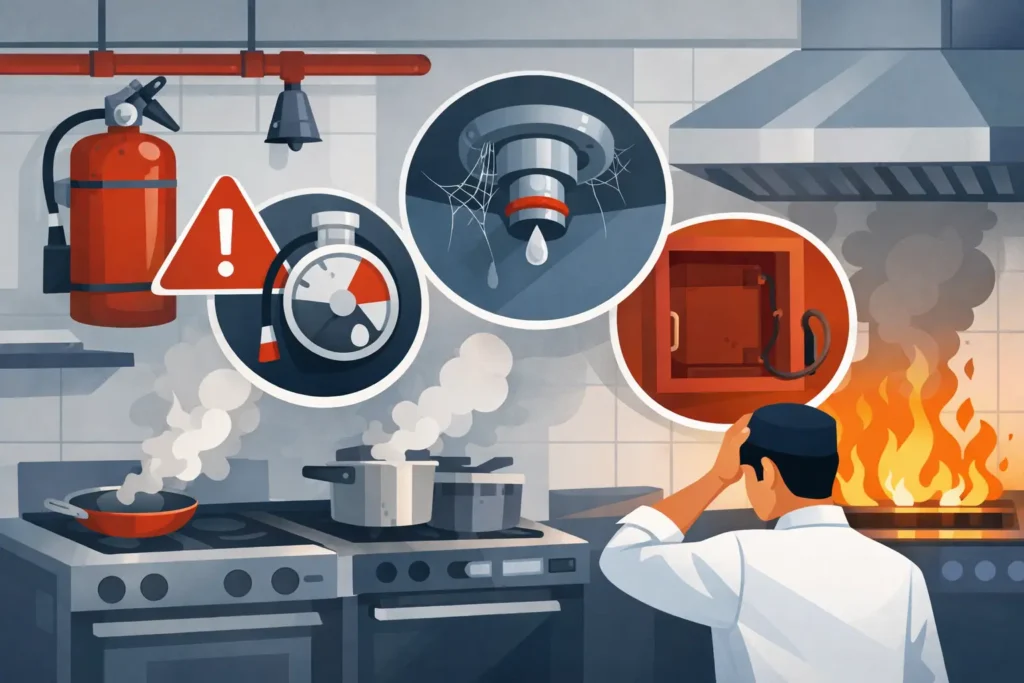
Another common signal is outdated fusible links. These links are heat-sensitive release devices, and they are not permanent components. In commercial cooking environments, grease, vapor, and cleaning chemicals accelerate deterioration. If links are painted, contaminated, the wrong temperature rating, or beyond their replacement schedule, the detection sequence may not operate correctly.
Cylinder status is another critical checkpoint. The tank may show corrosion, pressure loss, missing labels, or test dates that indicate required hydrostatic testing or replacement intervals have been missed. A cylinder that has not been maintained per manufacturer requirements is not just an administrative issue. It may fail when the system is needed most.
Nozzles also tell a story. Missing blow-off caps, grease-packed discharge points, incorrect orientation, or nozzle relocation after appliance changes are all warning signs. A kitchen that replaced fryers, charbroilers, or ranges without re-evaluating nozzle coverage may now have an expired protection layout even if the original installation once passed.
Documentation problems are another sign facilities underestimate. If there is no current inspection report, no record of corrective actions, no appliance compatibility confirmation, or no evidence of alarm and gas shutoff interface testing, the operation is exposed. Auditors and insurers do not evaluate intent. They evaluate records, conditions, and conformity.
Why systems become expired before operators notice
Most failures come from drift, not a single dramatic event. A kitchen changes equipment. A contractor disconnects something during maintenance. Hood cleaning happens, but no one checks nozzle caps afterward. A manager assumes the last vendor handled the inspection, but there is no report on file. Six months becomes nine, then twelve. At that point, the issue is no longer routine maintenance. It becomes an operational risk.
High-volume cooking accelerates this timeline. Grease-laden vapor affects detection components, nozzles, and pipe surfaces. Facilities with long service hours, aggressive frying, solid-fuel cooking, or inconsistent cleaning need closer attention because contamination develops quickly. In these environments, a system can move from compliant to questionable faster than many operators expect.
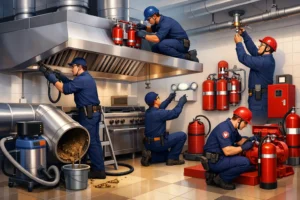
There is also confusion between hood cleaning and suppression maintenance. Both are necessary, but they are not interchangeable. A clean hood does not confirm a functional suppression system, and a recently inspected suppression system does not replace duct and plenum cleaning. Kitchen fire protection only works when those services are coordinated.
What inspectors usually check first
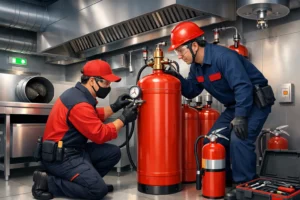
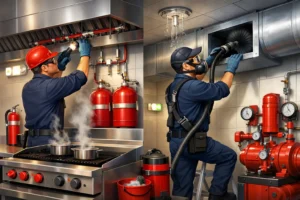
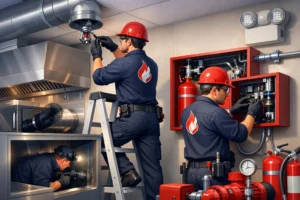
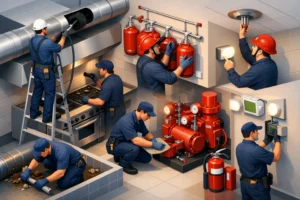
A trained kitchen fire protection inspection starts with the basics, but it should not stop there. Inspectors review service tags, manufacturer labeling, cylinder condition, pressure status, actuation components, fusible links, nozzles, manual pull stations, and protected appliance layout. They also verify that the system matches current cooking equipment and that nothing obstructs discharge patterns.
From there, the inspection should confirm whether fuel and electrical shutoffs are properly integrated and whether the fire alarm interface is functioning where required. In many failed inspections, the suppression hardware is present but the downstream sequence is incomplete. If gas does not shut off, or alarm monitoring is not properly coordinated, the facility still has a serious deficiency.
Good inspection work also includes documented reporting. That means findings are written clearly, deficiencies are identified, and corrective recommendations are specific. In a hospitality environment, photos matter because they create an audit trail and reduce confusion across ownership, engineering, operations, and insurance contacts.
What to do when you find señales sistema extinción vencido
The first step is not cosmetic cleanup. It is to schedule a qualified inspection by a contractor who works specifically with commercial kitchen wet chemical systems and understands the applicable manufacturer requirements. A general fire safety check is not enough when the system protects grease-producing appliances under a hood.
After inspection, the facility needs a deficiency-based action plan. Some cases require immediate replacement of expired links, cartridges, or caps. Others involve cylinder servicing, nozzle cleaning, appliance coverage corrections, or mechanical actuation testing. If equipment has changed since the original installation, redesign or reconfiguration may be necessary.
Timing matters. If an upcoming fire marshal visit, brand audit, insurer inspection, or ownership review is already on the calendar, delaying corrective service creates unnecessary exposure. A documented inspection followed by prompt repairs puts the facility in a stronger position than a rushed explanation on inspection day.
For multi-unit operators, the smarter move is a preventive schedule across all locations. Expiration issues are rarely isolated to one kitchen. If one site has outdated tags and undocumented changes, similar conditions often exist elsewhere in the portfolio.
Compliance, insurance, and business continuity
An expired suppression system is a safety issue first, but it quickly becomes a business issue. If a fire occurs and records show overdue service, missing maintenance, or uncorrected deficiencies, the financial consequences can extend well beyond equipment loss. Insurance disputes, guest impact, operational shutdown, and reputational damage can follow.
This is especially relevant in hotels, resorts, and high-output restaurants where kitchen downtime affects occupancy, events, banquets, and brand standards. A failed suppression inspection can force emergency scheduling, delayed openings, or temporary cooking restrictions. Those costs usually exceed the cost of staying current on inspection and maintenance.
That is why serious operators treat suppression compliance as part of continuity planning. The goal is not just passing one inspection. The goal is maintaining a kitchen that remains defensible during audits, reliable during service, and ready if an incident occurs.
A better standard for kitchen fire protection
The right approach is disciplined and repetitive. Inspect on schedule. Replace date-sensitive components on time. Verify nozzle condition and appliance coverage after any kitchen change. Coordinate hood cleaning with suppression awareness. Test mechanical and interface functions as required. Keep reports, photos, and corrective records organized and accessible.
For operations that cannot afford inspection failures or preventable shutdowns, technical consistency matters more than reactive service. A specialist provider such as Fire Patrol focuses on exactly that point – keeping commercial kitchen systems aligned with standards, manufacturer requirements, and real operating conditions.
If your facility is already showing signs of overdue service, treat that as a warning, not paperwork. The safest kitchens are not the ones that look fine from the floor. They are the ones with current inspection status, documented corrections, and a fire suppression system that is ready to perform when the heat rises.