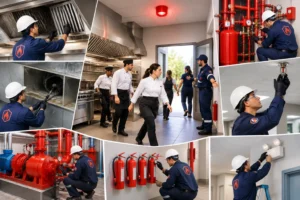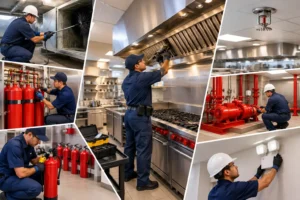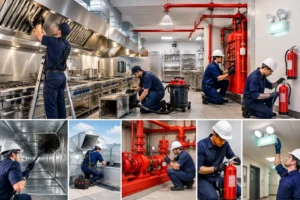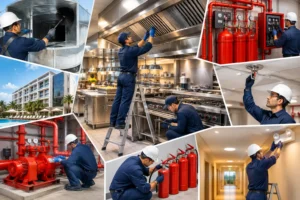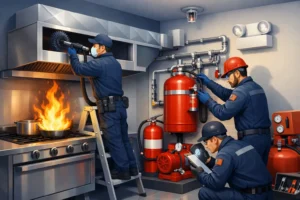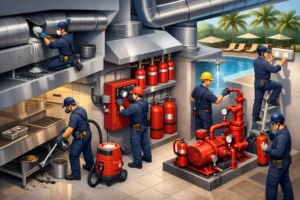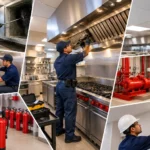
A failed kitchen inspection rarely starts with what is visible on the line. It usually starts above it – inside the hood plenum, along the grease duct, and at the exhaust fan where vaporized grease has been accumulating for months. In commercial foodservice, limpieza campanas y ductos cocina is not a cosmetic task. It is a fire prevention control, a sanitation measure, and a compliance requirement that directly affects operations, insurance exposure, and inspection readiness.
For restaurants, hotels, resorts, commissaries, and institutional kitchens, the issue is not whether grease will accumulate. It will. The real question is whether that accumulation is being managed under a documented maintenance program that aligns with NFPA 96, supports suppression system performance, and reduces the chance of a shutdown after an audit, claim, or fire event.
Why limpieza campanas y ductos cocina is a safety issue
Grease-laden vapors move through the hood and into the exhaust path every time cooking equipment is in use. As those vapors cool, grease deposits adhere to internal surfaces. Over time, the residue thickens in the hood canopy, filters, plenum, horizontal duct runs, vertical shafts, access panels, and rooftop fan assembly.
That buildup creates two immediate problems. First, grease is combustible. When flare-ups occur on the cooking surface, the fire can extend into the hood system and travel through contaminated ductwork. Second, grease restricts airflow. Reduced exhaust performance affects heat removal, smoke capture, indoor air quality, and overall kitchen working conditions.
For high-volume kitchens, these risks accelerate quickly. Fryers, charbroilers, wok stations, solid fuel cooking, and long operating hours produce heavier deposits than a light-duty kitchen. A cleaning interval that may appear acceptable on paper can become inadequate if cooking volume or menu profile changes.
What standards and inspectors are really looking for
NFPA 96 is the reference point most operators should have in mind when evaluating hood and duct cleaning frequency and condition. The standard is centered on the control of grease-laden vapors and the reduction of fire risk in commercial cooking ventilation systems. That means inspectors are not focused only on visible polish. They are looking for system condition, access, cleanliness to bare metal where required, and whether the exhaust system is being maintained at intervals consistent with actual use.
This matters because many failed inspections happen in kitchens that appear orderly at floor level. Stainless steel may be clean, filters may be in place, and the cook line may look presentable. But once access panels are opened, inspectors often find grease on internal duct walls, fan hinges with residue buildup, missing service records, blocked or inaccessible inspection points, or evidence that cleaning was partial rather than complete.
The difference between a vendor visit and a compliance-driven service is documentation and scope. A proper service should account for the full exhaust path, note deficiencies, and leave records that can support internal audits, landlord requirements, fire marshal reviews, and insurance inquiries.
The real scope of commercial hood and duct cleaning
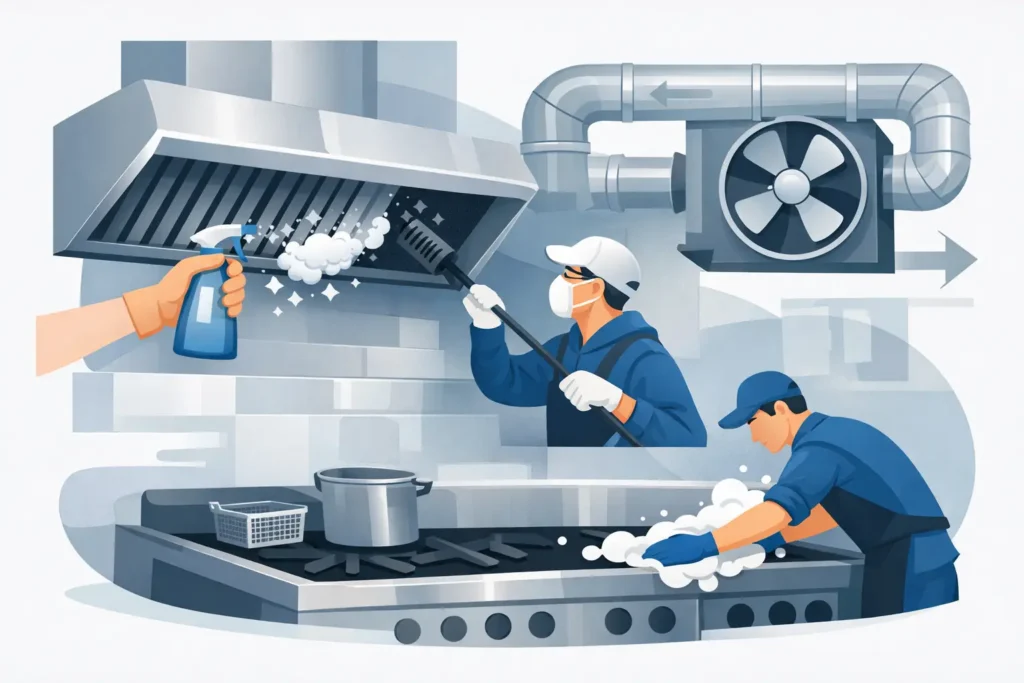
A proper limpieza campanas y ductos cocina comercial includes more than wiping the visible hood skirt. In a compliant service environment, the cleaning scope typically extends from the hood interior to the filters, plenum area, ductwork, access openings, exhaust fan, and grease containment points where applicable.
The goal is to remove grease deposits from the entire system, not just improve appearance. In practical terms, that means technicians should evaluate whether access is sufficient, whether fan components can be cleaned safely, whether heavy deposits require scraping and degreasing, and whether any conditions interfere with fire suppression coverage or nozzle discharge patterns.
This is where operators need to think beyond housekeeping. Hood and duct cleaning intersects directly with suppression system reliability. If nozzles are obstructed by grease, if caps are missing, if duct interiors are heavily contaminated, or if access limitations prevent full cleaning, the fire protection value of the entire kitchen is compromised.
Signs your kitchen is overdue
Some warning signs are obvious. Dripping grease, visible residue on the hood exterior, strong burned-oil odor during operation, smoke escape at the front edge of the hood, and excess rooftop grease around the fan are all indicators that the system needs attention.
Other signs are operational. Rising kitchen temperatures, more frequent complaints from staff about air quality, staining on nearby ceiling surfaces, and repeated comments from inspectors about maintenance records often show that cleaning intervals are no longer aligned with actual kitchen demand.
A kitchen can also be overdue even when there are no dramatic symptoms. That is common in facilities with multiple meal periods, seasonal occupancy spikes, banquet production, or late-night service. The system may still be functioning, but grease loading inside the duct can already be beyond what an inspector or insurer would consider acceptable.
Frequency depends on cooking load, not guesswork
One of the most common mistakes in this area is using a fixed annual schedule for every kitchen. That approach is rarely defensible. Cleaning frequency should reflect the type of cooking, the hours of operation, and the grease production profile of the equipment under the hood.
A high-output kitchen using fryers and charbroilers every day may require much more frequent service than a prep kitchen with limited hot-line production. Seasonal hospitality properties also need close review because peak occupancy periods can create several months of grease accumulation in a short time.
The right schedule is based on inspection findings, operating patterns, and documented system condition. If the system is accumulating residue faster than expected, the interval should be shortened. If access is poor or airflow is compromised, corrective action may be needed before the next routine cycle. This is one reason experienced providers do more than clean – they assess, document, and recommend adjustments.
What a professional service should document
For operators managing risk, paperwork is not secondary. It is part of the service outcome. If there is ever a fire event, an insurance claim, a franchise review, or a regulatory inspection, undocumented maintenance creates unnecessary exposure.
A professional provider should record the date of service, the areas cleaned, observed grease conditions, inaccessible sections if any, and deficiencies that require follow-up. Photo evidence is especially valuable because it establishes a verifiable condition record before and after service. That record helps facility managers prove due diligence and identify recurring issues such as damaged access doors, worn fan belts, missing hinge kits, or excessive grease discharge.
In multi-unit operations, documentation also supports consistency. Corporate teams, regional maintenance managers, and safety leaders need a clear service history to verify that standards are being applied across locations, not handled informally site by site.
Cleaning alone does not solve every risk
There is an operational trap here. Some facilities treat hood cleaning as a reset button for the whole kitchen exhaust and suppression environment. It is not. A clean duct does not correct expired fusible links, low cylinder pressure, obstructed nozzles, failed microswitches, disconnected alarms, or suppression systems that no longer match the protected appliances below.
That is why the most effective approach is coordinated maintenance. Hood and duct cleaning should be reviewed alongside wet chemical suppression inspection, nozzle condition, manual pull station access, alarm interface status, and general code readiness. These systems work together in a fire event. If one element is neglected, the overall protection strategy is weakened.
For many commercial kitchens, the strongest preventive model is not reactive cleaning after visible buildup. It is scheduled service with technical reporting, corrective recommendations, and inspection alignment. That is the difference between maintenance that looks complete and maintenance that actually reduces risk.
Choosing a provider for limpieza campanas y ductos cocina
Not every cleaning contractor is equipped for commercial kitchen compliance environments. Operators should look for a provider that understands grease exhaust systems as part of a broader fire and life safety framework, not as a janitorial task. Knowledge of NFPA 96 matters. So does familiarity with suppression components, access requirements, rooftop fan safety, and documented reporting practices.
A provider serving hospitality and foodservice operations should also be able to work around production schedules, limit disruption, and identify issues that affect inspections. That includes seeing beyond the cleaning itself – whether the system is overdue, whether records are adequate, whether access is missing, and whether adjacent fire protection elements require service coordination.
This is where a specialist contractor adds value. Fire Patrol approaches hood and duct cleaning as part of a larger kitchen safety program, tying sanitation, fire prevention, and audit readiness into one service model built for commercial operations.
When grease accumulation is treated as an operational risk instead of a housekeeping detail, decisions improve quickly. The kitchen runs safer, inspections become easier to manage, and maintenance stops being a scramble after someone notices smoke, odor, or a failed report. The right time to address the exhaust system is before it gives you a reason to.