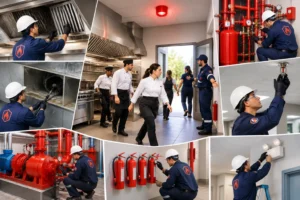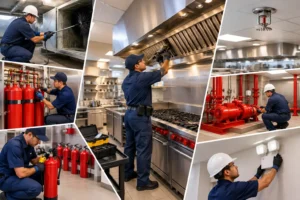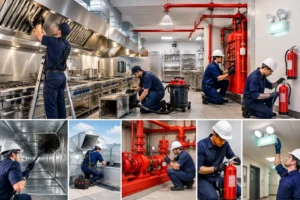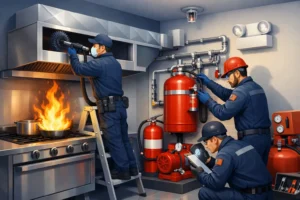

A commercial kitchen can look fully protected on the surface and still fail at the exact moment the system is needed. That is why the prueba descarga mecánica sistema extinción matters. In a wet chemical fire suppression system, visual inspection alone does not confirm that the manual pull, cable path, release mechanism, and connected shutdowns will operate correctly under real conditions.
For restaurants, hotels, resorts, and institutional kitchens, this is not a minor maintenance item. It directly affects life safety, equipment protection, audit readiness, and insurance defensibility. If the mechanical release sequence does not perform as designed, the system may not discharge when grease ignition spreads through the hood or duct. The result can be kitchen shutdown, structural damage, code violations, and a much more difficult conversation with insurers and authorities having jurisdiction.
What a prueba de descarga mecánica sistema extinción actually verifies
A mechanical discharge test is intended to confirm function, not just appearance. In kitchen suppression systems, that means evaluating whether the actuation components can transmit force from the initiating point to the releasing device without obstruction, misalignment, excessive tension, or wear. It also helps verify whether auxiliary functions tied to system activation respond properly.
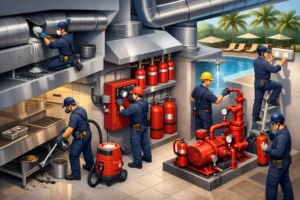
In practical terms, the test focuses on the operating chain. That may include the manual pull station, mechanical cable, corner pulleys, fusible link line, release mechanism, gas or electric appliance shutoff, and alarm interface where applicable. A system can pass a basic inspection for cleanliness and accessibility while still having drag in the cable, damaged pulleys, improper routing, or a release mechanism that does not reset correctly.
This is where many operators underestimate risk. A suppression system is not just a cylinder and nozzles above the appliances. It is a coordinated emergency control assembly. If one mechanical component binds or has been altered during equipment moves, hood cleaning, or line maintenance, the full protection sequence may be compromised.
Why mechanical discharge testing matters in commercial kitchens
Commercial food operations create a specific fire profile. Open flame, high heat, cooking oils, grease vapor, and rapid production cycles all increase the consequences of delayed suppression. A system that is partially functional is not a safe system.
NFPA 17A and NFPA 96 shape the expectations around inspection, maintenance, and system condition in wet chemical applications. While the exact testing procedure depends on system type, manufacturer requirements, configuration, and site conditions, the compliance principle is consistent: components must be maintained in operating condition, and the system must be capable of performing its intended protective function.
For operators, the issue is both technical and operational. A failed test can reveal conditions that might otherwise stay hidden until an emergency. Common examples include stretched or corroded cable, contaminated detection line components, missing or improperly rated fusible links, obstructed pull station access, and disconnected fuel shutoff interfaces. These are not paperwork defects. They are failure points.
A disciplined testing program also supports audit performance. Health and safety reviews, insurance visits, brand inspections, and internal risk assessments increasingly look beyond whether a system exists. They look at service records, documented deficiencies, corrective actions, and proof that critical life safety equipment is being maintained according to code and manufacturer criteria.
What happens during the test
The exact scope depends on the suppression system brand and site setup, but a professional prueba de descarga mecánica sistema extinción is controlled, documented, and coordinated to avoid unnecessary business disruption. In many cases, the test is performed as a dry mechanical trip or controlled actuation verification rather than an actual chemical discharge, unless a specific full discharge procedure is required.
The technician begins by isolating affected utilities and confirming operational safety conditions. Appliance shutdown coordination is critical. If the system is designed to cut fuel or power upon actuation, that sequence must be verified safely and intentionally. Notification protocols also matter because connected alarm circuits or supervisory signals may need to be placed on test to prevent false emergency response.
From there, the mechanical actuation path is checked under operating conditions. The pull station is evaluated for accessibility and function. Cable movement is observed through the routing path. Release assemblies are examined for proper travel and engagement. Fusible link detection lines are inspected for loading, contamination, and installation condition. The test also confirms whether connected electrical or fuel interlocks activate as required.
After the test, the system is reset following manufacturer procedure. This step is as important as the trip itself. Incorrect reset can leave a system impaired even if the test was successful. Documentation should reflect what was tested, the condition found, what corrections were made, and whether the system was restored to service.
Common deficiencies found during mechanical discharge testing
In high-volume kitchens, deficiencies often develop gradually and go unnoticed between scheduled inspections. Equipment gets moved. Ceiling work changes cable routing. Grease accumulation affects components near the hood. Busy staff may block access to manual pull stations with shelving, packaging, or portable equipment.
One frequent issue is cable resistance caused by poor alignment or wear at pulleys and elbows. Another is the use of incorrect fusible links after cleaning or repair work. Links are temperature-rated components, and substitution without regard to listing or design temperature can affect detection performance. Manual pull stations also present recurring problems when they are painted over, obstructed, or physically damaged.
Interlocks are another major concern. The suppression system is expected to work with appliance fuel and electrical shutdown functions. If the mechanical actuation occurs but gas remains on, the fire can continue feeding after chemical discharge. That creates a dangerous false sense of protection.
This is also why kitchen-only specialists bring value. A general fire equipment check may identify the presence of a system. A kitchen suppression specialist is more likely to catch operational deficiencies tied to appliance layout, grease conditions, hood changes, and real-world foodservice use patterns.
When this test should be scheduled
There is no one-size-fits-all answer because interval and scope depend on the authority having jurisdiction, manufacturer guidance, system age, previous deficiencies, and whether site modifications have occurred. What is clear is that testing should never be treated as a reactive step after a failed inspection.
Mechanical discharge verification becomes especially important after appliance replacement, hood or duct work, suppression system modifications, repeated nuisance issues with pull stations or cable assemblies, and any event that may have affected alignment or accessibility. Multi-unit operators should also consider consistency. A single weak location can create enterprise-level risk if maintenance standards vary from site to site.
For hospitality properties, scheduling should align with preventive maintenance planning. Testing during controlled service windows reduces operational interruption and allows deficiencies to be corrected before peak occupancy periods, ownership reviews, or external audits.
Documentation is part of the protection
A test without technical reporting leaves a gap. If a kitchen experiences a fire event or a compliance dispute, undocumented service is difficult to defend. Proper records should identify the system, the date of service, the procedure performed, components evaluated, impairments found, corrective action status, and confirmation of return to service. Photo documentation strengthens that record, especially when deficiencies involve blocked access, damaged devices, grease contamination, or interlock issues.
For operators managing hotels, resorts, or multi-site restaurant groups, documentation also supports internal control. It helps maintenance leaders verify that open items were closed, recurring problems were addressed at the root cause, and field service quality is consistent across properties.
This is where a compliance-driven contractor matters. The value is not only in performing the prueba de descarga mecánica sistema extinción, but in connecting the result to code expectations, operational risk, and follow-through. Fire Patrol approaches this as part of a broader kitchen safety program built around inspection discipline, corrective action, and audit-ready reporting.
The real question is not whether the system is installed
The real question is whether it will actuate correctly when heat, grease, and open flame create a fast-moving incident above the cookline. Mechanical discharge testing answers that question with evidence instead of assumptions.
If your kitchen suppression system has not been functionally evaluated beyond visual checks, you may be carrying more risk than your inspection tag suggests. A planned test, performed correctly and documented thoroughly, protects more than equipment. It protects uptime, compliance standing, and the people working beneath that hood every day.
The best time to find a mechanical failure is during a controlled service visit, not during a fire.