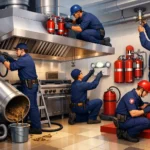

A hotel kitchen rarely fails all at once. The warning signs show up earlier – grease loading in the duct, missed fusible link replacement, uneven refrigeration temperatures, undocumented corrective actions, a hood suppression system that has not been serviced on schedule. By the time an inspector, insurer, or fire marshal identifies the gap, the operational damage is already close. This hotel kitchen risk management guide is built for operators who need to prevent that chain of failure, not react to it.
Hotels carry a different level of exposure than standalone restaurants. The kitchen is tied to guest safety, room inventory, event revenue, employee welfare, and brand reputation. A single suppression system deficiency or sanitation lapse can affect banquet operations, in-room dining, breakfast service, and group business on the same day. That is why risk management in hospitality kitchens has to be disciplined, documented, and tied to standards.
What hotel kitchen risk management actually covers
Risk in a hotel kitchen is not limited to open flame. Fire remains the highest-consequence threat, but the real management task is broader. It includes suppression readiness, hood and duct cleanliness, grease vapor control, equipment condition, food safety controls, refrigeration performance, alarm integration, staff response, and documentation that proves the facility is being maintained correctly.
The mistake many properties make is treating these items as separate work orders. Engineering handles one issue, culinary handles another, and sanitation is addressed only before an inspection. That approach creates blind spots. Effective risk management works as a connected system where fire protection, hygiene, maintenance, and compliance reporting support each other.
The highest-risk failure points in a hotel kitchen
The most common exposure starts above the cookline. Grease accumulation in hoods and ducts increases the likelihood that a contained cooking flare-up becomes a fast-moving fire event. If the exhaust system has not been cleaned to an acceptable standard under NFPA 96 expectations, the fire load is higher and suppression performance may be compromised by contaminated nozzles or obstructed discharge paths.
The next failure point is the wet chemical fire suppression system itself. Hotels often assume the system is protected because it is installed. Installation is not the same as readiness. Nozzle caps go missing, cylinders lose proper pressure, fusible links age out, manual pull stations are obstructed, and appliance lineups change without corresponding nozzle coverage updates. Under NFPA 17A, these conditions are not minor details. They directly affect whether the system will discharge correctly when needed.
Refrigeration is another major risk area, even though it is not always treated as one. Temperature drift creates food safety exposure, product loss, and failed audit conditions. In a hotel environment with high turnover, banquet prep, and variable occupancy, refrigeration issues can move from maintenance problem to public health problem quickly.
Then there is the documentation gap. A property may complete certain services but fail to maintain records with dates, findings, deficiencies, and corrective actions. During an insurer review or post-incident investigation, undocumented work often gets treated as work that did not happen.
Building a hotel kitchen risk management guide into operations
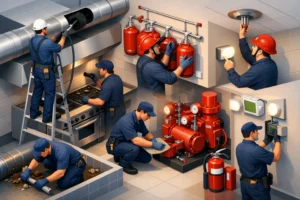
A working hotel kitchen risk management guide starts with an asset-based view of the kitchen. Every protected appliance, hood section, duct run, suppression component, pull station, gas shutoff interface, alarm connection, walk-in, and prep zone should be identified and tied to a service schedule. Without that baseline, maintenance becomes reactive and inspections become harder to defend.
From there, frequency matters. Not every kitchen carries the same cleaning or inspection interval. A high-volume resort kitchen, all-day dining outlet, or banquet operation generates very different grease and equipment stress than a limited breakfast line. The right schedule depends on production volume, cooking methods, and occupancy patterns. That is where generic calendars fall short. Risk management should match actual kitchen use, not just administrative convenience.
Responsibility also has to be clear. Executive chefs, engineering teams, safety managers, and third-party service providers all touch the same risk profile. If nobody owns verification, deficiencies stay open too long. The strongest programs assign internal accountability for review of inspection reports, approval of corrective work, and confirmation that deficiencies were closed with documented evidence.
Fire suppression and exhaust system control
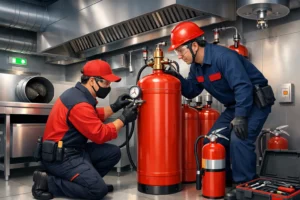
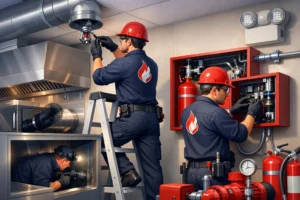
If one area deserves zero ambiguity, it is fire suppression. Wet chemical systems protecting hotel cooking operations require regular inspection, testing, and maintenance. That includes confirming cylinder condition and pressure, nozzle placement and cleanliness, cap presence, fusible link replacement, manual actuation accessibility, detection line condition, and proper appliance shutdown interface where required.
Changes in the kitchen create hidden exposure. When a property replaces a fryer, relocates a range, adds a charbroiler, or modifies the hood layout, suppression coverage has to be reviewed against the new hazard. Operators often focus on getting the line back in service, but if the system configuration no longer matches the appliance arrangement, the kitchen may be operating with a compliance defect.
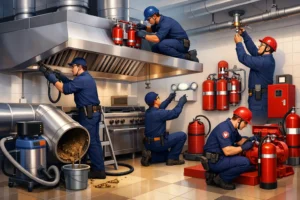
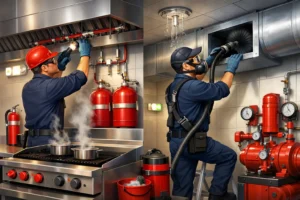
Exhaust maintenance has similar consequences. Hood and duct cleaning is not cosmetic work. It is a fire load reduction measure and a compliance issue. The standard is not whether the surface looks better from floor level. The standard is whether grease deposits have been removed from the entire exhaust path to a level consistent with safe operation and inspection expectations.
Sanitation, HACCP discipline, and equipment reliability
Fire risk and food safety risk often share the same root cause: deferred maintenance. When cleaning schedules slip, small conditions stack up. Grease accumulates, drains back up, refrigeration struggles, door gaskets fail, and prep areas become harder to sanitize correctly. In a hotel, these issues can spread across multiple shifts and departments before leadership sees the pattern.
HACCP-based safety reviews help close that gap because they force the operation to look at process controls, not just visible cleanliness. Temperature control, cross-contamination prevention, holding practices, and cleaning verification should be reviewed with the same discipline as fire protection inspections. A kitchen that passes a visual walk-through but lacks process control is still carrying significant operational risk.
Equipment reliability matters here as well. Refrigeration and air conditioning performance affect product integrity, employee working conditions, and the stability of the kitchen environment. When cooling systems drift, staff may improvise, move product in ways that reduce traceability, or overload alternate units. Risk management has to account for those real operating behaviors, not just ideal procedures written on paper.
Why documentation determines audit readiness
Audit readiness is not created the day before an inspection. It is created every time a deficiency is recorded, corrected, and verified. Hotels should expect to produce service records for suppression inspections, hood and duct cleaning, nozzle review, fusible link replacement, mechanical testing where applicable, sanitation findings, refrigeration maintenance, and alarm-related coordination.
The best documentation is specific. It identifies location, date, equipment, condition observed, corrective action taken, and remaining deficiencies if any. Photographic evidence adds another level of protection, especially for hidden or technical conditions that can be disputed later. This matters not only for health and fire inspections, but also for insurance renewals, internal brand audits, and post-loss claims.
A vague report creates uncertainty. A clear report creates defensibility.
How to reduce shutdown risk without disrupting service
Many hotel operators delay corrective work because they fear losing meal periods or banquet capacity. That concern is valid, but postponing critical maintenance usually creates bigger disruptions later. The better approach is structured preventive scheduling around low-impact windows, phased work by kitchen zone, and clear coordination between culinary and technical teams.
Not every deficiency requires the same response time. A missing nozzle cap or overdue fusible link replacement should not sit in the same queue as a non-critical cosmetic repair. Risk ranking helps operators prioritize what threatens life safety, compliance status, food safety, or continuity first.
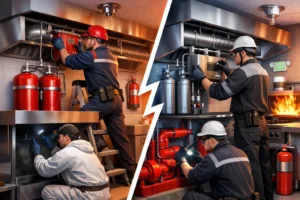
This is where a specialized kitchen service model becomes valuable. Providers that understand NFPA 17A, NFPA 96, alarm coordination, and hospitality operating constraints can identify what must be corrected immediately, what can be scheduled, and what needs closer monitoring. Fire Patrol works in that lane – combining inspection, corrective action, and documented reporting so operators are not left piecing together risk from multiple disconnected vendors.
Leadership questions worth asking now
If you manage a hotel kitchen, the right question is not whether the property has had a recent incident. The right question is whether your current records, equipment condition, and service intervals would stand up to an unplanned inspection tomorrow. If a suppression system discharged tonight, would every protected hazard be properly covered? If an auditor asked for proof of recent maintenance, would your team have complete and credible records ready?
Risk management works best before it feels urgent. In hotel kitchens, that window closes fast. The properties that stay operational, insurable, and audit-ready are usually the ones that treat prevention as part of daily control, not as a response to the next finding.