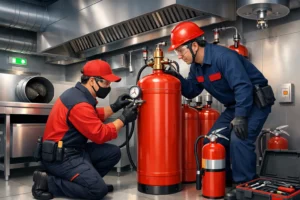
A suppression cylinder can look fine from the outside and still fail the moment your kitchen needs it. That is why cylinder pressure verification is not a paperwork detail. In a commercial kitchen fire suppression system, the stored pressure inside the cylinder directly affects whether the agent discharges as designed, reaches the nozzles at the required rate, and protects the cooking line before fire spreads into the hood and duct.
For restaurants, hotels, resorts, and institutional kitchens, this check sits at the intersection of life safety, NFPA compliance, insurance expectations, and business continuity. If pressure falls outside the acceptable range, you are not dealing with a minor maintenance issue. You are dealing with a potentially impaired fire protection system.
Why cylinder pressure verification matters
Wet chemical suppression systems installed over commercial cooking equipment depend on a specific internal pressure condition to operate correctly. The cylinder is not just a container for extinguishing agent. It is part of the discharge mechanism. If pressure is too low, the system may not distribute agent with enough force or coverage. If pressure is too high, that can also indicate a problem that requires evaluation, especially when ambient temperature, gauge condition, or cylinder integrity are factors.
In practical terms, cylinder pressure verification helps answer a simple but critical question: if a fire starts under live cooking conditions, will the system perform as listed and installed?
That question matters for several reasons. First, occupant and staff safety depend on early suppression. Second, kitchen downtime after a fire event can be severe even when damage appears limited. Third, many operators only discover system impairments when an inspector, insurance representative, or authority having jurisdiction requests documentation. By then, the corrective timeline is no longer under your control.
What cylinder pressure verification actually includes
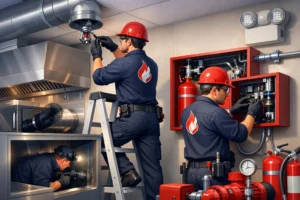
In a compliant service program, cylinder pressure verification is more than glancing at a gauge. A qualified technician evaluates the cylinder condition, the pressure indication, the installation environment, and the relationship of the cylinder to the complete suppression system.
Gauge reading and acceptable range
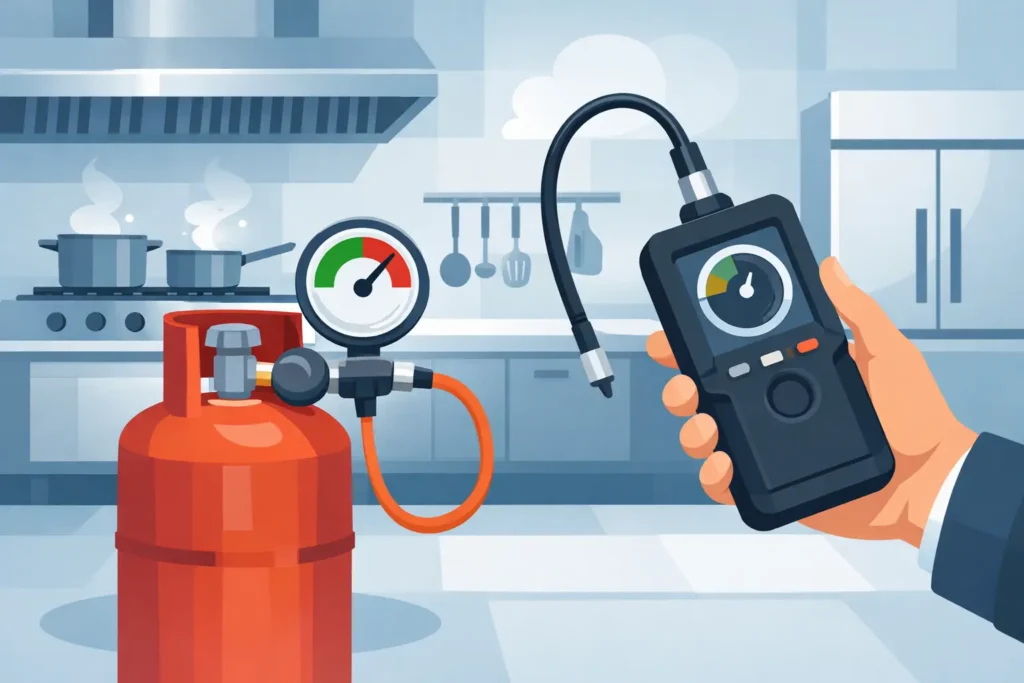
The pressure gauge must indicate that the cylinder is within the manufacturer’s acceptable operating range. That sounds straightforward, but the reading has to be interpreted correctly. Temperature can affect pressure indication, and the gauge itself must be legible, intact, and free from signs of damage or tampering. A reading in the wrong zone is an immediate red flag. A gauge that cannot be trusted is also a problem, even if the needle appears close to normal.
Physical condition of the cylinder
Verification also includes checking for corrosion, dents, improper mounting, leakage evidence, damaged valve components, and any condition that could compromise readiness. In busy kitchens, service space is tight, grease accumulates, and equipment movement is common. Cylinders installed in these environments are exposed to vibration, heat, cleaning chemicals, and accidental contact. Pressure status cannot be separated from physical condition.
Compatibility with system service records
A proper review compares field findings with service history, prior inspections, and manufacturer requirements. If a cylinder has recurring pressure issues, repeated recharge history, or inconsistent documentation, that pattern matters. Compliance is not just about the reading on one day. It is about whether the system has been maintained in a controlled and traceable way.
Cylinder pressure verification and NFPA compliance
For commercial kitchen operators, compliance is never theoretical. It affects inspections, certificate status, insurance defensibility, and whether a facility can continue operating after a review by fire officials or risk managers.
NFPA 17A governs wet chemical extinguishing systems, while NFPA 96 addresses ventilation control and fire protection for commercial cooking operations. Together, these standards create the framework for inspection and maintenance expectations in kitchen suppression systems. Cylinder pressure verification supports that framework by confirming a core operating condition of the extinguishing system.
What matters operationally is this: if your cylinder pressure is out of range, your system may be considered impaired. An impaired system can trigger corrective action requirements, failed inspection findings, or pressure from insurers and property management groups to restore compliance immediately.
That is especially relevant in hotels, resorts, and multi-unit foodservice operations where documentation is reviewed across multiple properties. One unresolved cylinder issue in one kitchen can become a larger question about maintenance controls across the portfolio.
Common reasons pressure falls out of range
Pressure problems do not always come from one obvious cause. In the field, technicians often see a mix of age, environment, missed service intervals, and handling issues.
Temperature exposure is one factor. Cylinders installed near high-heat equipment or in areas with poor environmental control can show pressure behavior that demands closer evaluation. Mechanical damage is another. A cylinder bracket that loosens over time, impact from nearby equipment, or repeated movement during cleaning can affect components that support safe operation.
Service neglect is also common. Kitchens that postpone inspections may assume the suppression system is fine because there has been no discharge event. That assumption is risky. Pressure loss can develop slowly, and if no one is performing scheduled inspection and documentation, the impairment stays hidden until a formal review or emergency reveals it.
There is also the human factor. Unqualified adjustments, incomplete recharge procedures, missing tags, and undocumented replacement parts create uncertainty. Once maintenance history becomes unclear, verification becomes more than a routine check. It becomes an effort to reestablish confidence in the system.
Why visual checks by staff are not enough
Kitchen managers and maintenance teams should absolutely report visible problems, but cylinder pressure verification should not be treated as an informal in-house task unless personnel are specifically trained and authorized for that system.
A gauge may look normal to an untrained observer while other impairments go unnoticed. A missing seal, damaged actuation component, obstructed access path, or undocumented prior service condition can all affect readiness. In addition, different manufacturers and system configurations have specific requirements that must be followed during inspection, recharge, and maintenance.
For operators, the real issue is liability. If a system fails and prior checks were informal, undocumented, or performed outside approved procedures, that creates exposure far beyond the cost of proper service.
How cylinder pressure verification fits into preventive maintenance
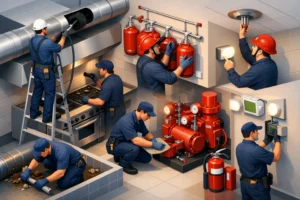
The best time to address suppression system problems is before they become findings, shutdowns, or claims. That is where scheduled service matters. Cylinder pressure verification should be integrated into a broader kitchen fire protection maintenance program that includes nozzle inspection and cleaning, fusible link replacement where applicable, mechanical detection review, alarm interface testing when required, and documented reporting.
A disciplined service schedule does two things. First, it helps identify impairments early enough to correct them without disrupting operations. Second, it creates an audit trail. That documentation matters when a health and safety review, insurance inspection, franchise requirement, or property risk audit asks for proof that the system has been maintained correctly.
For high-volume kitchens, preventive scheduling also reduces the operational friction of emergency service. Planned inspection windows are easier to coordinate than rushed corrective visits after a failed review.
What decision-makers should expect from a proper verification process
If you are responsible for kitchen safety, ask for more than a verbal confirmation that the cylinder is okay. A proper service process should produce clear findings, note any deficiencies, identify corrective actions, and document the condition of the system in a way that supports compliance review.
That means the technician should inspect the cylinder in context, not in isolation. The question is never just whether pressure exists. The question is whether the suppression system, as installed over your cooking appliances, remains ready to operate according to its listing and maintenance requirements.
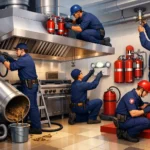
This is where specialized kitchen-focused contractors add value. A team that works daily with commercial cooking hazards understands how suppression performance, grease conditions, ventilation issues, access limitations, and inspection timing all affect risk. Fire Patrol approaches these inspections with that operational mindset because kitchen compliance is rarely about one component alone.
When to act immediately
If a gauge is out of range, the cylinder shows physical damage, service records are missing, or an inspection report identifies an impairment, do not treat the issue as something to address at the next convenient visit. In a kitchen environment, delay increases risk fast. Open flame, hot oil, grease vapor, and extended production hours leave little margin for a compromised suppression system.
The right response is prompt technical evaluation, documented corrective action, and confirmation that the system has been restored to service condition. Waiting for the next inspection cycle may save time this week and create much larger consequences later.
A kitchen suppression system does not get credit for looking ready. It has to be ready when the fire starts.