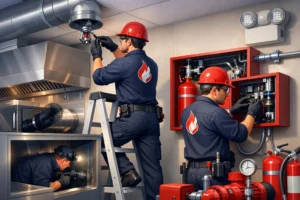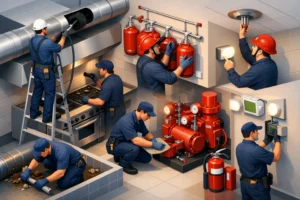
A kitchen line can look clean at the hood and still carry a serious hidden hazard above the ceiling. If you are asking, can clogged ducts increase fire risk, the answer is yes – and in a commercial kitchen, that risk can escalate quickly.
The issue is not just dust or restricted airflow. In foodservice environments, clogged exhaust ducts often mean grease accumulation, contaminated vapor deposits, lint-like debris, and residue that can ignite under high heat. Once flame enters the exhaust path, buildup inside the duct becomes fuel. That is why duct condition is not simply a cleanliness concern. It is a fire protection issue, an inspection issue, and an operational continuity issue.
Why clogged ducts create a higher fire load
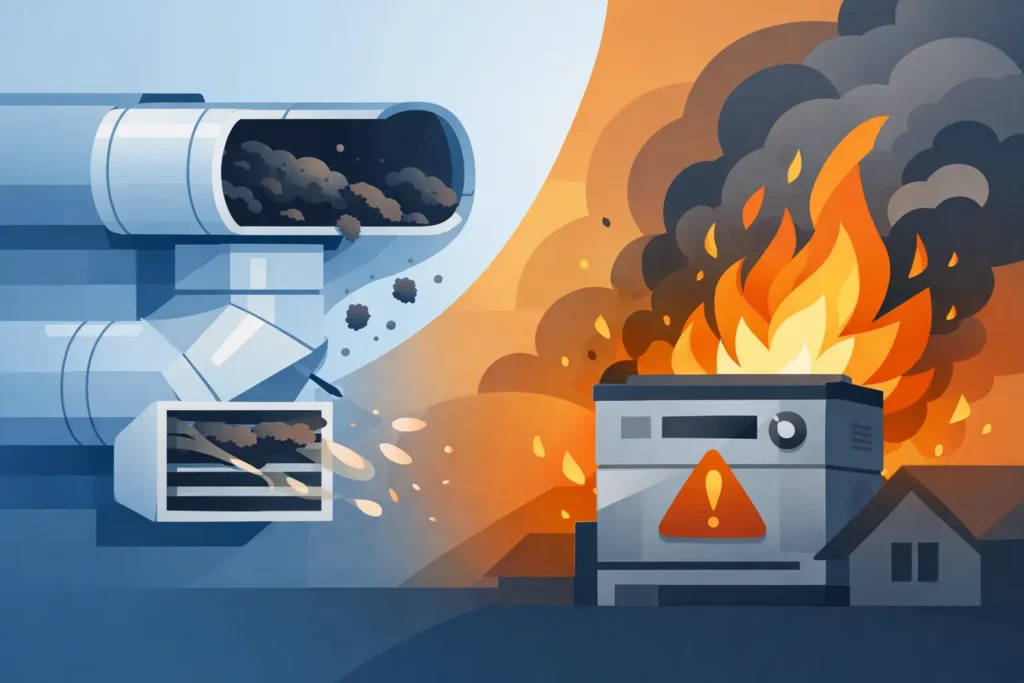
In a commercial kitchen, the exhaust system is designed to capture grease-laden vapors, smoke, and heat and move them safely out of the building. When that pathway becomes restricted by grease or debris, two things happen at the same time. First, airflow performance drops. Second, combustible material increases inside the very system that is supposed to remove heat and contaminants.
That combination matters. Reduced airflow can allow higher temperatures to build around cooking equipment and in the hood plenum. At the same time, grease deposits inside the duct provide a continuous fuel source. If there is a flare-up on the cooking surface, or if flame is drawn into the hood, fire can spread beyond the appliance and into the exhaust system.
This is the point many operators miss. A duct does not need to be fully blocked to become dangerous. Even partial restriction can change exhaust behavior, trap grease in heavier layers, and support rapid flame travel.
Can clogged ducts increase fire risk even if the hood looks fine?
Yes. Visual appearance at the hood edge tells only part of the story. The highest risk areas are often deeper in the system – inside vertical risers, horizontal runs, offsets, access panel sections, fan housings, and duct transitions where grease tends to accumulate unevenly.
A hood may appear acceptable during daily wipe-downs, while the duct interior above it carries significant buildup. This is why code-driven inspection and cleaning schedules are essential. Surface cleaning by kitchen staff is not a substitute for full-system assessment and documented service.
In many failed inspections, the problem is not that the operator ignored cleaning completely. It is that cleaning was limited to visible areas, while hidden duct sections continued collecting grease over time. That gap creates exposure for fire spread, compliance deficiencies, and insurance scrutiny after an incident.
What actually causes the clogging
In commercial kitchens, clogging is usually the result of grease deposition patterns, not a single obstruction. As grease-laden vapors move through the hood and duct, they cool and condense on metal surfaces. Over time, those deposits thicken. In high-volume operations, especially with charbroiling, frying, wok cooking, or heavy sauté production, the accumulation rate can be aggressive.
Poor airflow balance can make the problem worse. If exhaust volume is inadequate, vapors move more slowly and deposit more residue inside the system. Delayed cleaning intervals, improperly installed duct sections, inaccessible areas, and neglected rooftop fans all contribute. In some facilities, construction defects or damaged access panels limit proper service, which means grease remains in place even after a cleaning visit.
The risk profile also changes by kitchen type. A hotel banquet kitchen running long production hours is different from a small café with limited fry load. A steakhouse using charbroilers generates a different exhaust burden than a prep kitchen with light-duty equipment. That is why cleaning frequency and inspection scope should match actual cooking operations, not assumptions.
The fire path operators need to understand
When ignition occurs below the hood, the suppression system is intended to discharge and control the fire at the appliance and plenum level. But if grease deposits are excessive inside the duct, the hazard extends beyond the protected cooking surface.
Fire can be drawn upward by the exhaust stream. Once it reaches accumulated grease, it may continue traveling through the duct toward upper building levels or rooftop fan components. This is one reason NFPA 96 places such strong emphasis on inspection, cleaning, and maintenance of the entire exhaust system, not only the hood canopy.
There is also a practical limitation to keep in mind. Fire suppression systems are critical, but they are not a replacement for cleaning. A compliant wet chemical system and a poorly maintained duct system are not equal controls. One manages a fire event. The other helps prevent the fire from finding additional fuel and spreading beyond the point of origin.
Warning signs that should not be ignored
By the time kitchen staff notice symptoms, the system may already be carrying a meaningful level of buildup. Reduced capture of smoke, stronger grease odors, visible residue dripping from hood seams, unusual heat around the line, and fan performance issues all deserve attention.
Operators should also take recurring nuisance conditions seriously. If ceilings near the hood area show staining, if rooftop fan bases have grease discharge, or if access panels reveal thick residue, the system may be overdue for corrective cleaning. In some cases, the first red flag appears during a fire suppression inspection, when technicians identify contaminated nozzles, obstructed discharge paths, or grease conditions that compromise system reliability.
That overlap matters. Duct hygiene, suppression readiness, and code compliance are connected. When one side is neglected, the others are usually affected.
Compliance, liability, and insurance exposure
The question can clogged ducts increase fire risk is not just technical. It has legal and financial consequences. If a kitchen fire spreads through a neglected exhaust system, investigators and insurers will review maintenance records, inspection intervals, service reports, and the condition of the hood, duct, and fan assembly.
Missing documentation creates problems quickly. So does incomplete cleaning that excludes hard-to-reach sections of the system. Operators may assume they are covered because a vendor «cleaned the hood,» but if the duct interior and fan were not serviced to standard, that record may not support a claim the way they expect.
For hospitality groups, resorts, and multi-unit operations, the stakes are even higher. One preventable fire can affect guest safety, trigger downtime, damage brand reputation, and invite broader review of maintenance practices across locations. Audit readiness is not paperwork for its own sake. It is part of defending the operation when something goes wrong.
How to reduce the risk in real operating conditions
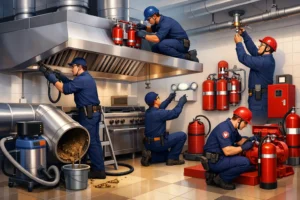
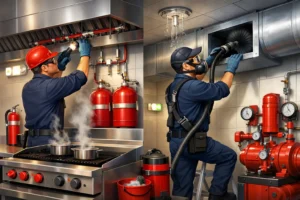
The most effective control is a structured preventive maintenance program built around actual cooking volume, not convenience. Systems should be inspected and cleaned on a frequency appropriate to the hazard level, with full access to hood, plenum, ducts, and fan components. Cleaning should remove combustible deposits, not just improve appearance.
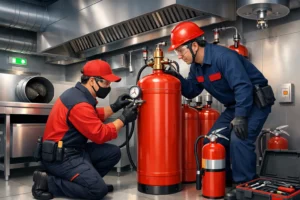
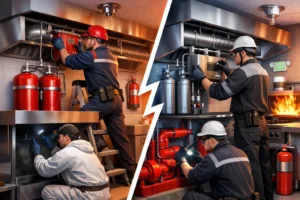
Just as important, the exhaust system should be reviewed alongside the fire suppression system. Fusible links, nozzle caps, cylinder pressure, mechanical actuation, alarm interface, and discharge coverage all need to be inspected in context. A clean duct with a compromised suppression system is still a risk. A compliant suppression system above a grease-loaded duct is also a risk.
Documentation should be treated as part of the service, not an administrative extra. Photographic evidence, deficiency notes, corrective recommendations, and dated reports help prove that the facility is maintaining the system responsibly. For operators managing audits, ownership transitions, franchise oversight, or insurer questions, that record is essential.
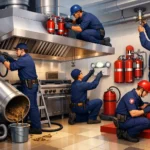
This is where a kitchen-focused contractor adds real value. A provider like Fire Patrol does more than clean surfaces. The work should connect hood and duct cleaning, suppression inspection, corrective action tracking, and standards-based reporting into one risk-control process.
When the answer is «it depends»
Not every clogged duct creates the same level of fire danger, and that distinction matters. A lightly loaded system with early-stage residue does not present the same immediate hazard as a high-volume exhaust line carrying heavy grease through long horizontal runs. But both conditions move in the same direction if neglected.
The practical mistake is waiting for visible failure. Fire risk does not begin only when grease is dripping or smoke is backing into the kitchen. It increases gradually as deposits build, airflow changes, and system performance declines. By the time the signs are obvious, corrective work is usually more urgent and more disruptive.
For commercial kitchens, the safer standard is simple: treat the exhaust duct as an active fire risk component, not a passive utility. If there is buildup, restriction, poor capture, or missing documentation, there is exposure that should be addressed before the next inspection – or before the next flare-up tests the system for real.
A well-maintained kitchen exhaust system does more than pass inspection. It protects service continuity, supports suppression performance, and keeps a preventable fire from becoming a facility-wide event.