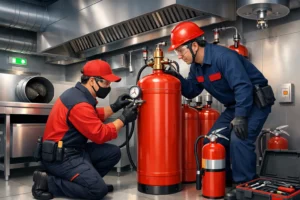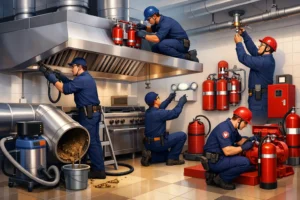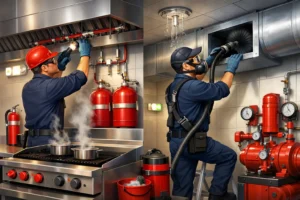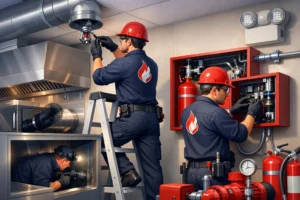
A failed kitchen fire inspection rarely fails on just one issue. What creates real exposure is weak follow-up – missing records, vague repair notes, no proof of completion, and no clear link between the deficiency and the corrective work performed. If you need to document corrective actions after fire inspection, the record has to do more than show intent. It has to show what was found, what standard applied, what was corrected, who performed the work, and when the system was returned to compliant condition.
In commercial kitchens, that distinction matters. Inspectors, insurers, franchise auditors, and risk managers do not evaluate your facility based on verbal updates. They evaluate documentation. A clean service file can support continued operation, reduce repeat deficiencies, and protect your business if a fire event or claim later puts your maintenance history under scrutiny.
Why documentation matters after a fire inspection
Post-inspection paperwork is not an administrative extra. It is part of the corrective process itself. When a deficiency is identified in a wet chemical fire suppression system, hood and duct condition, manual pull station, fusible link set, cylinder pressure, nozzle coverage, or alarm interface, the risk remains open until the issue is corrected and documented.
For hospitality and foodservice operators, poor documentation creates two problems at once. First, the fire protection issue may stay unresolved longer than expected because no one has assigned responsibility or verified completion. Second, even if the repair was completed, you may have no defensible record for AHJ review, insurance renewal, brand audit, or internal compliance reporting.
This is especially relevant in facilities operating under NFPA 17A, NFPA 96, and related local fire code requirements. The standard is not just whether service happened. The standard is whether the service can be verified.
What to include when you document corrective actions after fire inspection
The strongest records follow a simple rule: they connect the deficiency to the correction without gaps. If an inspection report says a nozzle cap was missing, a fusible link was outdated, or grease accumulation exceeded acceptable levels, the corrective record should not just say repaired. It should state exactly what was done.
Start with the original deficiency. Include the inspection date, inspection location, system type, and the exact finding as written by the inspector or technician. If the issue references a code requirement, include that reference in the corrective file. That makes the record stronger because it shows the repair was not arbitrary. It was tied to a defined compliance obligation.
Then record the corrective action in plain technical language. Replace vague wording like serviced system or fixed problem with specific entries such as replaced six fusible links above cooking line, cleaned and reinstalled appliance protection nozzles, adjusted gas shutoff trip linkage, or corrected low cylinder pressure reading by replacing cylinder and recharging system per manufacturer requirements.
The file should also identify who performed the work. Include the company name, technician name when available, date of service, and any certification or licensing details required by your jurisdiction or policy. In commercial kitchens, especially those in hotels, resorts, and multi-unit operations, this chain of accountability matters.
Photos, signatures, and code references
Photographic evidence adds credibility to the record, particularly for deficiencies involving visible conditions such as grease buildup, blocked access, damaged piping, missing caps, obstructed pull stations, or improper appliance layout under existing nozzle coverage. Before-and-after photos are useful because they reduce dispute later. They also help facility managers explain corrective spending to ownership or procurement.
Signatures matter too, but they should support the record, not replace it. A signed work order with no detail is weak. A signed service report with date, deficiency reference, corrective scope, parts replaced, and photographic backup is much stronger.
Where applicable, include the specific standard or manufacturer requirement that governed the repair. That may be an NFPA reference, a suppression system service manual requirement, or a local fire marshal directive. This becomes important when a follow-up inspection is performed by a different party than the one who wrote the original deficiency.
Build the corrective record in the right sequence
The order of documentation affects how easy it is to audit later. A scattered file with emails, text messages, handwritten notes, and one unsigned invoice may technically contain the answer, but it does not function as a compliance record.
A better approach is to structure each corrective item as a closed loop. Open with the deficiency notice. Follow it with the repair authorization or internal assignment. Add the completed service documentation, supporting photos, replaced component details if relevant, and the verification that the issue was resolved. If reinspection was required, include the reinspection outcome in the same file.
For operators with several active kitchens, this should be organized by site, system, and date. A resort property with multiple food outlets cannot afford a mixed archive where suppression system work from one kitchen is confused with another. Good records reduce the chance of repeated deficiencies simply because prior service cannot be located.
When one inspection creates multiple corrective actions
Many kitchen inspections produce a combination of findings. Some are urgent life-safety deficiencies. Others are maintenance-related but still significant for compliance. Treating every issue the same can slow down the items that create the greatest risk.
Document each deficiency separately, even if the same vendor addresses all of them in one visit. For example, a low-pressure cylinder condition, missing nozzle blow-off caps, and excessive grease in the hood exhaust path should not be bundled into one generic line item. They involve different hazards, different standards, and sometimes different service scopes.
Separating them also helps with prioritization. If the fire suppression system has an impairment that affects automatic actuation, your documentation should show that it was escalated, corrected quickly, and verified before normal risk exposure resumed. That kind of record can be critical if an incident occurs during the period between inspection and closure.
Common documentation mistakes that create compliance problems
The most common failure is writing corrective notes that are too general. Repaired, cleaned, adjusted, or inspected are not enough by themselves. They do not tell an auditor what changed, whether the deficiency was actually removed, or whether the work matched the original finding.
Another problem is failing to match the dates. If the inspection occurred on one date, the repair on another, and the verification on a third, your record should show that timeline clearly. Missing dates make it harder to prove that deficiencies were addressed within a reasonable window.
Operators also run into trouble when they keep the invoice but discard the service detail. Billing documents are useful, but they are not a substitute for technical reporting. An invoice may show that money was spent. It may not show whether nozzle alignment was corrected, whether fusible links were replaced with the proper temperature rating, or whether appliance protection remained compliant after equipment was moved.
Finally, do not ignore unresolved items. If a deficiency could not be corrected immediately because parts were unavailable, the kitchen layout changed, or owner approval was pending, document that status. Note the interim risk, any temporary controls, and the target completion date. Silence in the file looks like inaction.
How facility teams should manage follow-up internally
The strongest external service report can still fail operationally if no one inside the facility owns the closeout process. After any inspection, assign one person to track open deficiencies through completion. In some operations that will be the facility manager. In others, it may be engineering, risk management, or a regional compliance lead.
That person should verify three things before closing the item: the corrective work matches the deficiency, supporting evidence is complete, and any required reinspection or signoff has occurred. This is where disciplined contractors stand apart. Companies such as Fire Patrol support clients with service reporting built for audit readiness, not just field completion.
For multi-location operators, consistency matters more than complexity. A standardized corrective action form or digital record format is usually enough if the content is complete. The goal is not to create more paperwork. The goal is to make every correction traceable.
Document corrective actions after fire inspection with audit readiness in mind
If your record would not make sense to an insurer, AHJ, hotel brand auditor, or replacement facility manager six months later, it is not complete. Good documentation should stand on its own without relying on memory or verbal explanation.
That means writing with enough precision that another qualified person can understand the issue, see what was done, and confirm whether the deficiency was closed correctly. In a commercial kitchen, where heat, grease, equipment movement, and production pressure constantly affect fire risk, that standard is not excessive. It is operational discipline.
The practical test is simple. If an inspection identifies a problem today, your documentation should be strong enough to prove the correction tomorrow and still defend the decision a year from now. That is how records support compliance, protect uptime, and keep a kitchen ready for the next review.