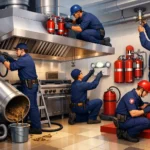
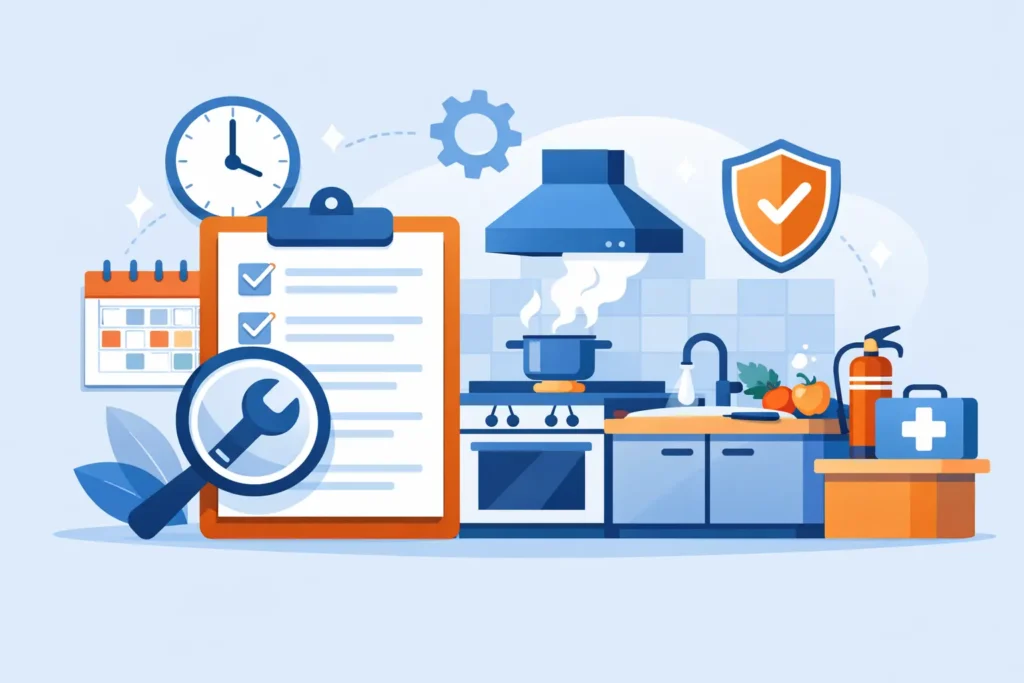
A failed inspection rarely starts on inspection day. It usually starts weeks earlier – when fusible links are overdue, grease buildup is ignored, cylinder pressure is not reviewed, or nobody can confirm the last service date on the suppression system. If you need to schedule kitchen safety maintenance properly, the goal is not just to keep equipment running. It is to reduce fire risk, protect insurance standing, and keep the kitchen audit-ready without disrupting service.
For commercial kitchens, maintenance scheduling has to be built around risk, code, and operating volume. A hotel banquet kitchen running long production hours does not carry the same maintenance profile as a small cafe with limited fry operations. The mistake many operators make is treating all kitchen safety tasks like a simple calendar reminder. In reality, effective scheduling requires a maintenance structure that accounts for fire suppression components, exhaust contamination, refrigeration performance, alarm communication, sanitation exposure, and documented compliance.
Why schedule kitchen safety maintenance by risk, not convenience
The calendar matters, but kitchen conditions matter more. A line with heavy grease production, solid-fuel cooking, frequent menu changes, or extended operating hours will deteriorate faster than a lightly used operation. When maintenance is scheduled only when it is convenient for the team, critical safety items tend to drift past their acceptable service intervals.
This is where NFPA-driven planning becomes essential. Wet chemical suppression systems, hood and duct cleanliness, nozzle condition, mechanical actuation, alarm interface, and related protective components should be reviewed according to the applicable standard, manufacturer requirements, and actual exposure levels in the kitchen. If scheduling is based only on downtime preferences, operators create gaps that can lead to failed discharge, blocked nozzles, excessive grease ignition risk, or incomplete inspection records.
A disciplined schedule also protects operations. Emergency shutdowns are usually more disruptive and more expensive than planned preventive service. The right approach is to build service windows before risk accumulates, not after a deficiency appears.
What should be included in a kitchen safety maintenance schedule
A real maintenance schedule is more than hood cleaning and an occasional extinguisher check. In a commercial kitchen, the schedule should connect fire protection, mechanical reliability, and sanitation-related risk controls.
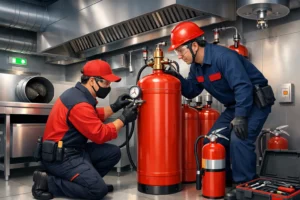
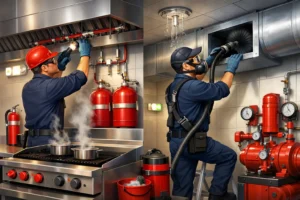
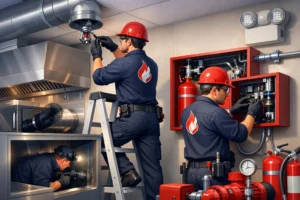
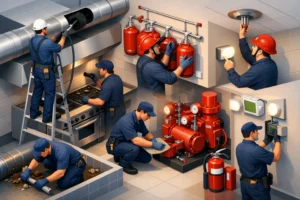
At minimum, the program should account for wet chemical fire suppression inspection and service, cylinder pressure review, nozzle inspection and cleaning, fusible link replacement, mechanical detection and discharge pathway checks, manual pull station condition, alarm integration where applicable, and visible confirmation that appliances remain under protected hood coverage. If cooking equipment has been moved, replaced, or added, the original protection layout may no longer be compliant.
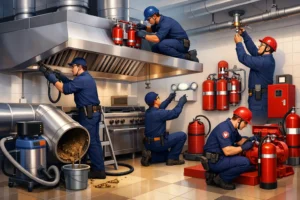
Exhaust system maintenance belongs on the same schedule, not in a separate silo. Grease accumulation in the hood, plenum, filters, and ducts is not just a housekeeping issue. It is a fire load issue that directly affects suppression performance and overall risk exposure. Operators should also align kitchen safety maintenance with refrigeration and air conditioning service when those systems influence temperature control, ventilation balance, or sanitary operating conditions.
Documentation is part of the schedule, not an afterthought. Inspection tags, technician reports, photos, deficiency notes, and corrective action records should be collected and retained in an organized way. If an AHJ, insurer, brand auditor, or corporate safety team asks for proof, delays or missing records create avoidable exposure.
The most common scheduling gaps
The biggest gaps usually appear in multi-unit operations and busy hospitality properties. One site assumes corporate is tracking service dates. Corporate assumes the local team is handling it. Meanwhile, hood cleaning is done by one vendor, suppression service by another, and corrective repairs are postponed because nobody owns the follow-up.
Another common problem is treating semiannual inspection as the only date that matters. Required inspections are critical, but they do not replace interim checks. High-volume kitchens need internal review points between formal service visits, especially when equipment is moved, nozzles are exposed to contamination, or grease loading increases during peak season.
How to build a workable schedule kitchen safety maintenance plan
The most effective plan starts with an asset inventory. Before scheduling anything, identify every protected cooking line, suppression system brand, cylinder type, pull station, detector link set, exhaust segment, and related alarm connection. You cannot manage service intervals on systems that are not clearly mapped.
Next, assign frequencies based on code requirements, manufacturer criteria, and kitchen use conditions. Some tasks are fixed by standard. Others should be adjusted based on cooking volume, grease production, and operational intensity. A resort kitchen serving breakfast, lunch, banquets, and late-night events should not be scheduled like a low-volume tenant space.
Then define who owns each action. Internal teams may handle basic condition checks, access coordination, and record storage, but certified technicians should perform inspection, testing, and technical maintenance on suppression equipment. Responsibility has to be explicit. If ownership is vague, deadlines will slip.
Service windows should be timed around the least disruptive operational periods, but not pushed so far that compliance is compromised. For some kitchens, that means early morning work before production starts. For others, it means overnight scheduling or phased service by line. The correct answer depends on the facility, but delay should never be the scheduling strategy.
Use tiers instead of one master date
One service date for everything sounds simple, but it often fails in practice. Commercial kitchens perform better with a tiered schedule.
Daily and weekly observations can be handled internally. These include visible grease conditions, damaged caps, blocked access to pull stations, signs of equipment movement, and obvious ventilation performance issues. Monthly or periodic internal reviews can verify tag status, physical accessibility, and whether prior deficiencies were corrected.
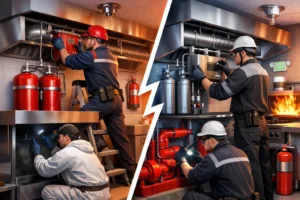
Formal technical inspections should then occur on the required interval, supported by specialty services such as hood and duct cleaning, refrigeration maintenance, and audit-focused sanitation checks. This creates overlap in the right places. Problems are caught before the next formal inspection, and the formal inspection is less likely to reveal neglected conditions that should have been addressed earlier.
Documentation is what makes the schedule defensible
A maintenance schedule only protects you if it can be proven. In commercial kitchens, undocumented work often gets treated like work that never happened. That creates problems during fire investigations, insurance reviews, health and safety audits, and landlord or brand compliance checks.
Every scheduled service should generate a traceable record. That includes the service date, protected area, technician findings, parts replaced, pressure status, nozzle condition, fusible link status, discharge pathway observations, alarm interface notes, and photos where relevant. Deficiencies should be clearly separated from completed corrective actions so management can see what was found and what remains open.
This matters because many failures are not caused by complete neglect. They are caused by partial maintenance with poor follow-through. A nozzle may be identified as contaminated, but cleaning is not confirmed. A system may be inspected, but appliance relocation is not documented. A hood may be cleaned, but grease in connecting sections is not addressed. Without disciplined reporting, those gaps stay hidden until an audit or incident exposes them.
For operators managing multiple kitchens, centralized record control becomes even more important. Standardized reporting formats, clear service histories, and photo-backed documentation reduce confusion and make recurring deficiencies easier to track across properties.
When your schedule needs to change
A maintenance schedule should not stay static if the kitchen changes. Any shift in menu mix, cooking method, operating hours, appliance layout, or production volume can change risk levels. Seasonal spikes, banquet demand, and extended holiday service often increase grease production and equipment stress faster than teams expect.
Renovations and equipment swaps are especially important. If appliances are moved outside the original protected zone or new hazards are introduced under the hood, suppression coverage may no longer match the risk. That is not a minor paperwork issue. It can become a code, insurance, and life-safety problem immediately.
The same applies after repeated deficiencies. If the same site continues to show grease accumulation, overdue links, poor housekeeping around protected equipment, or unresolved system impairments, the schedule is no longer sufficient for actual conditions. More frequent checks or a different service structure may be necessary.
For many operators, this is where a specialized contractor adds value. A company like Fire Patrol can coordinate technical inspection, corrective service, cleaning visibility, and documented reporting under a compliance-driven framework instead of leaving each task disconnected.
The strongest maintenance schedules are not the most complicated. They are the ones that reflect how the kitchen actually operates, assign responsibility clearly, and produce records that stand up under review. If your kitchen is one missed service away from a failed inspection or one hidden deficiency away from a shutdown, the right time to tighten the schedule is before the next busy shift starts.