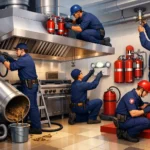
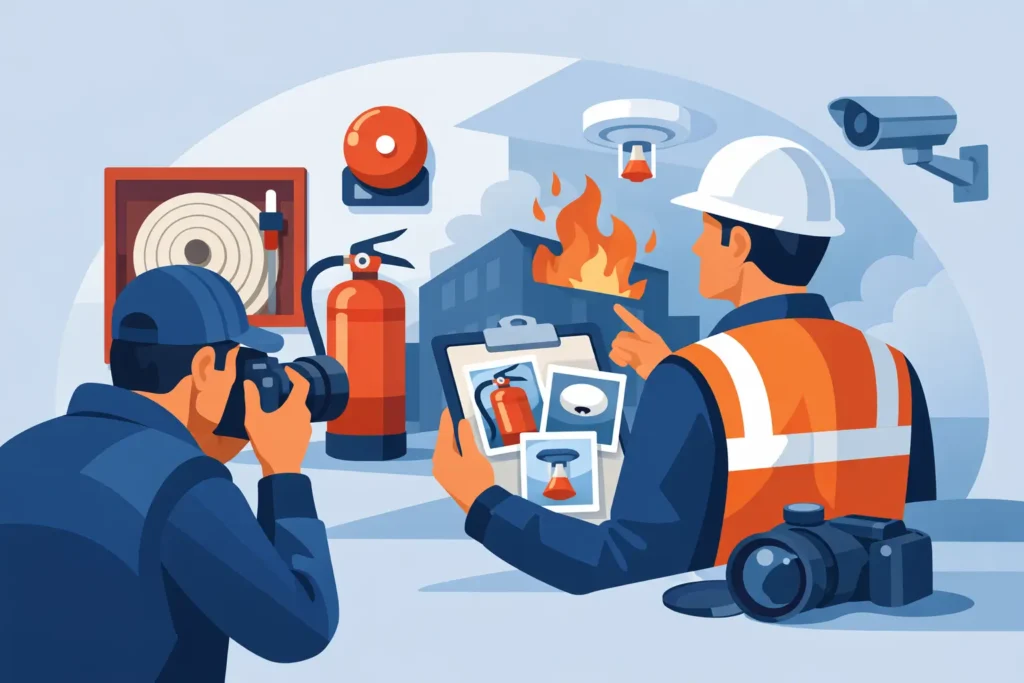
A failed kitchen fire inspection rarely starts with one major defect. More often, it comes down to missing proof – no clear record of nozzle condition, no visual confirmation of fusible link replacement, no dated evidence of grease buildup, and no traceable documentation of corrective work. In that context, documentación fotográfica inspección contra incendios is not an extra administrative step. It is part of the inspection itself.
For commercial kitchens, hotels, resorts, and high-volume foodservice operations, photographic documentation supports more than a maintenance file. It helps verify system condition, supports NFPA-based service records, gives operators defensible evidence during audits, and reduces disputes about what was found, what was corrected, and what still requires action. When fire suppression, hood and duct conditions, alarm interface, and overall kitchen risk are involved, images matter because they show the exact field condition at the time of service.
Why documentación fotográfica inspección contra incendios matters
In a commercial kitchen, risk changes fast. Grease accumulates, nozzles become obstructed, cylinders lose pressure, caps go missing, and manual pull stations may be blocked by operational changes on the line. Written notes are necessary, but they do not always capture the level of detail that a facility manager, insurer, auditor, or corporate safety team may need later.
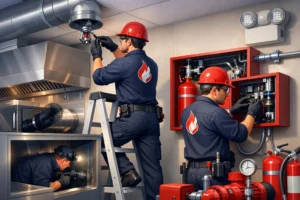
That is where documentación fotográfica inspección contra incendios becomes operationally valuable. A photo can confirm whether appliance coverage was compromised after equipment was moved. It can show whether an exhaust plenum had excessive grease contamination at the time of inspection. It can document whether detection components were installed correctly and whether discharge piping, agents, signage, and access points were in acceptable condition.
For ownership groups and multi-unit operators, photographs also create consistency. One location may say a deficiency was minor, while another may describe a similar issue as urgent. Images reduce that ambiguity. They help centralize decisions and prioritize corrective work based on actual condition, not interpretation alone.
What good photographic documentation should capture
Not every inspection photo has the same value. Random images of a hood system do little if they are not tied to inspection points, identifiable equipment, and a defined service scope. Useful documentation should support a technical finding.
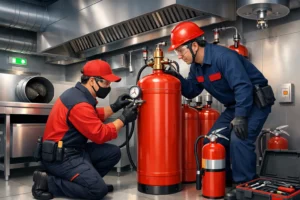
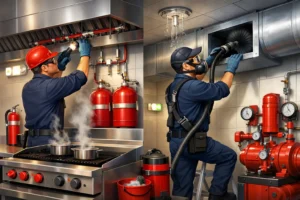
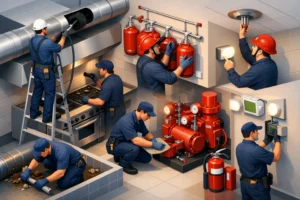
In kitchen suppression inspections, that usually includes system identification, cylinder condition, pressure gauge readings when visible, actuation components, manual pull stations, remote release devices where applicable, appliance layout, nozzle placement, nozzle caps, fusible links, and visible discharge piping. If the inspection includes alarm integration review under NFPA 72 coordination, photo records may also need to show interface devices, notification connections, or related control equipment.
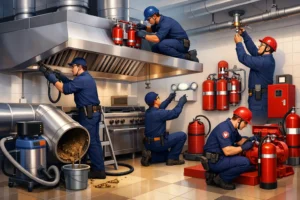
The same applies to hood and duct conditions. If grease accumulation is part of the risk profile, images should clearly show the level and location of buildup, especially in areas that affect fire spread potential or system performance. For sanitation and compliance purposes, before-and-after photographs can be particularly useful, but only if they are properly labeled and traceable to the service date and specific kitchen area.
A strong record is also selective. Taking 80 photos with no inspection logic creates noise. Taking 12 clear, relevant, well-framed photos tied to actual findings creates evidence.
The difference between proof and pictures
Many service providers take photos. Fewer produce usable proof. The difference is whether the image answers a compliance question.
A blurry image of a suppression cylinder is just a picture. A clear, date-linked image showing cylinder identification, mounting condition, and gauge status is evidence. A wide shot of a cookline may look thorough, but a close image showing a missing nozzle cap over a specific appliance is what supports corrective action. In regulated environments, that distinction matters.
How photos support NFPA-based inspections and audit readiness
Commercial kitchen fire protection is not managed by appearance. It is managed by standards, inspection intervals, and documented conditions. Photographic evidence supports that process because it helps show whether the inspection addressed the components that matter under NFPA 17A and NFPA 96 expectations.
For example, if a suppression system requires service due to obstructed nozzles, damaged detection line components, inaccessible manual actuation, or poor appliance alignment under protected areas, a written deficiency note is important. But a photo strengthens the record and can speed internal approval for corrective service. That is especially useful in hotels, casinos, hospitals, institutional kitchens, and corporate foodservice environments where several departments may be involved before work is authorized.
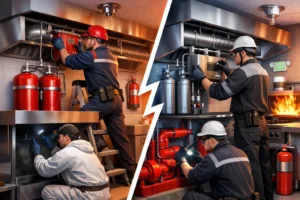
Photos are equally valuable after corrective action. If fusible links were replaced, caps were restored, nozzles were cleaned, coverage was adjusted to match appliance configuration, or a pull station obstruction was removed, the post-service images help close the loop. During an audit, this creates a stronger file than a service ticket alone.
For insurance and liability exposure, the benefit is straightforward. When a loss event or compliance dispute occurs, operators need documentation that demonstrates preventive action, system condition review, and response to identified deficiencies. A clean service report with photographic support is much more defensible than a vague maintenance log.
Common inspection findings that should always be documented
In kitchen environments, certain conditions repeatedly create compliance problems and should be photographed whenever found. One is grease accumulation in hoods, ducts, and exhaust components, particularly when buildup indicates delayed cleaning or elevated fire load. Another is missing or contaminated nozzle caps, which can affect discharge performance.
Photos should also document moved appliances that no longer align with protected discharge patterns, damaged or corroded components, inaccessible pull stations, low cylinder pressure indicators where visible, and fusible links that appear overdue, contaminated, painted, or improperly installed. If the inspection identifies blocked access to system controls or poor housekeeping around protected cooking equipment, that should be part of the record as well.
There is also a practical reason to document these issues. In active kitchens, conditions can be changed quickly after an inspector leaves. Equipment gets repositioned, line staff clean selectively, and temporary obstructions disappear. Without photos, there may be disagreement about what the inspector actually saw.
What operators should expect from a compliant reporting process
A serious inspection process should not leave you with a few images sent by text and a generic invoice. Operators should expect photographic records to be organized as part of the technical report, with enough context to connect each image to a finding, service area, and recommended action.
That means photos should correspond to the actual kitchen inspected, reflect the service date, and support the narrative in the report. If corrective actions were completed the same day, the reporting should distinguish between pre-existing deficiencies and post-correction condition. If issues remain open, the documentation should make that clear.
The reporting process also needs discipline. Over-documentation can slow review, while under-documentation weakens the file. The right balance depends on the site. A single restaurant with one protected line may need a concise photographic record. A resort with multiple kitchens, banquet production, employee dining, and satellite food operations may require a more structured inspection package.
This is where a specialist contractor adds value. A provider focused on commercial kitchen fire protection understands which images support compliance and which do not. Fire Patrol applies that discipline because kitchen risk cannot be managed with generic field reporting.
Documentation is only useful if it drives action
Photographic evidence has one main job – help the operator act before a preventable failure becomes an operational event. If the report shows grease accumulation at levels that increase fire spread risk, delayed cleaning is no longer a minor housekeeping issue. If the images show compromised suppression coverage due to equipment changes, the problem is not cosmetic. It is a protection gap.
That is why documentation should lead directly to prioritization. Some issues require immediate correction, such as impaired actuation access, missing critical components, or conditions that could interfere with discharge. Others can be scheduled within a controlled maintenance window. The point is not to generate paperwork. The point is to support decisions that protect life safety, property, business continuity, and insurance standing.
For facility managers and operators, the practical standard is simple. If a photo does not help verify condition, support compliance, or justify corrective work, it adds little value. If it does all three, it belongs in the inspection file.
The best time to need photographic evidence is before anyone asks for it. Once an audit fails, a claim is disputed, or a fire event raises questions about maintenance history, missing documentation becomes its own problem. A disciplined inspection record helps prevent that situation before it starts.