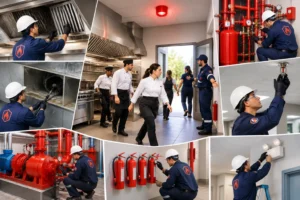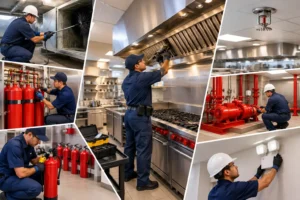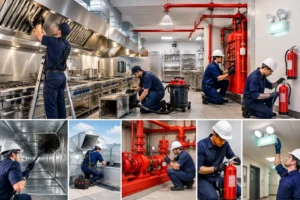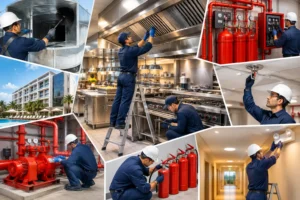
A hotel kitchen can pass breakfast service, banquet prep, and late-night production in the same day – and still be one missed inspection away from a failed audit, a suppressed discharge that does not activate correctly, or a grease condition that puts the entire operation at risk. That is why a programa preventivo cocinas hoteleras should never be treated as a basic maintenance calendar. It is a control system for fire protection, sanitation, compliance, and business continuity.
In hospitality, the cost of prevention is predictable. The cost of delay is not. A blocked nozzle, overdue fusible links, low cylinder pressure, grease accumulation inside ductwork, or an undocumented corrective action can quickly turn into kitchen shutdowns, insurance problems, and exposure during brand or authority inspections. For hotels and resorts running multiple meal periods and high-volume production, preventive work has to be structured, documented, and aligned with recognized standards.
What a programa preventivo cocinas hoteleras must control
A preventive program for hotel kitchens is not limited to one system. It has to cover the full chain of operational risk inside the cooking environment. That starts with the wet chemical fire suppression system, but it also includes hoods, ducts, exhaust components, alarm integration, refrigeration support areas, and sanitation controls that affect fire load and inspection readiness.
From a compliance standpoint, the core references are clear. Wet chemical systems protecting commercial cooking operations must be inspected and maintained in accordance with NFPA 17A, while grease removal and exhaust system conditions fall under NFPA 96. In practice, that means the kitchen cannot rely on visual assumptions such as «the hood looks clean» or «the system was serviced recently.» It needs a repeatable inspection process with documented findings, scheduled intervals, and corrective actions that are closed out, not postponed.
This matters even more in hotels because kitchen use patterns are inconsistent. A resort may have a main kitchen, pool bar, buffet line, specialty restaurant, employee cafeteria, and banquet production area, all operating under different loads. One area may be lightly used while another is under constant grease exposure. A useful preventive program adjusts to that reality instead of applying the same frequency and scope everywhere.
The operational components that cannot be skipped
Fire suppression inspection and service
The suppression system is the most visible life-safety control in the kitchen, but it is also one of the most misunderstood. Operators often assume that if the tank is mounted and the pull station is in place, the system is ready. That is not enough.
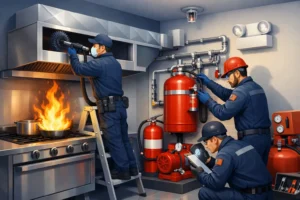
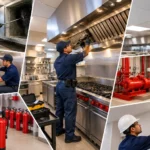
A proper service scope includes cylinder pressure review, nozzle inspection and cleaning, verification of caps, fusible link replacement at required intervals, mechanical and detection line checks, actuation path review, and confirmation that the manual pull station is accessible and functional. Where required, discharge and trip testing procedures must be carried out under controlled conditions. Documentation should identify deficiencies clearly, with photographic support and a record of corrective action.
The trade-off here is straightforward. Deferring service may save a small budget line in the short term, but it increases the chance of system failure when the appliance line needs protection most. In a hotel environment, one failed suppression event can affect guest safety, public reputation, and occupancy revenue far beyond the kitchen itself.
Hood and duct cleaning tied to fire risk
Grease accumulation is not just a sanitation problem. It is fuel. When grease builds inside hoods, filters, ducts, and exhaust fans, flame spread can move beyond the cooking surface into concealed portions of the exhaust system. That is why cleaning frequency should be based on actual cooking volume and grease production, not a generic annual visit.
A hotel with heavy frying, wok cooking, charbroilers, or banquet output may need a much tighter cleaning schedule than a limited-service property with lower grease load. The point is not to overservice. The point is to match the cleaning interval to the hazard. NFPA 96 supports that logic, and inspectors increasingly expect the condition of the system to support the schedule on paper.
Alarm and utility interlock verification
A suppression system is only part of the response sequence. Fuel shutoff, electrical interlocks, and fire alarm interface may also be required depending on the system design and jurisdiction. If those related functions are not tested and documented, a kitchen may appear protected while critical parts of the response chain remain unreliable.
This is one of the areas where hotels often face hidden exposure. Electrical work may have been modified during equipment replacement, or devices may have been added without confirming proper interface with the suppression system and alarm logic under NFPA 72 requirements. A preventive program should catch that before an inspection or emergency does.
How to structure the preventive program
The most effective programa preventivo cocinas hoteleras is built around asset inventory, service frequency, deficiency tracking, and proof of compliance. Without those four elements, maintenance stays reactive.
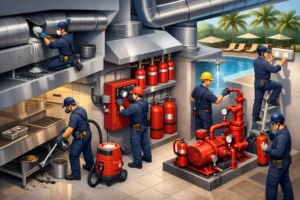
Start with a complete inventory of each protected kitchen area. That includes appliance lineups, hood sections, duct paths, suppression system brand and model, cylinder data, nozzle maps, pull stations, gas or electric shutoff devices, alarm connections, and service history. In multi-kitchen properties, this step is critical because equipment changes often happen over time and documentation becomes fragmented.
Next, establish service intervals based on actual risk. High-volume kitchens, 24-hour operations, and grease-intensive menus need more frequent attention than lower-load areas. The same applies to hood and duct cleaning. A fixed calendar that ignores kitchen activity creates blind spots.
Then build a deficiency workflow. If a technician identifies low cylinder pressure, missing nozzle caps, inaccessible pull stations, damaged detection cable, excess grease, or expired fusible links, the issue should move into a tracked corrective action process with responsibility and due date assigned. Too many properties collect reports but do not close findings. During an audit or claim review, that gap matters.
Finally, maintain records that are audit-ready. That means inspection reports, photos, test results, service dates, deficiency logs, corrective actions, and evidence of completed work. For operators managing insurance requirements, franchise reviews, health inspections, and internal safety audits, documentation is not administrative overhead. It is protection.
Where hotel operators usually fall behind
Most failures are not caused by lack of concern. They are caused by fragmented responsibility. Engineering may oversee extinguishing systems, culinary may own daily cleaning, stewarding may handle filters, outside vendors may clean ducts, and risk management may only get involved when an audit is scheduled. When these tasks are not coordinated, preventable gaps appear.
One common problem is treating fire suppression and exhaust hygiene as separate programs. They are connected by the same hazard profile. Another is assuming annual service is enough for every kitchen, regardless of volume. That may satisfy a basic calendar, but it may not reflect actual conditions in a hotel with banquet peaks, seasonal occupancy swings, or multiple concepts under one roof.
A third issue is incomplete reporting. If a service company signs off on a visit without clear findings, photos, asset references, and corrective recommendations, the property may believe it is covered when it is not. Serious preventive maintenance depends on technical reporting, not vague service notes.
What decision-makers should expect from a service partner
For owners, facility managers, executive chefs, and compliance leaders, the standard should be higher than «someone checked the system.» A qualified provider should understand commercial kitchen protection as an integrated environment, not a single device.
That includes familiarity with major suppression system brands, the ability to inspect and maintain wet chemical components correctly, coordination with hood and duct cleaning needs, verification of nozzles and fusible links, mechanical discharge and detection checks where applicable, and documentation that stands up during audits. Just as important, service should be scheduled to support kitchen operations with minimal disruption, especially in hotels where downtime affects guest service immediately.
This is where specialized kitchen-focused contractors such as Fire Patrol add value. The benefit is not only technical service. It is the ability to align inspections, preventive maintenance, corrective actions, and compliance records into one controlled program.
Prevention is cheaper than interruption
Hospitality operators already understand the pressure of occupancy, staffing, food cost, and guest expectations. What they cannot afford is a preventable kitchen incident that interrupts service, damages equipment, triggers enforcement action, or weakens an insurance position. A preventive program is not paperwork for its own sake. It is how a property keeps cooking systems protected, clean, documented, and ready for review.
If your hotel kitchen program still depends on scattered vendor visits and last-minute inspection prep, that is usually the first sign the system needs to be rebuilt. The right preventive structure gives you fewer surprises, stronger documentation, and a kitchen operation that stays ready long before the next audit date appears on the calendar.