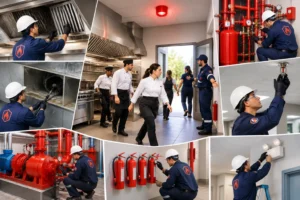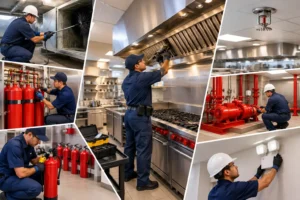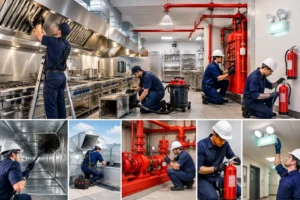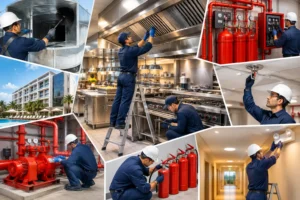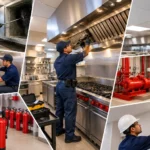
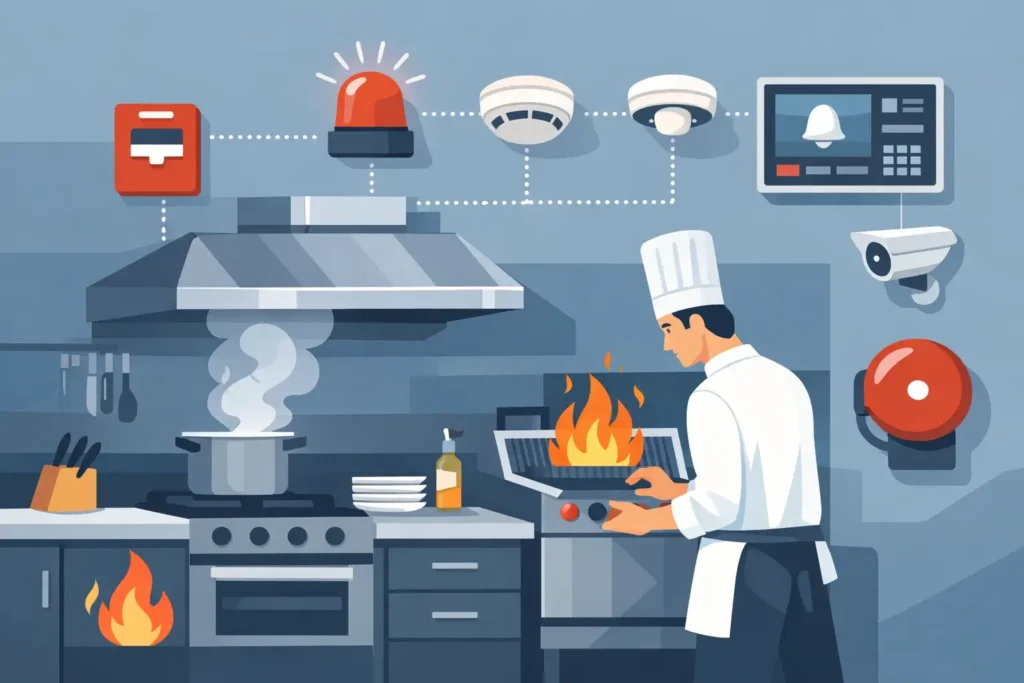
A kitchen suppression system can discharge correctly and still leave your facility exposed if the alarm side was never integrated the right way. That is the real issue behind integración alarma NFPA 72 cocina in commercial food operations. When a wet chemical system activates, the event must do more than release agent. It must trigger the required alarm functions, shut down the right equipment, and provide a documented sequence that supports life safety, inspection readiness, and insurance defensibility.
In hotels, restaurants, resorts, and institutional kitchens, this is not a minor wiring detail. It is a life safety interface. If the suppression system trips but fuel sources remain active, makeup air keeps feeding the hazard, or the fire alarm panel never receives the supervisory or alarm condition it is supposed to receive, the system may be partially functional but operationally noncompliant. That gap is where failed inspections, insurer objections, and unnecessary fire growth begin.
What integración alarma NFPA 72 cocina actually means
In practical terms, alarm integration in a commercial kitchen means the fire suppression system, releasing controls, notification pathway, and related shutdown functions operate as one coordinated sequence. NFPA 72 governs the performance of the fire alarm and signaling side. In the kitchen environment, that often intersects with NFPA 17A for wet chemical systems and NFPA 96 for ventilation control and fire protection of commercial cooking operations.
The point is not simply to make devices communicate. The point is to ensure the discharge event produces the required response. Depending on system design, that can include transmitting an alarm condition to the building fire alarm control unit, activating occupant notification where required, shutting down appliances under the hood, stopping gas or electric power to protected cooking equipment, and coordinating exhaust or makeup air behavior in line with the applicable design and authority having jurisdiction.
That last part matters because many owners assume there is one universal wiring rule for every kitchen. There is not. The exact sequence depends on the suppression system model, the fire alarm architecture, the protected appliances, fuel type, and local enforcement expectations. Good integration is standards-based, but it is also field-specific.
Why kitchen alarm integration fails in the field
Most failures are not dramatic. They are procedural. A kitchen gets a suppression upgrade, but the alarm contractor is not brought in. A fire alarm panel is replaced, but the kitchen interface is never recommissioned. A gas valve is changed during equipment replacement, but no one verifies the releasing circuit still interrupts fuel on discharge.
Another common problem is assuming the microswitches inside the mechanical release are enough by themselves. They may be part of the signaling path, but they do not replace proper sequence verification. If the suppression system discharges and the building panel does not annunciate correctly, the site may have a hidden impairment. The same is true when disconnects exist on paper but not in actual field operation.
Grease-heavy, high-volume kitchens create another layer of risk. Heat, vibration, moisture, and cleaning practices affect connections and device integrity over time. Even when original installation was correct, deferred maintenance can create silent failures. A kitchen can pass through months of operation with an interface issue that only appears during an inspection, a false activation, or an actual fire event.
Integración alarma NFPA 72 cocina and the required sequence
For decision-makers, the most useful question is not whether the system has an alarm connection. The right question is whether the full sequence has been verified and documented.
When a protected kitchen suppression system activates, the expected chain of events usually includes detection or manual actuation, release of extinguishing agent, operation of mechanical or electrical shutdowns, signal transfer to the alarm system, and panel indication consistent with the programmed cause and effect. In many properties, that also requires coordination with monitoring, elevator recall strategy outside the kitchen area, or other building-specific controls. Not every site needs the same sequence, but every site needs a defined one.
This is where technical reporting matters. A contractor should be able to state what input was activated, what outputs responded, which appliances lost fuel or power, what panel indication appeared, and whether notification appliances were expected to operate under that configuration. Without that level of clarity, owners are left with assumptions instead of evidence.
The difference between installed and compliant
Commercial kitchens often have equipment that looks complete from the outside. The pull station is present. The control head is mounted. The fire alarm panel shows normal. That does not confirm compliant integration.
A compliant condition is demonstrated through inspection, testing, and documentation. It confirms the interface works under actual operating logic. It also confirms that changes in tenant buildout, hood modifications, appliance replacements, and electrical work have not broken the original design intent.
This distinction matters during audits and post-loss investigations. If a discharge occurs and the documented sequence was never tested after a renovation, responsibility quickly becomes expensive.
What owners and facility managers should verify
If you oversee a commercial kitchen, start with the interface points. Confirm the suppression system is connected to the fire alarm system where required and that the signal type matches the panel programming. Confirm fuel shutoff devices function on discharge. Confirm appliance power interruption is operating where applicable. Confirm manual pull stations are accessible, identified, and included in test procedures.
Then look at the documentation trail. You should have current inspection records, device identification, test results, deficiency notes, and evidence of corrective action. If a contractor reports only that the system was «checked,» that is not enough for a serious compliance program. Kitchen fire protection needs traceable records because authorities, insurers, and corporate safety teams increasingly ask for proof, not verbal confirmation.
The timing of testing also matters. Integration should be verified during installation, after any modification, after fire alarm panel work, after kitchen equipment replacement affecting shutdowns, and as part of scheduled inspection programs. Waiting for the annual visit alone is risky in active hospitality operations with frequent equipment changes.
Common deficiency findings during kitchen alarm integration inspections
In the field, several recurring issues appear again and again. The panel receives no signal from the suppression system. The panel receives a trouble or supervisory signal when an alarm condition was intended. Gas valves are installed but do not actually de-energize fuel on release. Appliance circuits remain energized because the wrong disconnect path was used. Manual pull stations are obstructed by equipment or storage. Test records exist for the suppression system, but no coordinated fire alarm test was ever completed.
There are also cases where the system was integrated correctly years ago, but later service work broke the sequence. An electrician replaces a contactor. A kitchen vendor relocates equipment. A renovation changes hood coverage or branch circuits. None of these trades may realize they have affected the fire protection sequence. That is why commercial kitchens need coordinated service oversight rather than isolated vendor visits.
How to approach integración alarma NFPA 72 cocina the right way
The right approach starts with a field assessment, not assumptions. Identify the suppression system make and model, releasing components, microswitch configuration, appliance loads, fuel shutoff devices, hood arrangement, and the fire alarm panel logic. Then verify the intended sequence against the applicable standards and local enforcement requirements.
After that, perform functional testing. Not just continuity checks. Functional testing confirms the real-world response of the kitchen and the panel. If deficiencies are found, corrective work should be documented clearly, including whether the problem is with the suppression system, the alarm interface, the shutdown device, or downstream electrical or gas controls.
For multi-unit hospitality properties, standardization is especially valuable. Different kitchens on the same campus often evolve over time and end up with inconsistent configurations. That creates audit exposure and maintenance confusion. A structured compliance program reduces that risk by making each protected kitchen easier to inspect, test, and defend.
This is where a specialized kitchen fire protection contractor adds practical value. Fire Patrol, for example, works in the overlap between suppression compliance, operational continuity, and documented technical service. In commercial kitchens, that overlap is where most preventable failures are found.
A discharge event should never be the first time anyone learns whether the alarm interface works. In a busy kitchen, the safest moment to find a wiring, shutdown, or signaling problem is during a controlled inspection with proper reporting and corrective action already planned.