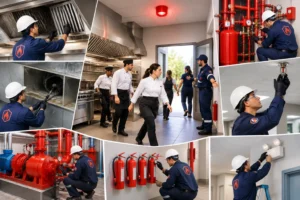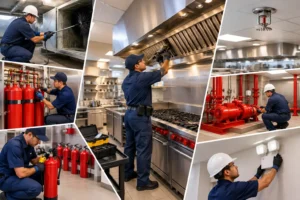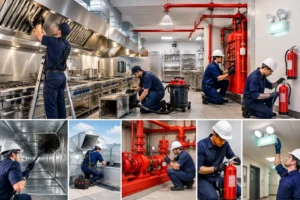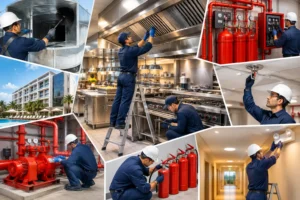

A failed fusible link, grease-loaded ductwork, or an unreadable service tag can turn a routine inspection into a shutdown event. That is why operators who want stability do not wait for breakdowns – they build preventive maintenance program kitchens can follow consistently, document clearly, and defend during audits.
For commercial kitchens, preventive maintenance is not just about extending equipment life. It is a control system for fire risk, sanitation exposure, code compliance, insurance protection, and day-to-day continuity. In restaurants, hotels, resorts, and institutional foodservice, the kitchen is a high-heat, high-grease, high-usage environment. If maintenance is informal, risk accumulates fast.
What a preventive maintenance program for kitchens must actually control
A useful program is not a calendar full of generic reminders. It needs to control the assets and conditions most likely to create operational or compliance failure. In a commercial kitchen, that usually starts with the hood and duct system, the wet chemical fire suppression system, gas and electrical cooking equipment, refrigeration, ventilation, and the cleaning practices that affect all of them.
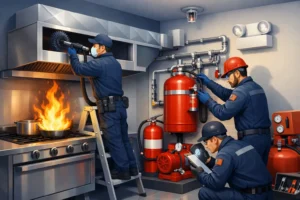
This is where many facilities get it wrong. They maintain visible equipment but ignore hidden failure points. Nozzles collect grease. Caps go missing. Fusible links age out. Cylinder pressure drifts out of range. Remote pull stations become obstructed. Alarm monitoring is not verified after modifications. Hood filters are cleaned, but duct interiors are overdue. On paper, the kitchen looks maintained. In the field, it is exposed.
A preventive maintenance program has to address both function and compliance. A fan may still run while belts are worn, airflow is reduced, and grease capture is poor. A suppression system may appear intact while components are contaminated or overdue for required service. The standard is not whether the kitchen is operating today. The standard is whether it will operate safely under peak conditions and pass inspection without exceptions.
How to build preventive maintenance program kitchens can sustain
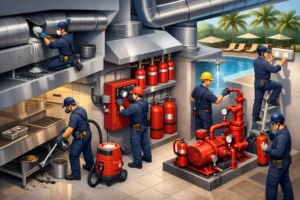
Start by defining the scope correctly. The kitchen should be treated as a connected risk environment, not a collection of separate vendors and isolated tasks. Hood cleaning, suppression inspections, refrigeration service, sanitation controls, and corrective repairs all affect one another. If each one is scheduled independently without coordination, critical gaps appear.
The first step is asset identification. Document every protected appliance, hood section, duct run, exhaust fan, make-up air unit, suppression tank, discharge nozzle, manual pull station, gas shutoff interface, alarm connection, refrigeration unit, and high-risk support system. If a component affects fire protection, airflow, temperature control, or food safety, it belongs in the program.
Next, establish the maintenance baseline. This requires an initial condition assessment, not assumptions based on the last invoice. Verify tag dates, inspection records, cleaning frequency, cylinder condition, nozzle placement, appliance line-up, fusible link status, fan operation, and visible grease accumulation. If equipment has been replaced or moved, confirm the suppression design still matches the cooking hazard. Many compliance problems begin after kitchen changes that were never reflected in the protection system.
Then assign frequencies based on code, manufacturer requirements, cooking volume, and risk profile. This is not a one-size-fits-all schedule. A high-volume hotel kitchen with solid fuel exposure, extended hours, and multiple fryers needs a tighter cycle than a light-duty service pantry. NFPA-driven inspection intervals, hood and duct cleaning frequency under NFPA 96, refrigeration service needs, and site-specific sanitation demands should all be built into one service calendar.
That calendar should separate routine tasks from certified inspections. Daily and weekly cleaning checks can be handled internally. Semiannual suppression inspection, fusible link replacement when required, cylinder review, nozzle cleaning, alarm interface verification, and mechanical discharge testing procedures belong to qualified technicians. If those responsibilities are blurred, critical work gets missed or performed without defensible documentation.
Documentation is part of the maintenance program, not an extra
If there is no service record, photo log, deficiency report, and corrective action trail, the kitchen is harder to defend during an insurance review, authority having jurisdiction inspection, or corporate audit. Documentation is not administrative overhead. It is proof that the risk was identified, addressed, and tracked.
Each service event should capture what was inspected, what standard or internal requirement applied, what deficiencies were found, what corrective actions were completed, and what remains open. Photos matter because they remove ambiguity. A note that says grease buildup was observed is weak. A dated photo set showing pre-service condition, corrective cleaning, and final verification is far stronger.
This is especially important in multi-unit operations and hospitality groups. Regional leaders need consistency across sites. If one location uses handwritten notes, another uses incomplete tags, and a third has no organized history, management cannot see trends or prioritize budget properly. A preventive maintenance program should create comparable records across every kitchen under the same operating umbrella.
The biggest mistakes when building a kitchen maintenance program
The most common mistake is treating fire protection as a standalone service call instead of part of operational maintenance. A suppression inspection can be current while the hood system is dirty, the fan performance is poor, or appliance placement has changed enough to affect nozzle coverage. Compliance on one line item does not mean the kitchen is safe.
Another mistake is over-relying on emergency repairs. If your program starts only after a leak, a discharge issue, a failed inspection, or a refrigeration alarm, you do not have a preventive model. You have a reactive one. Reactive maintenance usually costs more, disrupts service, and creates avoidable exposure with insurers and regulators.
Facilities also underestimate the effect of kitchen staff turnover. Cleaning routines, shutdown checks, and daily visual inspections often fail when responsibilities are informal. A good program includes simple internal procedures that survive staffing changes. Operators should know who checks pull station access, who reports missing nozzle caps, who escalates unusual grease accumulation, and who signs off on recurring tasks.
There is also a budgeting mistake that shows up often: choosing the lowest-cost vendor mix without central oversight. Cheap service is expensive when reports are incomplete, deficiencies are not tracked, or one contractor does not coordinate with another. In commercial kitchens, fragmented service models often hide risk until an inspection failure or equipment event forces action.
What a strong preventive maintenance schedule looks like
A strong schedule balances internal checks, technical service, and compliance milestones. Line staff may handle daily observations and cleaning verification. Management may review weekly condition logs, open deficiencies, and service due dates. Certified field technicians handle specialized inspection and maintenance activities tied to suppression systems, alarm interfaces, discharge components, and documented performance checks.
The right schedule also accounts for operational timing. High-volume kitchens cannot afford disruptive service during meal peaks. Maintenance should be organized around access windows, production load, and shutdown requirements. That sounds simple, but it is one reason many programs fail. Work is deferred because no one planned around live operations.
The better approach is disciplined scheduling with pre-approved service windows, defined site contacts, and clear escalation paths for deficiencies that require immediate correction. If a fusible link is overdue, a nozzle is obstructed, or cylinder pressure is out of tolerance, the response should already be defined before the technician arrives.
For operators managing hotels, resorts, and multi-shift kitchens, this structure is not optional. It is what keeps one maintenance issue from becoming a guest disruption, failed audit, or fire loss event. Companies such as Fire Patrol are often brought in when organizations need this level of kitchen-specific coordination rather than disconnected service visits.
Build the program around risk, not just tasks
The best kitchen maintenance programs are built around consequences. Ask what could cause a fire event, a failed inspection, an insurance problem, a sanitation issue, or a forced shutdown. Then build inspections, service intervals, responsible parties, and documentation around those exposures.
That may mean one site needs more frequent hood and duct attention because grease production is extreme. Another may need tighter suppression review because equipment changes are common. Another may need stronger refrigeration maintenance because food safety losses are the larger operational threat. The program should reflect the kitchen you actually operate, not the generic checklist someone copied from another facility.
A kitchen that stays audit-ready, protected, and operational does not get there by chance. It gets there because someone assigned responsibility, verified the condition of the system, documented the work, and repeated the process on schedule. If you are going to build a preventive maintenance program for kitchens, build one that can stand up to heat, volume, inspection pressure, and real-world failure points.