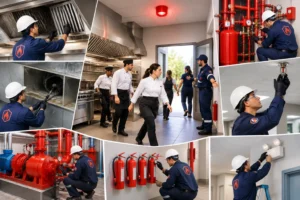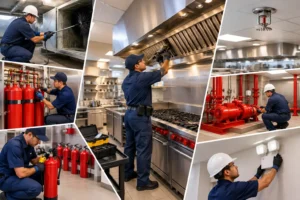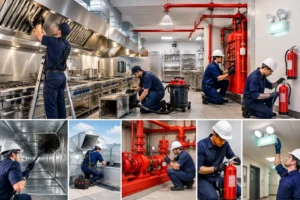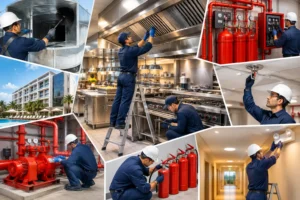

A failed hotel kitchen audit rarely starts with a single major violation. It usually starts with small gaps that accumulate across shifts – an unverified holding temperature, grease above acceptable levels in the exhaust path, missing corrective-action records, a suppression system component past service interval, or sanitation practices that are followed in theory but not documented in real time. That is why an auditoría HACCP seguridad foodservice hotelero process has to be more than a checklist. In hospitality, it is an operational control system tied directly to food safety, fire protection, insurance exposure, and business continuity.
Why HACCP auditing in hotel foodservice is different
A standalone restaurant can have a relatively stable menu, a fixed prep flow, and a smaller team. A hotel cannot count on that kind of consistency. Breakfast buffets, banquet production, room service, pool bars, employee dining, specialty restaurants, and seasonal volume spikes create multiple hazard points within the same property. The result is a wider risk surface and more opportunities for critical control points to drift out of tolerance.
That matters because HACCP is not just about keeping food at safe temperatures. In hotel foodservice, the system has to hold under pressure when production scales up fast, staffing changes between shifts, and kitchen assets operate for long hours with high grease load and high thermal stress. If one part of the control structure fails, the impact moves quickly from food safety to equipment reliability, sanitation, and emergency response readiness.
An effective audit, therefore, has to read the kitchen as a system. It should evaluate hazards in receiving, storage, thawing, prep, cooking, hot and cold holding, cooling, reheating, transport, service, and cleaning. But it also has to verify whether the surrounding safety infrastructure supports those controls. A line can meet cooking temperature targets and still present unacceptable risk if hood and duct conditions, discharge components, alarm integration, or maintenance documentation are not current.
What a real auditoría HACCP seguridad foodservice hotelero should verify
A proper audit starts with hazard analysis, but it should not stop there. In a hotel environment, the strongest audits connect food handling controls with the physical condition of the kitchen and the documented evidence behind each procedure.
Critical control points and actual field conditions
The first layer is the classic HACCP review: receiving temperatures, cross-contamination prevention, labeled storage, calibrated thermometers, verified cook temperatures, holding logs, cooling times, reheating standards, and employee hygiene practices. Those controls are basic, but they are often where recurring nonconformities appear because teams assume they are already under control.
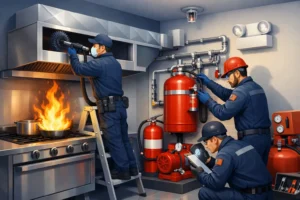
The second layer is what many operators underestimate – whether the kitchen environment itself supports safe production. Grease accumulation, poor airflow, damaged nozzles, obstructed appliances, expired fusible links, low cylinder pressure, or missing inspection tags do not only affect fire code compliance. They also affect whether the operation can continue safely during peak demand. If a suppression system is compromised or an exhaust system is overloaded, the facility may face shutdown, property damage, or a failed inspection that disrupts service.
Records that can withstand an audit review
In hospitality, undocumented compliance is treated as noncompliance. A team may be cleaning, checking temperatures, and replacing small parts, but if those activities are not logged clearly and consistently, the audit result will reflect a gap.
That is why record review is one of the most decisive parts of the process. The auditor should verify temperature logs, sanitation schedules, corrective actions, preventive maintenance records, suppression system service reports, hood and duct cleaning records, alarm interface testing where applicable, and photo-supported evidence of deficiencies and completed repairs. Vague notes are not enough. The documentation has to show dates, findings, actions taken, and service status in a way that a health inspector, brand auditor, insurer, or loss-control reviewer can follow.
Where hotel kitchens usually fail
Most failures are not caused by lack of awareness. They are caused by inconsistent execution across departments and shifts.
Banquet and production kitchens are a common pressure point because they move fast and often operate with temporary workflow changes. Cold chain interruptions during staging, incomplete labeling, and rushed cooling procedures are frequent. Employee dining and secondary service areas also create hidden exposure because they may receive less management oversight than the main restaurant kitchen.
Another common weakness is treating fire protection and food safety as separate silos. From an operational standpoint, they are connected. A hood system with heavy grease deposits, delayed cleaning, or neglected suppression components increases the chance of a fire event that can interrupt food production, trigger costly repairs, and raise serious questions during an audit. A kitchen cannot claim full control of hazards if key protective systems are overdue for inspection or if corrective actions remain open.
Training is another variable. HACCP plans often look solid on paper, but the line staff may be following habit instead of procedure. When staff turnover is high, that gap widens fast. An audit should test actual practice, not only policy. If the night shift handles cooling differently from the day shift, or if one outlet stores chemicals incorrectly during deep cleaning, the plan is not functioning as designed.
How to prepare for a HACCP audit without disrupting service
The best preparation is not a last-minute cleanup. It is a controlled inspection rhythm that keeps the property in a state of readiness.
Build audit readiness into preventive maintenance
Hotel operators usually think about HACCP in the context of food handling, while maintenance teams focus on equipment uptime and fire systems. That split creates blind spots. Audit readiness improves when preventive maintenance includes sanitation condition, exhaust cleanliness, suppression service intervals, nozzle inspection, cylinder pressure review, and documented corrective action tracking alongside food safety controls.
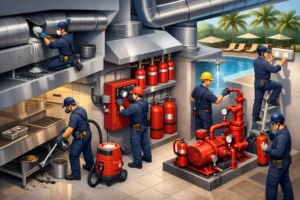
This is where specialist contractors add value. A kitchen-focused safety partner can identify deficiencies that a general maintenance program may miss, especially when the review includes wet chemical suppression systems, fusible links, mechanical discharge components, and service documentation aligned with NFPA 17A and NFPA 96 expectations. Fire Patrol operates in that overlap between compliance, kitchen protection, and audit preparedness, which is exactly where many hospitality properties need stronger control.
Verify the evidence, not just the task
Before any formal audit, managers should sample the evidence trail. Check whether logs are complete, whether corrective actions are closed, whether service tags match actual intervals, and whether photos or technician notes support high-risk findings. If a hood was cleaned, there should be a record. If a nozzle was serviced, there should be a report. If a refrigeration issue affected holding temperature, there should be a documented response.
This approach prevents a common problem: the property believes the issue was handled, but the file cannot prove it. In an audit environment, that distinction matters.
Use cross-functional accountability
The executive chef, stewarding lead, engineering, safety manager, and operations leadership should not be preparing separately. A HACCP audit in hotel foodservice crosses all those functions. Food safety controls fail when one department assumes another owns the risk.
A practical review meeting should cover open nonconformities, repeated deviations, pending service dates, sanitation issues, and any equipment or suppression deficiencies that could affect safe operation. The goal is not paperwork for its own sake. The goal is to reduce the chance that a known issue turns into a failed inspection, an incident, or an avoidable interruption during service.
The standard is not perfection. It is control.
No hotel kitchen is static. Menus change, occupancy changes, staff changes, and equipment ages. That is why a useful auditoría HACCP seguridad foodservice hotelero process does not pretend conditions never vary. It verifies whether the property can detect hazards early, respond correctly, document the response, and maintain the protective systems that support ongoing production.
That also means trade-offs exist. A luxury resort with multiple outlets may need a more structured audit frequency than a limited-service property. A banquet-heavy operation may require tighter cooling verification and transport controls. A kitchen with older suppression infrastructure may need closer inspection scheduling than one with recently upgraded equipment. The right standard is not a generic schedule. It is a risk-based program with enough discipline to stand up to inspection and enough practicality to work during live operations.
When hotel foodservice leaders treat HACCP auditing as a compliance exercise only, problems stay hidden until an inspector, insurer, or emergency exposes them. When they treat it as an operating control, the kitchen becomes safer, more defensible, and more resilient under pressure. That shift is what keeps service running when the stakes are highest.