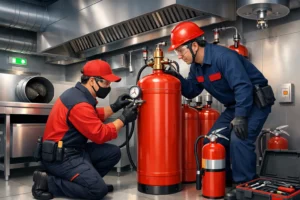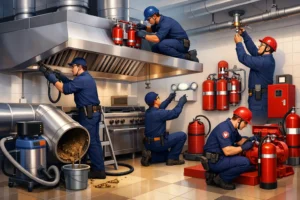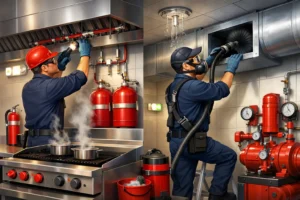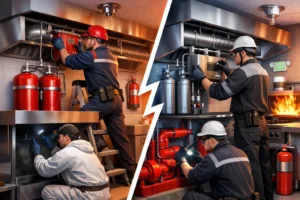
A failed suppression inspection at 10:00 a.m. can turn into canceled service by lunch. In high-volume food operations, that is how fast revenue loss starts. This guide to commercial kitchen shutdown prevention is built for operators who cannot afford failed audits, fire code violations, insurance disputes, or avoidable downtime.
Commercial kitchen shutdowns rarely come from a single dramatic event. More often, they result from small technical failures that were left uncorrected – grease accumulation in the exhaust system, blocked nozzles, expired fusible links, low cylinder pressure, undocumented repairs, disconnected alarms, or a suppression system that no longer matches the cooking line below it. When an inspector, insurer, or fire marshal finds one of those conditions, the kitchen can be restricted or closed until corrective action is completed.
What causes most kitchen shutdowns
Shutdown risk usually builds quietly. A kitchen may appear fully operational while critical protection components are degraded, contaminated, or out of compliance with current conditions. The most common triggers include suppression system deficiencies, hood and duct contamination, poor maintenance records, and equipment changes that were never evaluated against fire protection requirements.
NFPA 17A and NFPA 96 set the framework here. For operators, that means the wet chemical suppression system, exhaust hood, ductwork, filters, fuel shutoff, and alarm interface are not separate issues. They function as one life safety and operational control system. If one part fails, the rest of the kitchen may no longer be considered protected.
That is the point many facilities miss. A clean hood alone does not compensate for clogged nozzles. A recently serviced suppression tank does not offset a failed gas shutoff. A visible inspection tag does not protect the business if there is no documented evidence showing actual system condition.
Guide to commercial kitchen shutdown prevention: start with the hazard profile
A reliable prevention plan starts with the actual cooking hazard, not a generic maintenance checklist. A hotel banquet kitchen, quick-service fry station, and resort show kitchen carry different heat loads, grease production, and suppression demands. Shutdown prevention depends on matching inspection frequency and corrective action to that risk level.
Begin by reviewing the full protected area. Confirm that every appliance producing grease-laden vapors remains under the correct hood coverage and nozzle protection. This becomes critical after kitchen renovations, menu changes, or equipment replacement. A new charbroiler or added fryer can create an unprotected hazard even if the original system is still tagged as active.
This review should also include the exhaust path, from hood interior to duct runs and discharge points. Grease accumulation is not only a fire load issue. It is one of the fastest ways to fail inspection, especially when cleaning intervals are based on guesswork rather than actual production conditions.
Inspection intervals are not a formality
Too many operators treat scheduled inspections as paperwork events. In practice, inspection intervals are one of the strongest controls against forced shutdowns. Semiannual suppression inspections, periodic fusible link replacement, cylinder pressure review, nozzle cleaning, and mechanical function testing are not optional if the goal is uninterrupted operation.
The trade-off is straightforward. Preventive service requires planning, service windows, and budget discipline. Emergency correction after a failed inspection usually costs more, disrupts production, and places the business under immediate compliance pressure.
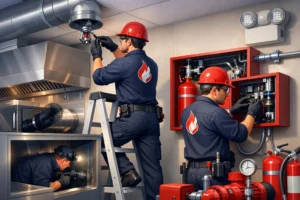
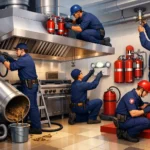
A proper inspection process should verify agent cylinder condition, piping integrity, nozzle caps and alignment, pull station accessibility, appliance interlocks, fuel or electric shutoff operation, and alarm connection where required. It should also identify impairments that do not yet cause system failure but are clearly moving in that direction.
That predictive value matters. If a technician finds contamination around nozzles, weak cartridge performance indicators, or poor accessibility to manual actuation points, the operator has a chance to correct the issue before an authority having jurisdiction documents it as a violation.
Documentation is part of shutdown prevention
A compliant kitchen that cannot prove compliance is still exposed. This is where many restaurants and hospitality groups lose time during audits, insurance reviews, and post-incident investigations. Documentation should not stop at a signed service tag.
Audit-ready records should show what was inspected, what was tested, what deficiencies were found, what corrective actions were completed, and when follow-up service occurred. Photographic reporting is especially useful because it creates objective evidence of nozzle condition, hood cleanliness, duct status, cylinder readings, and repaired deficiencies.
For multi-unit operators, this becomes even more important. One location may pass because a strong manager keeps local records organized. Another may face closure because service history is incomplete or scattered across vendors. A centralized documentation process reduces that inconsistency and gives facility leaders a clearer picture of system-wide risk.
The hidden shutdown factors operators overlook
Some of the most disruptive deficiencies are not obvious during daily kitchen activity. Staff can work around them for weeks without realizing the exposure.
One example is alarm integration. If the suppression system discharges but the required alarm or monitoring sequence does not occur, the installation may not meet code expectations for the facility type. Another is appliance mobility. Cooking equipment moved during cleaning may no longer sit under protected nozzle patterns. Over time, small shifts in placement can create a serious compliance problem.
Refrigeration and HVAC performance also have a place in this discussion. Poor airflow balance, elevated kitchen temperatures, and neglected rooftop or make-up air issues can increase grease migration and stress the overall environment. These conditions do not replace fire code deficiencies, but they often contribute to sanitation failures, equipment strain, and broader operational instability.
Then there is simple neglect of consumable protection components. Fusible links, nozzle caps, and cartridges are small items, but they are part of the operating reliability of the system. When they are contaminated, outdated, or missing, the kitchen is relying on a protection system that may not perform as designed.
How to build a prevention program that holds up under inspection
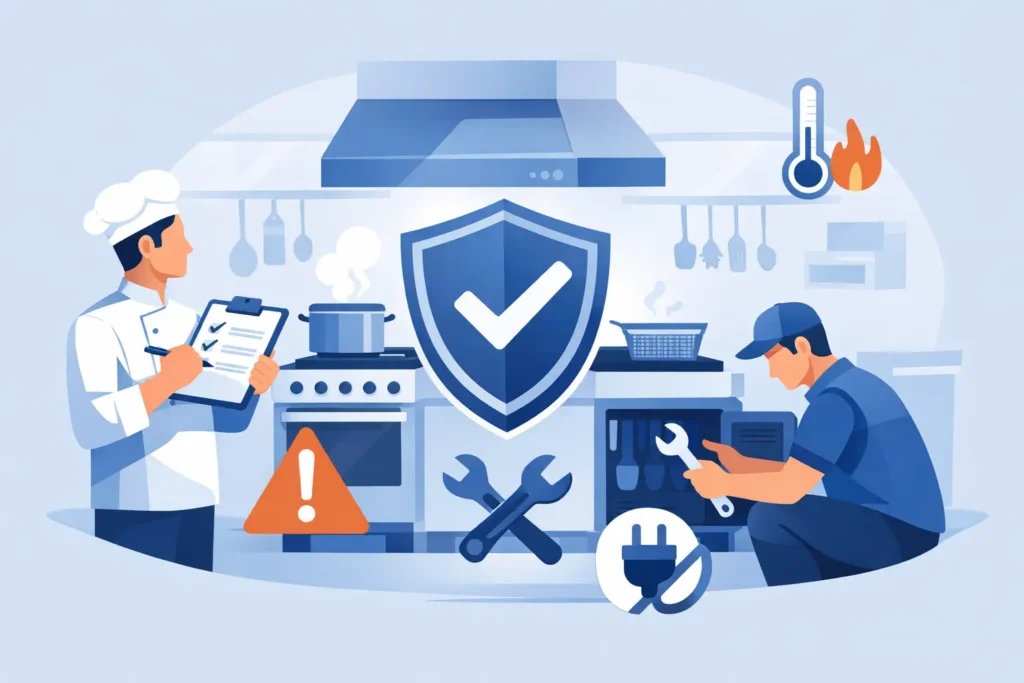
The most effective guide to commercial kitchen shutdown prevention is not a one-time project. It is a structured program that combines inspection scheduling, cleaning, technical corrections, and compliance tracking.
For most operations, the first step is a baseline assessment. That assessment should compare current field conditions to applicable standards and to the actual cooking equipment in place. If the system design no longer fits the line, corrective action should be prioritized before the next audit cycle.
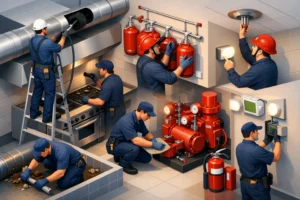
The second step is service coordination. Hood cleaning, suppression inspection, cylinder pressure review, nozzle cleaning, and alarm verification should be managed as connected tasks. When vendors work in isolation, gaps form. A hood may be cleaned without identifying damaged detection components. A suppression inspection may occur without addressing heavy grease buildup that threatens continued compliance.
The third step is deficiency management. Not every finding requires an immediate shutdown, but every finding needs a documented path to correction. High-risk issues such as impaired discharge components, obstructed pull stations, failed shutoffs, or unprotected appliances should be escalated quickly. Lower-level deficiencies still need deadlines and accountability.
The fourth step is internal awareness. Kitchen managers, chefs, and maintenance staff do not need to become suppression technicians, but they should know what to report. Missing nozzle caps, excessive grease, blocked access to manual pull stations, and equipment changes should trigger immediate review rather than waiting for the next scheduled visit.
Audit readiness is operational readiness
A kitchen that is always preparing for the next audit tends to operate with fewer surprises. That does not mean over-servicing every component. It means maintaining a standard that can withstand inspection at any time.
For hotels, resorts, and large foodservice operations, this is especially important because shutdown consequences extend beyond one meal period. Guest satisfaction, event commitments, labor scheduling, brand reputation, and insurance relationships are all affected when the kitchen is taken offline.
That is why specialized service providers matter. A contractor focused on commercial kitchen protection understands the interaction between suppression systems, hood hygiene, NFPA requirements, and operational scheduling. Fire Patrol applies that model through field inspection, corrective maintenance, and documented reporting designed for audit readiness, not just basic service completion.
A commercial kitchen does not usually shut down because no one cared. It shuts down because warning signs were treated as minor until they became a code issue, a fire risk, or a failed inspection. The better approach is disciplined prevention – the kind that keeps the kitchen open, the paperwork ready, and the protection system capable of doing its job when it matters most.